
Climate change: Kaduna don raises alarm over health-related deaths
A university don, Professor Auwal Farouk Abdussalam of Kaduna State University, has raised alarm over rising heat-related deaths in Nigeria, warning that climate change has become a “silent public health crisis” claiming lives across the country. Speaking during his 13th Professorial Inaugural Lecture titled “Climate Dynamics, Environmental Sustainability, and Public Health: Navigating the Impacts of […]
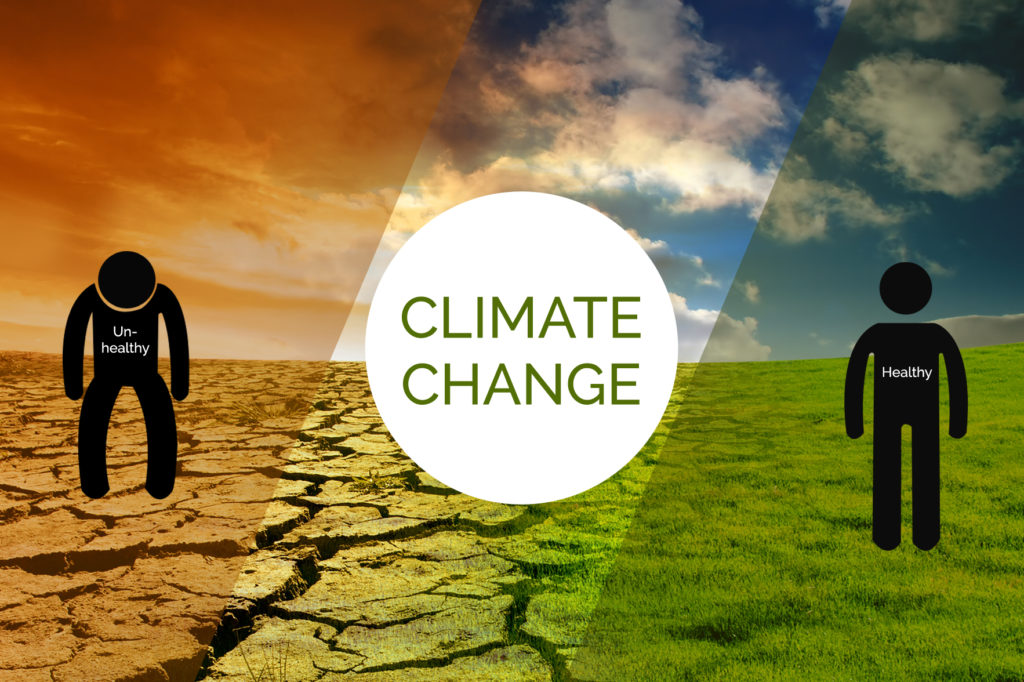
Climate change
A university don, Professor Auwal Farouk Abdussalam of Kaduna State University, has raised alarm over rising heat-related deaths in Nigeria, warning that climate change has become a “silent public health crisis” claiming lives across the country.
Speaking during his 13th Professorial Inaugural Lecture titled “Climate Dynamics, Environmental Sustainability, and Public Health: Navigating the Impacts of Climate Change in Nigeria,” Abdussalam said the nation is grossly unprepared for the health emergencies triggered by extreme heatwaves and changing weather patterns.
“We don’t even know how many people are dying in Nigeria because of the heat,” he said. “We are passing through heatwaves in an entirely different way, and we are not tracking anything.”
The professor recalled severe heat incidents in parts of northern Nigeria, including Kano and Kaduna, noting that many deaths linked to heat stress go unrecorded. “The situation was so bad that corpses were still flying into the graveyard,” he said.
Abdussalam linked rising temperatures to outbreaks of malaria, cholera, and other waterborne diseases, explaining that warmer climates have expanded mosquito breeding zones and accelerated the spread of infectious pathogens.
“Mosquitoes are very happy. Before, in the highlands of Ethiopia and Eritrea, there were no mosquitoes. But now there are. Here in Nigeria, the heat is there, the gutter is there — everything is there for them to flourish,” he remarked.
He warned that Nigeria’s fragile healthcare system is ill-equipped to cope with the growing climate-induced disease burden. “There is no single medical care unit that can handle the scale of what is coming,” he cautioned.
Describing climate change as a “risk multiplier,” Abdussalam said it worsens every existing challenge, including poverty, food insecurity, and conflict. “Even if you are doing well, climate change will meet your problem and multiply it by ten,” he added.
The professor faulted the government’s slow and fragmented response to climate threats, calling for a coordinated “whole-of-government and whole-of-society” approach.
“All agencies must work together — horizontally and vertically — because climate change affects everyone under the same atmosphere,” he said.
He also lamented widespread ignorance about climate change, citing a study which found that while 95 percent of Nigerians notice temperature changes, only 12 percent understand the actual risks.
“We have a confused generation,” Abdussalam said. “The youth are the soul of the nation, yet many do not know what climate change is or what it means for their future.”
Vice-Chancellor Professor Abdullahi I. Musa, represented by Deputy Vice-Chancellor Professor Helen Afong Andow, commended Abdussalam for “exposing the link between climate change and human suffering.”
Similarly, Dr. Yusuf Saleh, former Head of Geography, urged authorities to take urgent action. “Government must take climate change very seriously before its health impacts overwhelm the nation,” he said.