
Climate Change: Nigeria hosts ‘Cracking the Nut’ Conference in Abuja
As part of efforts to mitigate the global impact of climate change, Connexus Corporation has held the 13th international Cracking the Nut® Conference in Abuja, Nigeria with participants drawn from 14 countries. The two-day conference, which took place on October 7th and 8th, 2024, was with the theme “Preparing for Accelerated Climate Change”, and explored […]
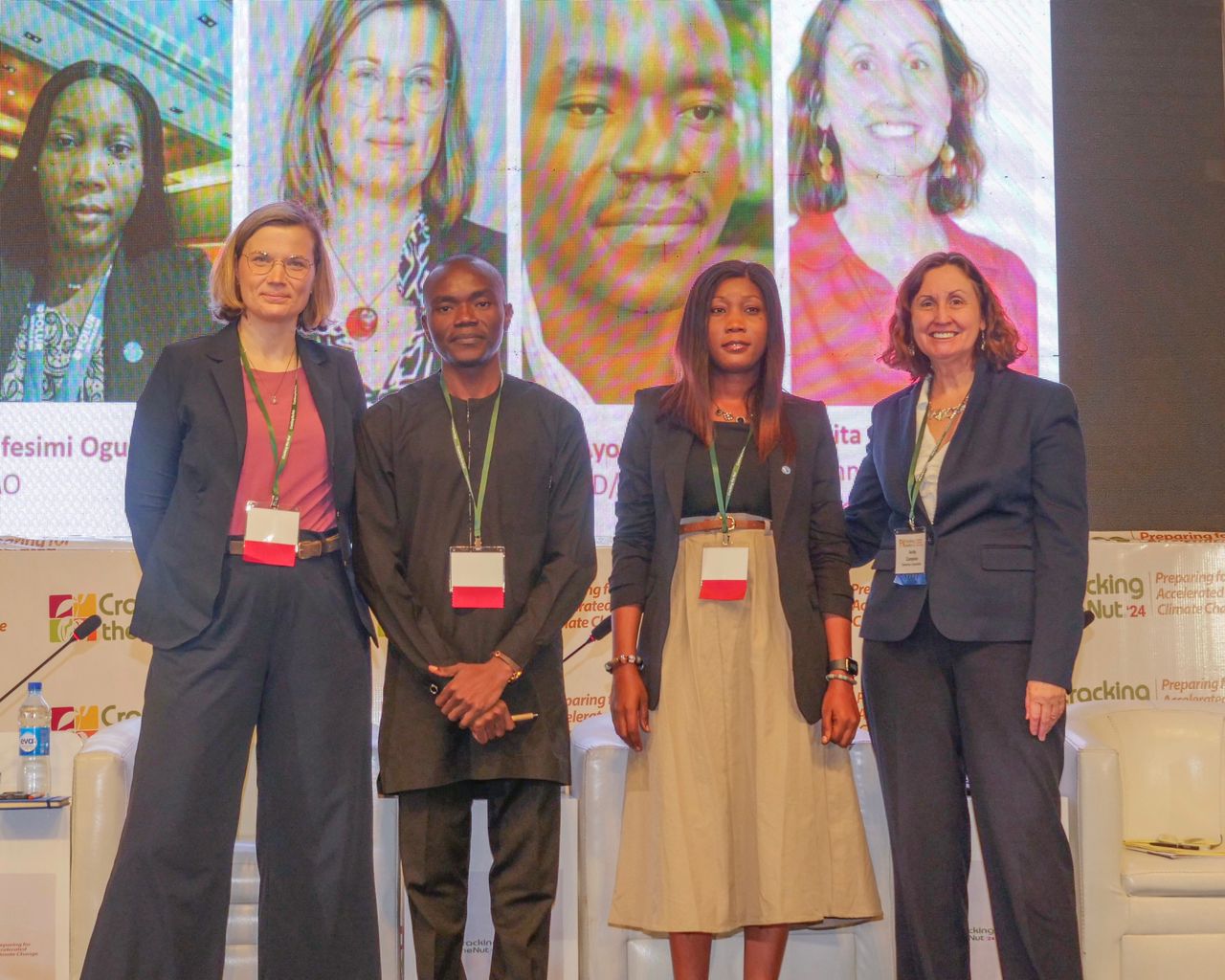
fao
As part of efforts to mitigate the global impact of climate change, Connexus Corporation has held the 13th international Cracking the Nut® Conference in Abuja, Nigeria with participants drawn from 14 countries.
The two-day conference, which took place on October 7th and 8th, 2024, was with the theme “Preparing for Accelerated Climate Change”, and explored strategies for mitigating greenhouse gas (GHG) emissions in agriculture and food production, promoting climate adaptations, and integrating food security and resilience.
Speaking at the Conference, Chief Executive Officer of Connexus, Anita Campion, addressed the increasing frequency of extreme weather events disrupting agricultural markets and food systems globally.
The United States Agency for International Development (USAID) Nigeria’s Mission Director, Melissa A. Jones, introduced the conference theme by highlighting the far- reaching impact of climate change in Nigeria.
Speaking on the recent floods in Borno State, she expressed empathy for those affected and called climate change “one of the greatest disruptors of our time,” emphasizing the crucial role of partnerships to drive climate action.
In his keynote address, AGRA’s Nigeria Country Director, Dr. Rufus Idris, outlined the necessary steps to “Transform Africa’s Food Systems” amidst the accelerating effects of climate change and emphasized the need for public-private partnerships to overcome the obstacles to implementing climate-smart agricultural practices.
He highlighted the need for increased finance, risk mitigation tools, and incentives to attract private sector investments that benefit rural smallholder farmers, women, and youth.
Former Coordinator of the Green Bond Program for Nigeria’s Ministry of Environment, Sule James, spoke on leveraging Nigeria’s sovereign green bond investments, which predominantly supported climate mitigation efforts such as renewable energy.
He provided a roadmap for tapping patient capital to issue green bonds for climate adaptation, supporting investments in climate-smart agriculture and resilient food systems.
In addition to the plenary sessions, the conference featured 18 competitively selected participatory breakout sessions to promote global knowledge exchange, the key lessons from these sessions will be compiled and shared publicly in early 2025.
In her closing remarks, Anita Campion extended her gratitude to the conference sponsors, including USAID/Nigeria, DAI, Catholic Relief Services, Chemonics International, Plethora Design, Abt Global, ACDI/VOCA, Winrock International, and UC Davis, for their commitment to the vital dialogue on climate change.