
CNG prices hike defy logic
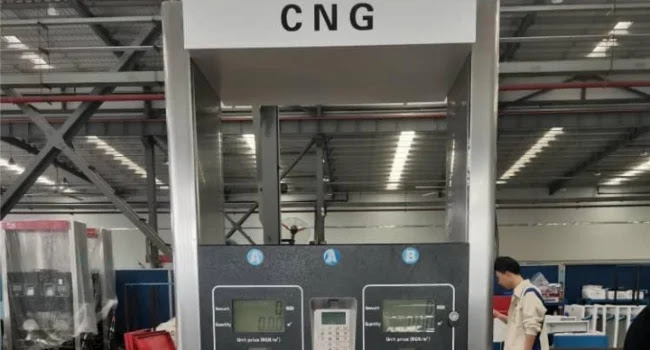
NNPC Gas Marketing Limited recently increased the price of Compressed Natural Gas (CNG) for trucks, commercial vehicles, and private vehicles without prior notice or a clear explanation of the policy change. In recent weeks, prices have risen from N230 per standard cubic meter (SCM) to N450/SCM. While commercial trucks are charged N450/SCM, private car owners […]
cng
NNPC Gas Marketing Limited recently increased the price of Compressed Natural Gas (CNG) for trucks, commercial vehicles, and private vehicles without prior notice or a clear explanation of the policy change. In recent weeks, prices have risen from N230 per standard cubic meter (SCM) to N450/SCM. While commercial trucks are charged N450/SCM, private car owners and taxi operators now pay N380/SCM—an average increase of approximately 95.65 per cent.
This sharp hike is a clear betrayal of the policy designed to encourage motorists to adopt CNG as an alternative to Premium Motor Spirit (PMS), especially in the wake of subsidy removal and the resulting astronomical fuel price increases.
The federal government has stated that the CNG policy would be private sector-driven and may justify the current price hike as a response to energy market fluctuations. However, this contradicts global best practices. In over 100 countries where CNG is used for public transportation, governments subsidise its cost and often fund the infrastructure required for vehicle conversion from PMS to CNG.
Many governments recognise the environmental benefits of CNG, which produces lower emissions compared to diesel and PMS. Egypt, for example, has heavily invested in CNG infrastructure, subsidised vehicle conversions, and deployed mobile conversion centres. South Africa has integrated CNG into public transportation with government support. Iran boasts an extensive CNG network backed by government programmes, while Pakistan is known for its longstanding subsidies for CNG stations and vehicle conversions. Argentina and Mexico also provide support for CNG adoption and infrastructure.
It is, therefore, not unusual for the Nigerian government to offer sustained support for CNG conversion and fuelling programmes, especially to cushion the impact of fuel subsidy removal on the population.
Given the government’s stance that CNG vehicles should serve as alternatives to PMS-powered ones, President Bola Ahmed Tinubu must not abandon the responsibility of ensuring that the necessary infrastructure is available and affordable. As of September 2025, very few of Nigeria’s 36 states and the Federal Capital Territory (FCT) have CNG conversion and fuelling facilities—notably Lagos, Ibadan, Port Harcourt, Abuja, Lokoja, and Oron (Akwa Ibom). Even in these locations, the facilities are insufficient. There are claims that the facilities are being put in place in other states, and Nigerians are patiently waiting; but in the above mentioned states, motorists often wait weeks and pay around N1.3 million to have their vehicles fitted with CNG kits and spend days refuelling.
Given the urgency of this intervention, it was expected two years into the subsidy removal strategy, at least 20 states would have the infrastructure to encourage widespread CNG adoption. The government—not the private sector—must lead the effort to entrench a CNG culture.
Under the Tinubu administration, subsidy has become a forbidden concept. This is a mistake. Governments—whether capitalist or socialist—allocate subsidies for essential goods and services such as healthcare, education, public transportation, and water, ensuring universal access regardless of income. In Nigeria, however, these services are increasingly commercialised under the guise of subsidy removal.
Beyond utilities, governments also subsidise strategic industries to foster growth and global competitiveness. China, for instance, has used this approach to industrialise and elevate local initiatives to compete internationally. Nigeria’s CNG sector is still too nascent to be left entirely to market forces. The federal government must play a visible role in its development—not by increasing SCM prices, but by subsidising infrastructure and conversion costs.
Nigeria possesses abundant natural gas reserves. The government must implement a policy ensuring that gas for CNG vehicles is not sold at international prices. Experts have linked the challenges in the electricity sector to the sale of gas to power-generating companies (GENCOs) in U.S. dollars. If CNG pricing is similarly pegged to the dollar, the campaign to promote CNG adoption will fail, leading to higher transportation costs for goods and services.
In the face of current inflationary pressures, the government should focus on reducing the cost of essential items. It is not a crime for governments to subsidize goods and services that improve citizens’ quality of life.