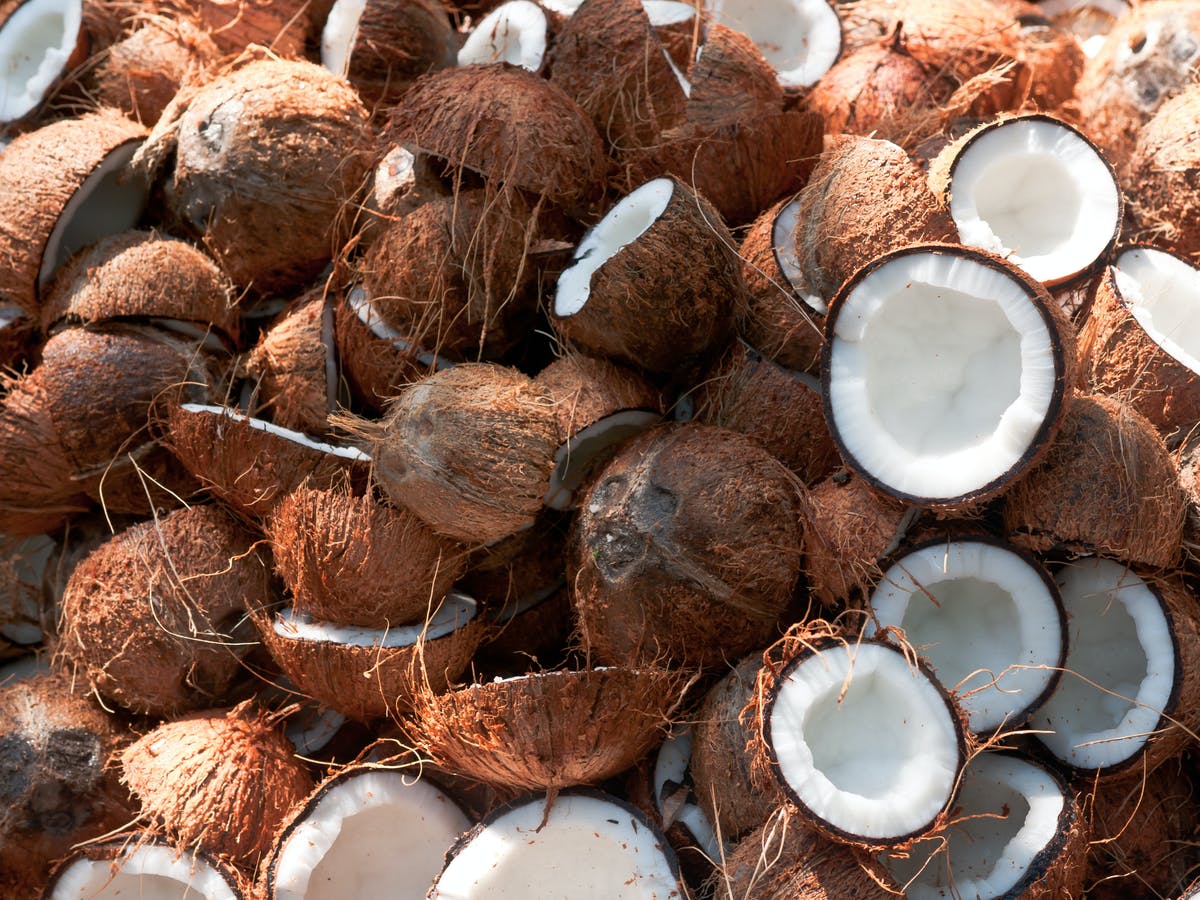
According to the Lagos State Coconut Development Authority (LASCODA), Nigeria currently produces between 265,000 and 300,000 metric tonnes of coconut annually. This accounts for barely 25 per cent of the country’s growing domestic demand.
In an interview, Mr John Oladapo Olakulehin, a former general manager of LASCODA highlighted a critical three-tiered problem within the sector’s production, processing and marketing process.
“Our coconut demand is exploding, but domestic production is stagnant. We are importing what we should be exporting. Seventy per cent of coconuts consumed in Nigeria are sourced from Ghana, Côte d’Ivoire, The Gambia and Philippines. These import trends cost Nigeria billions of naira annually,” he said.
Coconuts are among the few agricultural products with near total economic circularity. From coconut water to oil, milk to flour, coir to activated charcoal, over 50 viable products can be derived from the tree. Coconut oil remains a global staple in cosmetics and pharmaceuticals. Coconut milk is in high demand as a dairy alternative; coconut flour is a gluten-free favourite among health-conscious consumers. The shells are turned into charcoal and crafts, while the husks produce coir for mattresses, ropes and erosion control mats.
Dr Chinelo Obasi, an agricultural economist, explained that Nigeria’s coconut value chain had the potential to generate over N500 billion annually if properly structured.
“This includes upstream farming, midstream processing and downstream export. But the sector remains largely informal, under-capitalised and fragmented,” she added.
Across producing states like Lagos, Ondo, Rivers, Akwa Ibom, Cross River and Bayelsa, farmers remain eager to scale up, but face heavy constraints.
“We don’t have access to improved seedlings, fertilisers or irrigation. Sometimes our coconuts rot because there’s no processing plant nearby. Buyers dictate the prices. We are farming gold but selling it like firewood,” Chief Bassey Etim, a coconut farmer in Akwa Ibom said.
The long gestation period of traditional coconut trees – sometimes 10 years – also discourages youths from participating in commercial cultivation despite the industry’s growing appeal.
Beyond the farm, the value chain faces a quiet but dangerous threat: product adulteration.
Mr Ben Odion, a Lagos-based food scientist, expressed concern over the growing sale of fake coconut oil in Nigerian markets.
He said, “Because of high demand, some producers mix coconut oil with paraffin, palm kernel oil or chemical thickeners to increase volume and profits. This not only puts consumers at risk but also damages the credibility of genuine local producers.
“Without regulatory oversight and enforcement, we risk flooding the market with fake products that threaten lives and livelihoods.”
In a view to addressing the status of the upcoming coconut development projects and verifying progress made under some initiatives, our reporter reached out for comments and clarifications. However, the current general manager of LASCODA failed to provide any formal update, and multiple attempts to contact the president of NACOPMANN also proved abortive. Calls, emails and official messages went unanswered at the time of filing this report.
If Nigeria can align policy, capital and innovation behind this super crop, the industry has the potential to transform not only agriculture but the broader economy. Time is of the essence. Neighbouring countries such as Ghana and Côte d’Ivoire are fast advancing their coconut export industries; and the global market share is shrinking.
Coconut may appear simple, but within its shell lies an ecosystem of wealth, wellness and opportunities. Whether Nigeria chooses to harness it or let it slip through the cracks remains the million-ton question.