
Concrete action required to save Africa
The three-day African Chiefs of Defence Staff Summit ended in Abuja on August 27, 2025. Attended by military representatives from 36 out of the 54 African countries, the summit served as a critical platform for dialogue about shared security challenges and exploration of strategic insights on enhancing sub-regional and continental defence cooperation. Furthermore, the summit […]
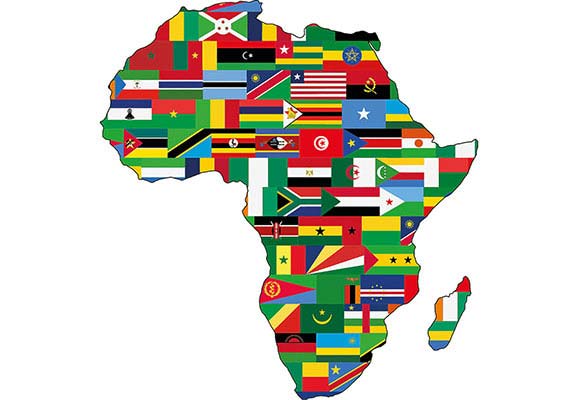
The three-day African Chiefs of Defence Staff Summit ended in Abuja on August 27, 2025. Attended by military representatives from 36 out of the 54 African countries, the summit served as a critical platform for dialogue about shared security challenges and exploration of strategic insights on enhancing sub-regional and continental defence cooperation.
Furthermore, the summit was to advance regional stability and promotion of cost-effective, African-led solutions that enhances the continent’s military ability to address a collective security which tackles the challenges of Africa’s defence landscape, including rising insurgencies, extremist threats, and cross-border terrorism.
And this landscape is unenviable. For example, Prof Ibrahim Gambari, former Minister for External Affairs and Nigeria’s former Permanent Representative to the United Nations (UN) said over 1,000 insurgent groups are currently operating within the African continent with the majority of them deadly. And this explains why Africa, particularly the Sahel and neighbouring regions, is widely considered the epicentre for global terrorism and banditry, experiencing 43 per cent of global terrorism deaths in 2022. In fact, global terrorism deaths and attacks, especially in West Africa’s coastal states surged by 250 per cent in just two years. This is perpetrated by groups including Al-Shabaab, Boko Haram and its splinter Islamic State West Africa Province (ISWAP), al-Qaeda affiliate Jama’at Nusrat al-Islam wal-Muslimeen (JNIM) and the Islamic State affiliate Islamic State Sahel (ISIS-Sahel) and other groups operating in other parts of the continent.
There are also organised crimes on the territorial waters that feed the violence on land. In the Gulf of Guinea, piracy and illicit trade are funding terrorism.
Perhaps, many expected the summit to marshal out concrete action plans that could change the narrative of an African landscape dominated by violent extremism and deadly transnational armed groups. But for now, the summit was great in conception and rhetoric as there is yet a specific actionable programme of implementation.
Daily Trust believes that Africa has had enough of these summits. There had been several U.S.-sponsored African Land Forces Summits. The U.S. African Command (AFRICOM) had also sponsored the African Chiefs of Defence Conference (ACHOD) in 2024 and 2025.
Even the African Union (AU) has been hosting theirs. The most notable, the third meeting of African Chiefs of Defence Staff (ACDS) held in Addis-Ababa, from May 15-16, 2003, kicked off the adoption of “The Policy Framework Document on the Establishment of the African Standby Force (ASF) and of the Military Staff Committee (MSC).” With the AU summit held in 2003 in Maputo, Mozambique ratifying it, the Peace and Security Council Protocol created the African Standby Force (Article 13) which was signed and adopted by member-states in 2004.
In 2013, the African Capacity for Immediate Response to Crisis (ACIRC) was set up as a temporary rapid intervention force until ASF was ready. In the end, ACIRC too, was never deployed. In 2019, the AU integrated ACIRC into the ASF framework envisaged to operate with five regional brigade-sized standby forces, each in east, west, central, north and southern Africa. Each brigade was to have about 5,000 members for an overall strength of 25,000 personnel.
The only good the ASF initiative achieved was to use the force’s capabilities to deploy the ECOWAS mission to The Gambia, while the Southern African Development Community (SADC) deployed a similar mission to Lesotho. Under this, SADC also deployed missions to Mozambique in 2021 and the botched Democratic Republic of Congo (DRC) in 2024. Likewise, the East African Community deployed a similar force in eastern DRC in 2022. Other similar arrangements include the Joint Force of the Group of Five for the Sahel, the Multinational Joint Task Force (MNJTF) against Boko Haram/ISWAP in the Lake Chad Basin, and the AU Regional Task Force against the Lord’s Resistance Army in Uganda.
But these were stop-gap interventionist forces. Therefore, Daily Trust calls on African leaders to stop being shy of taking action. Arising from the summit, the continent’s military leaders should move beyond the current ad hoc troop coalitions and mobilise their militaries especially as the unipolar world today does not favour Africa in terms of growth and stability, which explains the myriad of wars and crises within it.
Perhaps, it is pertinent to remind African political and military leaders again to take ownership the continent’s security architecture. The only way for Africa to escape the scourge of terrorism, civil and predatory wars, organised crime, and other forms of insecurity is operationalization of coordinated continental response. It is not in summits and issuance of communiques. The era of endlessly waiting for bilateral and multilateral partners to bail Africa out of its insecurity has become mere wishes.
Moreover, African leaders should strengthen their local Defence industries, using modern technologies to source the weapon systems for tackling the threats in order to guarantee human security. Each nation should secure itself before securing their sub-region and continent.
The militaries should mobilise and deploy new technologies like unmanned aerial systems and improvised explosive devices to counter threats against the people. Every African deserves to live in safety and dignity and this can only be achieved through a united approach.
Also, the idea of regional and continental standby force should move beyond declarations. The much talked about African Peace and Security Architecture must stop being a mere proposal but operationalised with specific modules and deployment concepts. This is supposed to be the essence of the summit.