
Controversy over status of Ikeja DisCo, Egbin power plant
Controversy has ensued over the current ownership of Ikeja Electricity Distribution Company and Egbin Power plant following an advertorial on the purported appointment of a receivership to take over the company. The advert had claimed that a court gave an order for FBN Quest Trustees Ltd. to take over assets of shares of Sahara Energy […]
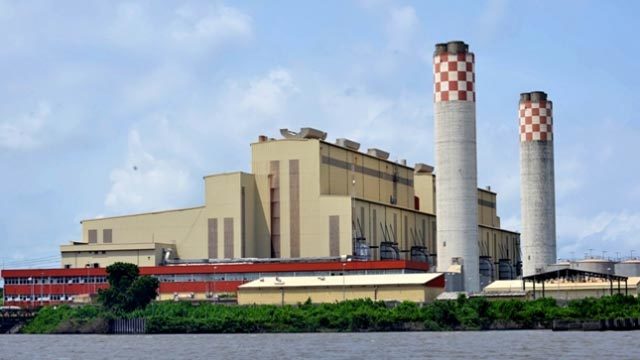
Controversy has ensued over the current ownership of Ikeja Electricity Distribution Company and Egbin Power plant following an advertorial on the purported appointment of a receivership to take over the company.
The advert had claimed that a court gave an order for FBN Quest Trustees Ltd. to take over assets of shares of Sahara Energy over its inability to pay its debt.
But a reaction from the company refuted the claim as it stated that the matter is still in court and no verdict has been given.
Daily Trust reports that the power plant has an installed capacity of 1,320 megawatt but contributes 624 megawatt to the national grid, the highest.
Ikeja DisCo is also the most commercially viable among the 11 DisCos in the county, raking in N37bn in the month of May alone.
It would be recalled that the GenCos owner recently raised an alarm that the N4trn debt owed to them by the federal government might lead to shutdown of their activities.
The debt which is the subsidy the government pay to subsidise electricity for Nigerians has raised controversy over the government’s lack of fund to sustain it.
This is not the first receivership in the sector as over five Electricity Distribution Company (DisCos), have since privatisation in 2013, undergo receivership due to inability to pay their creditors who provided the funds to buy the companies from the federal government.
What the advert said
“Take notice that ‘Kunle Ogunba ESQ. SAN, legal practitioner of Insolvency Forte, House 1928, Isale Eko Avenue, Dolphin Estate, Ikoyi, Lagos, has been appointed RECEIVER/MANAGER by MESSRS FBNQUEST TRUSTEES LTD. over the entire undertakings, stocks, good will, plant and machinery, moveable and fixed properties or assets of KEPCO ENERGY RESOURCES NIGERIA LTD. RECEIVERSHIP and its 70% stake in EGBIN POWER PLC., pursuant to a SECURITY DEED dated the 21st day of AUGUST, 2013 registered at the Corporate Affairs Commission, Abuja on the 22ND day of JANUARY, 2014. The Deed of Appointment of Receiver/Manager dated the 19th day of June, 2025 has been duly registered with the Corporate Affairs Commission, Abuja.
It urged all debtors of the company to preserve the assets in furtherance of the ongoing receivership exercise and for creditors to send their proof of claims to the Receiver/Manager within 14days from date of this publication.
Sahara Group‘s response
Responding Sahara Energy in a statement said the report sourced from misleading advertorial is false.
It said contrary to a subsisting court ruling, erroneously claimed the appointment of a Receiver/Manager over KEPCO Energy Resource Nigeria Limited, NG Power-HPS Limited, and New Electricity Distribution Company, with operating companies as follows: KEPCO (Egbin Power), NG Power-HPS Limited (FIPL) and New Electricity Distribution Company (Ikeja Electric).
“We state unequivocally and for the record that Egbin Power Plc, First Independent Power Limited, and Ikeja Electric Plc are absolutely not in Receivership, and their assets, businesses, or undertakings are not under the management of any external Receiver/Manager whatsoever,” Babatunde Osadare, Chief Legal and Regulatory Officer, Ikeja Electric, said on behalf of the power companies’ Management.
Osadare said the claims were not only false, but represent a gross misrepresentation of facts and a malicious attempt at self-help designed to subvert the course of justice.
According to him, in definitive rulings delivered on August 5, 2025 (Suit Nos. FHC/L/CS/1242, FHC/L/CS/1244, FHC/L/CS/1245), the Honorable Justice Akintayo Aluko of the Federal High Court in Lagos explicitly restrained the Lenders and their purported Receiver/Manager from taking any adverse actions.
Osadare said the ruling specifically prohibits the purported Receiver/Manager from: “accelerating the disputed loan facility before its maturity; interfering in any manner with the assets, businesses, or undertakings of the Power Entities, including operational accounts; enforcing any share security over the assets of the Power Entities or their sponsors, based on the disputed debt; or unilaterally enforcing any finance documents related to the disputed debt.”
“We therefore urge the general public, our valued customers, financial partners, regulators, and all stakeholders to completely disregard the falsehoods presented in the aforementioned advertorials and any related press releases.
Meanwhile, the Centre for the Promotion of Private Enterprise [CPPE] said the report of the receivership highlights the persistent challenges of the power sector, which has become a troubling conundrum.
A statement by its CEO, Dr. Muda Yusuf said these challenges stem from flawed privatization processes, ageing equipment, limited technical and financial capacity of the power distribution firms, problematic pricing and tariff structures, coupled with affordability concerns among the citizenry and an unsustainable subsidy regime.
He said the result has been an acute liquidity crisis in the sector.
“There are additionally clear conflicts between the commercial objectives of private investors (DisCos and GenCos), the citizens’ desire for affordable electricity, the quest by industrialists for an investment-friendly electricity tariff, and a politically acceptable tariff regime.”
He said the government’s obstruction and the citizens’ opposition to cost-reflective tariffs, despite demands from private investors in the sector, further complicates the situation, thus creating numerous contradictions and conflicts that require careful and painstaking strategic resolution.
“What has happened to the DISCOs is also partly a consequence of the prohibitive interest rate in the economy, given the high degree of leveraging of most of the DISCOs. It is very difficult for any long-term project to survive the current excruciating lending rate in the economy.”