
COVID-19: FG launches sanitary pads distribution
The Federal Government, through the Ministry of Women Affairs, has launched a project to distribute about one million sanitary pads to women and teenage girls in the country in order to cushion the effect of COVID-19. The Minister of Women Affairs, Dame Pauline Tallen, yesterday in Kado village, Abuja, launched the project in a ceremony […]
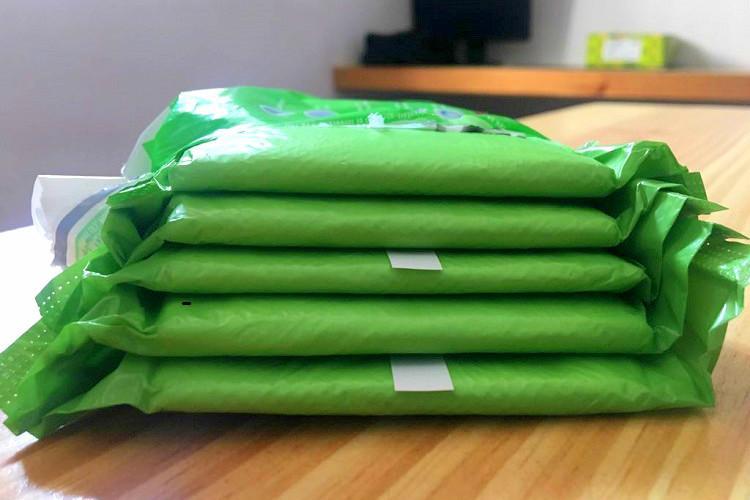
sanitary pads
The Federal Government, through the Ministry of Women Affairs, has launched a project to distribute about one million sanitary pads to women and teenage girls in the country in order to cushion the effect of COVID-19.
The Minister of Women Affairs, Dame Pauline Tallen, yesterday in Kado village, Abuja, launched the project in a ceremony organised by the ministry with support from Water Supply Sanitation and Collaborative Council (WSSCC) and other stakeholders to commemorate the 2020 World Menstrual Hygiene Day (WMHD).
The WMHD 2020 was marked with the distribution of menstrual hygiene kits to indigent women and girls at the ceremony.
Mrs. Tallen lamented lack of access to menstrual health and hygiene products, education and sanitation facilities by women and teenage girls, saying that each beneficiary would receive at least four packs of sanitary towels.
She said, “This project tagged: ‘One Million Pads Distribution Project’, is aimed at adolescent girls in all states of the federation and is hinged on the fact that girls and women’s choices of menstrual hygiene materials are often limited by cost, availability and social norms.
“Therefore, providing access to feminine hygiene products will go a long way to solve the problem to a great extent.”
The minister commended the private sector and development partners, especially WSSCC, for providing technical and financial support for the menstrual hygiene sector.
She thanked Procter and Gamble (P&G) for providing 4,000 sanitary towels to kick-off the first phase of the project.
The WSSCC National Coordinator for Nigeria, Ms. Elizabeth Jeiyol, urged all stakeholders to team up to change the negative social norms surrounding menstruation.
Ms. Jeiyol acknowledged that the COVID-19 pandemic had further worsened access to menstrual management materials.