
Criminalisation of poverty and the tyranny of wealth
In today’s Nigeria, money is no longer just a medium of exchange or a measure of economic value—it has become the yardstick for human worth, the language of social validation, and the architecture of moral reasoning. It governs not just what people do, but how they are seen. In this new order, poverty is not […]
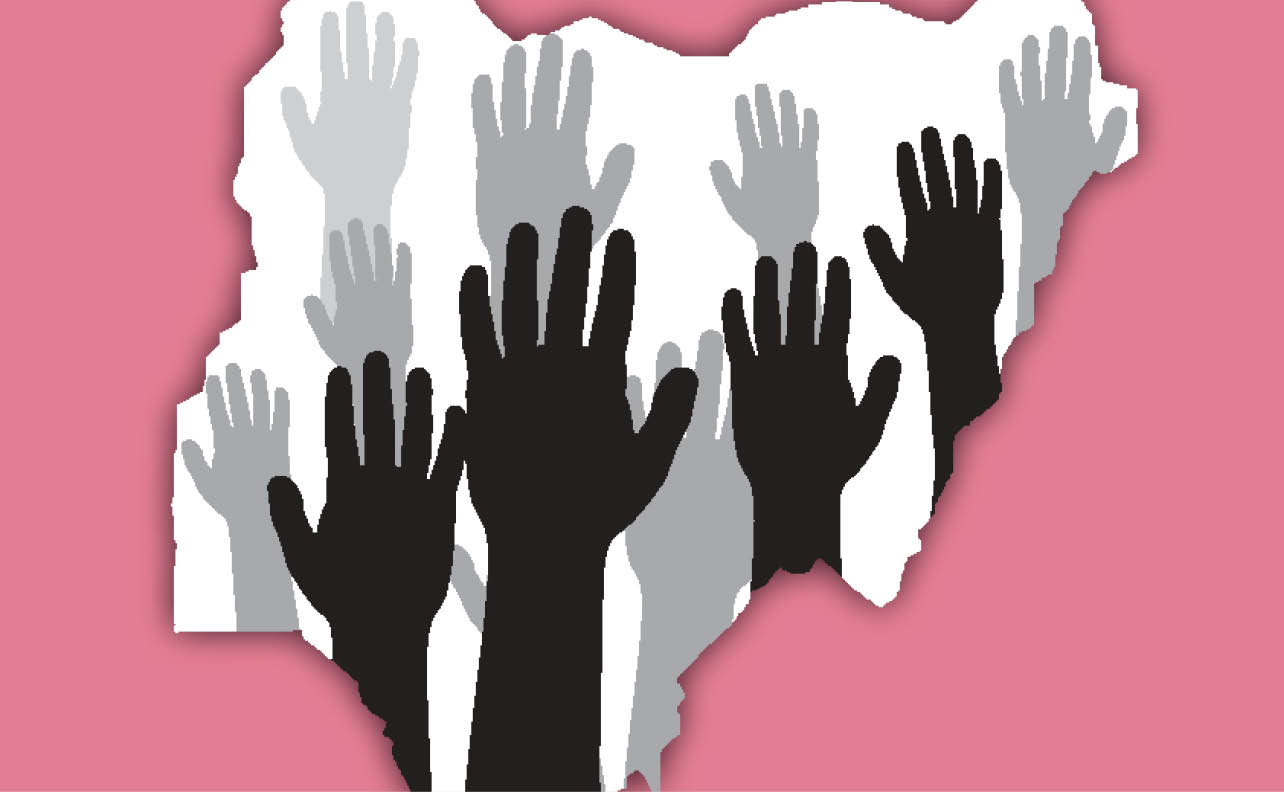
In today’s Nigeria, money is no longer just a medium of exchange or a measure of economic value—it has become the yardstick for human worth, the language of social validation, and the architecture of moral reasoning. It governs not just what people do, but how they are seen. In this new order, poverty is not merely an unfortunate condition; it is a crime. Wealth, no matter how acquired, is not just desirable—it is revered, sanctified, and weaponised.
The Nigerian obsession with money is not a novel phenomenon. But in recent years, it has reached a crescendo that borders on existential transformation. It is not simply that people desire wealth—most human beings do. The problem is that money has become the nucleus of identity, the soul of aspiration, and the primary criterion of virtue. In this society, success is not measured by contribution, character, or consistency—it is measured by how much money you are perceived to possess.
It is now common to hear people defend morally bankrupt actions with a shrug and a smirk: “At least I’m making money. That’s what matters.” This phrase, offered half in jest but fully in belief, encapsulates a dangerous shift: the displacement of values by vanity, and the replacement of principles with profit. Where once there was shame attached to dishonesty, today there is only shame in being broke.
This is not a culture that merely excuses unethical behaviour; it glorifies it—especially if it’s lucrative. Internet fraud, euphemistically referred to as “hustle” or “soft work,” is not only normalized but often celebrated. Young men with dubious income sources are praised for their “smartness,” and the idea of ritual wealth—once relegated to myth—is now openly discussed as an option. The line between innovation and immorality has been blurred beyond recognition.
But perhaps more corrosive than the idolisation of wealth is the hatred of poverty. Poverty is no longer seen as a systemic failure or a shared societal burden—it is seen as a personal flaw. The criminalisation of poverty manifests in the everyday language, attitudes, and structures that punish the poor for being poor. It is evident in the condescension with which many Nigerians speak about those with fewer means: “He’s just lazy,” “She doesn’t think smart,” “Why can’t they just hustle harder?”
This disdain is not subtle. It is etched into the very infrastructure of the economy. Landlords routinely hike rents beyond the reach of honest workers. Healthcare remains inaccessible unless one can pay in full, in cash, and in advance.
Food prices skyrocket weekly. Water, power, and shelter—needs so basic they require no defence, are treated as luxuries for the few. And all this in a country where 56 per cent of the population (approximately 129 million people) live below the poverty line, according to the World Bank. A nation with a declining GDP, crumbling productivity, and runaway inflation behaves as if everyone should be rich—and that if you’re not, it’s your fault.
Nowhere is this social hostility more visible than on social media. Platforms like Twitter (now X) have become digital coliseums where the poor are not just mocked but dehumanised. Users gleefully dig through others’ timelines to find evidence of past giveaways, using them to discredit opinions and silence dissent. “You can’t speak on national issues—you’re broke,” they imply. In this dystopia, money is not just power; it is voice. And the voiceless are those who dare to speak without wealth.
One recalls a particularly telling incident: a Twitter user criticises a corrupt political figure. Rather than engage the argument, opponents post screenshots of the critic’s past plea for financial assistance. The message is loud and clear: Your poverty disqualifies your perspective. In that moment, it is not the corrupt politician who is condemned, but the poor citizen who dares to hope for better.
What we are witnessing is not just a moral crisis—it is a philosophical inversion. Traditionally, societies elevated values such as integrity, compassion, service, and wisdom. But in Nigeria, these virtues are increasingly subjugated to the tyranny of wealth. Even within families, parents now measure the worth of their children by their bank accounts, not their character. Stories abound of mothers who once feared their sons falling into crime but now silently celebrate their sudden affluence—regardless of the source.
This commodification of the soul comes at a cost. It corrodes empathy, fractures community, and destroys the very possibility of collective progress. If every man is only as good as his wallet, then there is no shared destiny, only private pursuits. If values are abandoned for gains, then what remains to hold society together?
The tragedy is not that Nigerians want wealth—it is that many have abandoned all else for it. In this moral economy, poverty is treated like a moral failing, and money is treated like a divine right. This is the soil in which corruption grows, the atmosphere in which impunity thrives, and the culture in which hope suffocates.
Yet, there is still a choice to be made. A society can choose what it worships. It can choose to dignify work, to respect honesty, and to protect the vulnerable. It can choose to see poverty not as a crime, but as a challenge to be addressed with justice and solidarity.
Until then, we must confront the uncomfortable truth: Nigeria is not just a poor country, it is a country that hates the poor. And until that hatred is undone, no amount of wealth will redeem us.
Terhemba, a development practitioner and democracy advocate, can be reached via [email protected] or on X @Victor_Terhemba.