
Customs engages banks, lawmakers on AI-driven revenue collection
The Nigeria Customs Service (NCS) says it will synergise with key stakeholders across the revenue value chain, including collecting banks, external auditors, and the National Assembly (NASS), to deepen Artificial Intelligence (AI) in revenue generation, remittance, and reconciliation processes. The Comptroller-General of Customs, Adewale Adeniyi, made the call in Abuja during the opening ceremony of […]
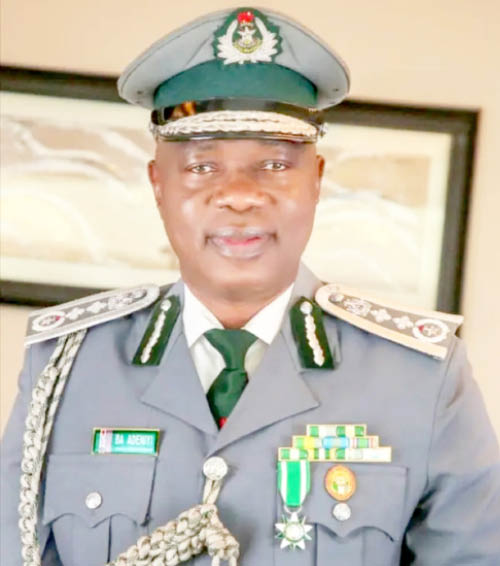
adewale adeniyi (comptroller general of customs)
The Nigeria Customs Service (NCS) says it will synergise with key stakeholders across the revenue value chain, including collecting banks, external auditors, and the National Assembly (NASS), to deepen Artificial Intelligence (AI) in revenue generation, remittance, and reconciliation processes.
The Comptroller-General of Customs, Adewale Adeniyi, made the call in Abuja during the opening ceremony of a training on AI-driven revenue generation, remittance, and reconciliation, organised for stakeholders within the Customs operational and oversight ecosystem.
Adeniyi explained that revenue administration is not a standalone function but a complex system involving multiple actors, including banks, auditors, policy committees, and legislative oversight institutions.
He noted that effective coordination among these institutions remains essential to achieving transparency, accountability, and efficiency in public finance management.
He further observed that the evolution of public sector oversight has shifted traditional practices, where legislative committees mainly issue summons for financial explanations, toward a more collaborative approach in which institutions like Customs now engage proactively with oversight bodies to strengthen compliance and transparency.
He explained that “AI is not being introduced in isolation but is being integrated into already existing technological systems to enhance efficiency and accuracy. Revenue generation and reconciliation process involves a long and interconnected value chain, from Customs operations to banks, platform owners, auditors, and National Assembly committees. Also strengthening each link in the chain is critical to ensuring leak-proof revenue collection and improved financial accountability.”
Adeniyi added that the training was designed to equip stakeholders with practical understanding of how AI can be applied across the entire revenue ecosystem to improve coordination, transparency, and performance.
In her welcome address, Kikelomo Adeola, Deputy Comptroller-General of Customs in charge of Finance, Administration and Technical Services, said the Nigeria Customs is strengthening its commitment to transparency, efficiency, and accountability in public financial management, noting that in today’s increasingly complex financial environment, there is a growing need for stronger systems that support accurate revenue processes and improve institutional coordination.
Hon. Bamidele Salam, Chairman of the House of Representatives Committee on Public Accounts, in his goodwill remarks at the event, said the committee’s engagement with the Nigeria Customs reflects its constitutional mandate to ensure accountability and compliance with financial regulations.
He explained that over the years, the committee has consistently examined audit queries, particularly from the Office of the Auditor-General, with a focus on strengthening institutional discipline rather than punitive action.