
“D-Day” celebrations in perspective
On the 6th of June 2019 all the pomp and pageantry which Britain the US and France could muster was poured into celebrating the 75th Anniversary of D-Day. Within the military, D-Day is the day on which a combat attack or operation is to be initiated. June 6th 1944 was the day during the Second […]
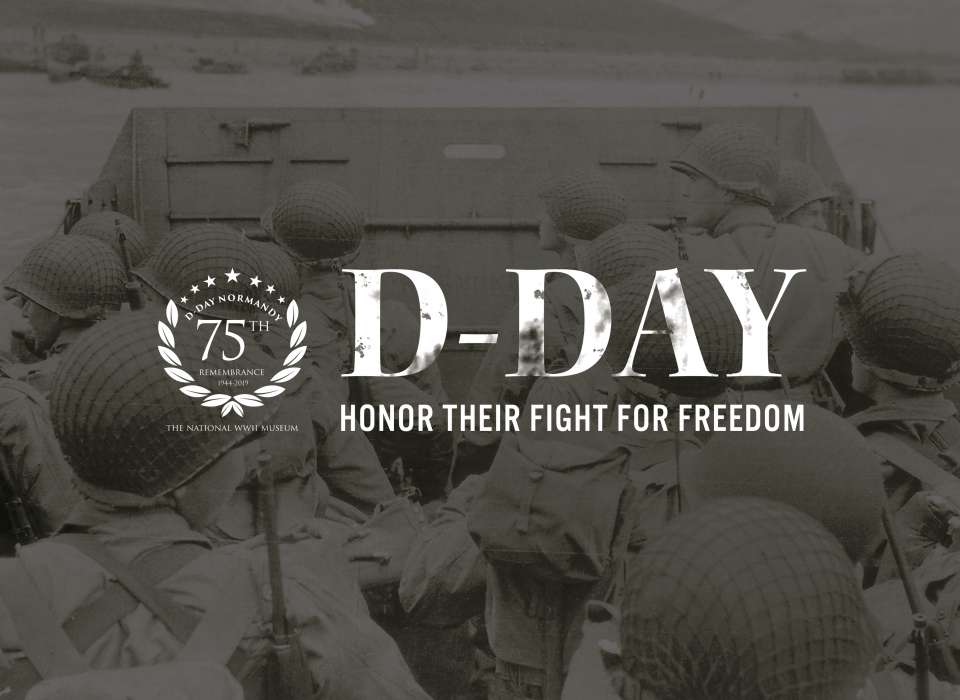
On the 6th of June 2019 all the pomp and pageantry which Britain the US and France could muster was poured into celebrating the 75th Anniversary of D-Day. Within the military, D-Day is the day on which a combat attack or operation is to be initiated. June 6th 1944 was the day during the Second World War when the greatest ever assemblage of military might, under the control of the “allied forces”, of Europe and America opened up a second front against Hitler’s armies by invading Normandy in German-occupied France.
Although “World War II” involved only 30 countries and the fighting was mainly limited to Europe, North Africa and Asia, it was the biggest and deadliest war in history. Celebrating D-Day is a quirk which lends credence to the allegation that some Western Nations are locked into their glorious but vanished past. D-Day wasn’t the day the war ended, which came months later in 1945. It wasn’t even the day in which the most casualties were recorded.
That heartrending day was August 6th 1945 when the Japanese lost an estimated 90,000 as a result of the nuclear bombing of Hiroshima City. That particular bombing is memorable because despite the proliferation of nuclear weapons, it represents one of only two times they have ever been deployed against an enemy in warfare. The second time was on the 9th August 1945 when another nuclear bomb was dropped on the City of Nagasaki. On both occasions it was the Americans bombing the Japanese. This isn’t to say that D-Day wasn’t in itself a horrendous slaughter.
On that day, allied ground forces recorded over 37,000 dead, and allied air forces an additional 16,714. All told, including German soldiers over 420,000 troops were killed, wounded, or went missing during the Battle of Normandy. The immense scale of the operation can be appreciated by the fact that in spite of the slaughter, over 50% of those involved survived the battle. Tragically, of the estimated 70–85 million people who perished either directly by the fighting or indirectly from war-related decease and famine, 50-56 million were civilians.
For the former Soviet Union in particular, D-Day came far too late. The delay in launching a second front cost them dearly. They lost an estimated 8.7 million soldiers in the course of the war as a result of taking on the Germans virtually single-handedly prior to D-Day. It’s understandable that they should be irked at celebrating of D-day more lavishly than the day the war actually ended. The moving speeches by the US President and the British and French Prime Ministers were centered around honoring peace and international cooperation, as well as the hope that “never again” would so many lives have to be sacrificed for good to triumph over evil.
That statement gives an insight to a stereotype lingering from that time, which is that in 1945 Germans were bad people. The truth is that on the whole they weren’t. They simply had bad leaders and they followed them. Germans soldiers like most soldiers before and since, simply obeyed orders. Those who resisted Hitler’s Nazism were disposed of with alacrity and brutality. His Holiness the Pope was constrained to mention this and the fact that during the war so many lives were needlessly lost on both sides.
The D-Day celebrations ignore the fact that the world has moved on since 1945, and celebrating wartime achievements can be offensive to former enemies who are now allies. Back in 1945 Britain and Europe stood shoulder to shoulder against Germany. Nowadays Europe and Germany stand shoulder to shoulder against Britain and their BREXIT shenanigans. Clothing the D-Day operations in the toga of the Allies finally standing up against oppression and human-rights abuses is ironic to say the least. When the British declared war on Germany “in defense of liberty”, they controlled numerous Crown Colonies, Protectorates, and the Indian Empire.
Indeed, the contribution of the British Empire and Commonwealth in term of manpower and material was critical to the war effort. Troops from member countries fought in every theatre of war throughout the various campaigns. Other European countries such as France, Belgium, Netherlands, and Italy also had colonies which were exploited sometimes brutally for natural and labor resources. Many of the D-Day survivors reflect on the fact that what was so painfully won back then is being put to one side. Nations are becoming more racially prejudiced, and warfare has become a worldwide regular occurrence.
In sober reflection, the survivors of the horrendous slaughter continue to ask themselves whether truthfully their arguments and differences at the time were so deep that there was no alternative other than to kill each other on such a massive scale. It’s trite that only nations “win” or “lose” wars. When all is said and the fighting ends, there really are no victors or vanquished amongst the citizenry, just the survivors and the dead! Perhaps it’s time the D-Day celebrations are put to one side and the world moves on with trying to re-establish the spirit in which so many young men gave up the lives in order to make the world a better place for all.