
Dangote’s 20,000MW power project to transform Africa’s energy future
Aliko Dangote, Africa’s richest man and President of the Dangote Group, has announced plans for a massive 20,000-megawatt power project, signaling a major expansion of his industrial empire beyond cement, oil refining, petrochemicals, and fertiliser production. Dangote disclosed the ambitious energy plan during an interview with Makhtar Diop, where he outlined a broader strategy aimed […]
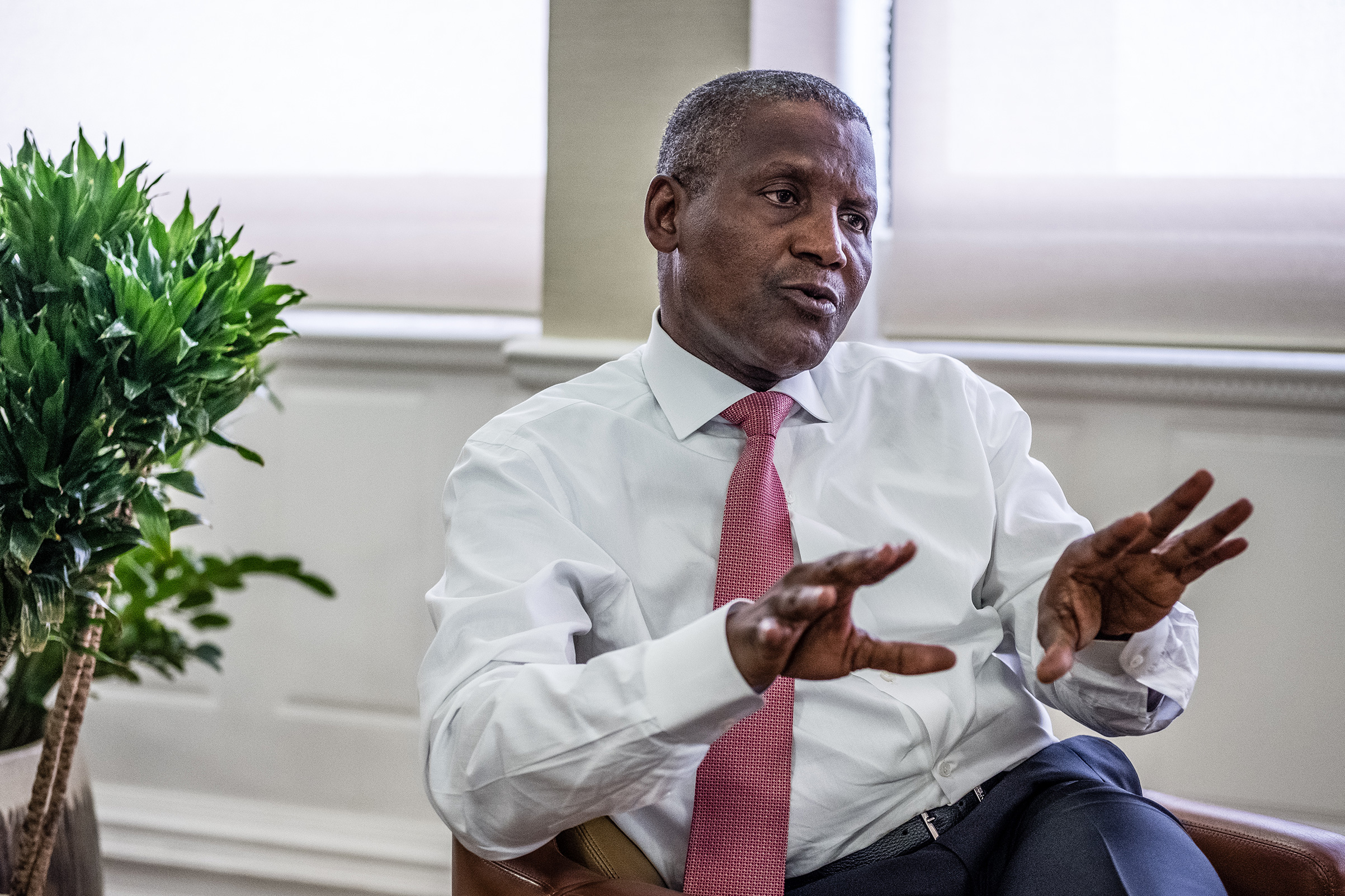
Alhaji Aliko Dangote.
Aliko Dangote, Africa’s richest man and President of the Dangote Group, has announced plans for a massive 20,000-megawatt power project, signaling a major expansion of his industrial empire beyond cement, oil refining, petrochemicals, and fertiliser production.
Dangote disclosed the ambitious energy plan during an interview with Makhtar Diop, where he outlined a broader strategy aimed at addressing Africa’s critical infrastructure and industrial needs.
According to Dangote, energy remains one of the continent’s most urgent development priorities alongside fertilisers and industrial raw materials. He explained that Africa’s long-term economic growth depends heavily on improving access to reliable power, industrial inputs, and locally produced petroleum products.
“We are now going into power—20,000 megawatts,” Dangote stated, revealing the scale of the planned project.
The announcement represents one of the largest privately driven power ambitions ever proposed in Africa. If achieved, the project could dramatically reshape Nigeria’s electricity landscape, where power shortages and unreliable supply continue to hinder economic growth and industrial productivity.
Nigeria currently has an installed electricity generation capacity of roughly 13,000MW but a significant portion of it is often unavailable due to what stakeholders attribute to aging infrastructure, gas supply constraints, transmission limitations, and operational inefficiencies.
A new 20,000MW power initiative would therefore represent a transformative addition to the country’s energy sector.
Dangote linked the expansion into power generation to the growing financial strength and operational success of his conglomerate. He explained that stronger cash flows and increased financial flexibility now allow the company to pursue larger-scale investments across multiple industries.
According to him, the Group’s current financial position provides significant room for additional capital raising and expansion.
However, he did not provide detailed information regarding financing structures, project timelines, locations, or the specific energy sources that would power the proposed facilities.
The billionaire businessman also highlighted several other ongoing industrial projects that form part of his long-term vision for Africa’s economic transformation.
Dangote revealed that his company is aggressively expanding its fertiliser operations and expects to become the largest fertiliser producer in the world within the next two and a half years. The Group is currently scaling up urea production capacity to 12 million tonnes annually while also developing potash and phosphate mining projects in the Republic of the Congo and Brazil.
In addition, Dangote announced plans to construct one of the world’s largest deep-sea ports with an 18-meter draft, further strengthening logistics and export capabilities for African industries. He also confirmed ongoing investments in liquefied natural gas (LNG), reinforcing the company’s broader diversification strategy.
The announcement comes amid the rapid expansion of the Dangote Petroleum Refinery, the massive US$20 billion refinery project widely regarded as one of Africa’s largest industrial developments.
The refinery currently has a processing capacity of 650,000 barrels per day and is being scaled toward a target of 1.4 million barrels daily.
The facility has already played a major role in improving fuel availability in Nigeria and surrounding African markets, particularly during recent global energy disruptions caused by geopolitical tensions in the Middle East.
Dangote emphasized that his investments are not solely commercial ventures but part of a broader mission to demonstrate Africa’s industrial potential and attract more investment into the continent.
According to him, African entrepreneurs must take the lead in investing within the continent before expecting international investors to commit significant resources.
He stated that his willingness to invest personal capital into large-scale African projects has given him credibility when advocating for the continent as a viable investment destination. Dangote said his success demonstrates that transformative industrial projects can be achieved in Africa despite long standing economic and infrastructure challenges.
The proposed 20,000MW power project could become one of the defining infrastructure initiatives in Nigeria’s modern history if implemented successfully.