
Democracy day: What June 12 means to us – Citizens
Nigeria marks another Democracy Day today, June 12. This year’s celebration marks Nigeria’s 25 years of uninterrupted democracy since the return to civilian rule in 1999. It is the longest democratic period in the country’s history. The general perception of democracy varies across different regions and populations, but global surveys indicate a mix of support, […]
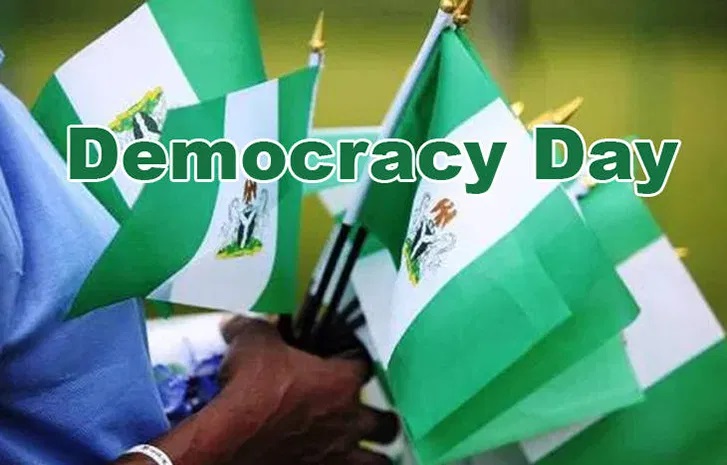
Nigeria marks another Democracy Day today, June 12. This year’s celebration marks Nigeria’s 25 years of uninterrupted democracy since the return to civilian rule in 1999. It is the longest democratic period in the country’s history.
The general perception of democracy varies across different regions and populations, but global surveys indicate a mix of support, scepticism and concern about democratic governance.
Experts often assess democracy more positively than the general public, highlighting a gap between institutional performance and citizen expectations.
Many people express dissatisfaction with their governments, feeling that political institutions do not effectively represent their interests.
In separate interviews with Daily Trust, some Abuja residents, ranging from students to professionals, shared their feelings about how democracy has impacted their lives and how they perceive the current administration.
Tabitha Onah, a corps member serving in Abuja, said despite the promise of democracy, the impact on ordinary citizens remains harsh.
“Since President Tinubu assumed office, things have gotten noticeably harder. The cost of living has skyrocketed – transport fares, food prices, and necessities have all doubled or tripled,” she said.
Although she welcomed the recent upward review of the minimum wage for corps members, she said it barely scratches the surface.
“The ₦33,000 I earned monthly couldn’t sustain me. The new ₦77,000 feels like a relief, but still doesn’t match the rising cost of living. It’s just survival every day,” she added.
Onah also questioned the state of democratic freedom in the country, citing the political crisis in Rivers State as an example.
“When I heard about the removal of an incumbent governor in Rivers, I began to question if we were still in a democracy or moving toward dictatorship,” she said.
Chidera Vitalis Ononiwu, founder of Africa Students for Sustainability, said fairness in appointments has been lacking.
“The performance of this government in terms of democratic values is moderate. Most appointments are from one ethnic background, which doesn’t reflect the diversity of Nigeria,” he said.
Ononiwu added that the country needs “a democracy of welfarism” that reaches even the grassroots.
“We need a democracy that includes everyone and checks all arms of government. Right now, it feels like the other arms are being sidelined,” he said.
For Jeremiah Yibowei, a web developer, the last two years have brought only hardship.
“In the last two years, the price of food, transport, healthcare, and gas has increased by more than 80 per cent. Only a fool would see positives in this administration at this time,” he said.
Yibowei added that the government still falls short on basic infrastructure and accountability.
“We still suffer from corruption, religious persecution and poor healthcare. Without accountability, a functioning administration can’t exist,” he said.
On democracy itself, he described it as “a complex reality.”
“Democracy in Nigeria is a work in progress. It’s a fight for representation, a test of leadership, and a show of people’s resilience. But it still has a long way to go,” he said.
Asked if democracy has worked for people like her, Amina Maikasuwa, a student and tailor in Abuja, said the system feels distant from her daily struggles.
“Sometimes I don’t even feel like I’m part of whatever is going on in government. Prices go up, and nobody explains anything. We just adjust and move on,” she said.
She called for better inclusion of women and small business owners in policy making.
“If democracy is for the people, then our needs should matter. We need leaders who listen to the business women, not just the rich,” she added.
The Executive Director of the Resource Centre for Human Rights and Civic Education (CHRICED), Dr. Ibrahim Zikirullahi, said that the two years of President Tinubu’s administration have been marked by political and economic turbulence, casting a shadow over Nigeria’s history.
“The ideals of the June 12 struggle—symbolising hope and economic emancipation—now seem distant, as many Nigerians grapple with daily challenges.
“Rather than ushering in a new era of progress, this administration has exacerbated the suffering of the masses. The stark contrast between expectations and reality serves as a reminder that governance must align with the needs of the people,” Zikirullahi said.
‘Mass political defection, dangerous precedent’
A Kano resident, Hamisu Ibrahim, said Tinubu is setting a very dangerous precedent with the current mass defection to his ruling party, the All Progressives Congress (APC).
“Tinubu is gradually turning our country into a one-party state, which is very bad for a country like ours,” he warned. “At least, we never expected this from a perceived democrat and beneficiary of the multi-party democracy system.”
Another resident, Balarabe Sule, believed that though the president has done well in some areas of upholding democratic ideals, more still needs to be done to get it right.
“Despite some challenges, I will still give him credit in some of his policies, such as trying to give local governments autonomy. This is a monumental achievement for our democracy.
“But that does not mean everything he has done is right, I am not happy with the way he is buying opposition out and shutting dissenting voices,” Sule added.
In the same vein, some citizens in Benue State expressed disappointment with the current democratic system under President Ahmed Bola Tinubu’s, which they believe has brought nothing but untold hardship.
A pro-democracy activist, Attah Ede, described Nigeria in the past two years as “critically sick and currently in the intensive care unit awaiting surgical operation” by a would-be right leader in the next political dispensation.
He worried that since Tinubu assumed office, “Nigerians have not known peace, they can’t feed well, enjoy electricity supply and move freely across the states. Nigerians are faced with insecurity, economic hardship, hunger, hard policies, anti-people’s programs and policies, resulting in a quantum of deaths.
“Tell me how a person who is paying for fuel now at the cost of almost N1,000 per litre from a previous price of N195.00, from having electricity power at a cheaper tariff to not having electricity power at higher tariffs, can say democracy is good?
“In the past two years, nobody can freely go to his or her farms, do their businesses, and go for recreation because of insecurity and kidnapping. Overwhelming insecurity, poverty and corruption are the order of the day under Tinubu. They failed to guarantee the security of the nation. Terrorists, insurgents and bandits are now running roughshod on Nigerians in Benue, Plateau, Niger, North East, South East, South South, South West, and the entire Nigeria,” he said.
Ede added that despite removing fuel subsidies under the pretence that it would save more resources to provide urgently needed infrastructures for Nigerians, the APC-led federal government had rather borrowed more money than any other government in the past.
“Tinubu is now using democracy to manipulate, intimidate and harass individual politicians and leaders to lure them into his party. Governors of different states are decamping to the ruling APC for fear of a declaration of a state of emergency in their states or for fear of being removed by rigging in 2027. What a democracy in Nigeria and under President Ahmed Tinubu!” he posited.
For Pius Elijah, also a resident of Benue, the past two years of President Tinubu at the helm of affairs in the country had only meant extreme hardship for Nigerians.
He said, “These two years of democracy under Tinubu have been a nightmare for Nigerians. Extreme suffering everywhere. Too much money is being spent on very few items. And our leaders have failed to address it.”
On her part, Tina Emmanuel said the current democracy was not anything she had hoped for in life.
“This democracy appears harsh. I don’t think Nigerians bargained for this at all. The suffering is too much,” she added.
Nigeria’s democracy not progressing – CISLAC
When contacted, Executive Director of the Civil Society Legislative Advocacy Centre (CISLAC), Auwal Musa Rafsanjani, said that Nigeria’s democracy is not progressing due to the “frightening collapse of responsible, transparent and accountable governance under the watch of President Bola Ahmed Tinubu”.
He said that the 26 years of continuous democratic governance in the country is characterised by a weakening of democratic institutions.
“Right now, the nation’s democratic institutions are at their weakest points and consistently failing the people, while authoritarian tendencies continue to rise. Failure of leadership, erosion of public trust, rising corruption, impunity, compromised electoral processes, and shrinking civic space are some of the key indicators of deliberate undermining of democratic values.
“Political leaders must retrace their steps to safeguard the democratic rule that was fiercely fought for,” Rafsanjani said.
He said that instead of building on the gains of democratic rule of the past, the country is regressing into a governance model defined by unaccountable leadership, weak institutions, killings and absolute exclusion of citizens from decision-making.
Speaking on electoral credibility and voter trust, Rafsanjani said that the organisation is concerned over Nigeria’s deteriorating electoral credibility, saying that elections have become mere exercises in futility for many citizens, marked by violence, voter suppression, vote buying, and judicial interference in electoral outcomes—creating political banditry aimed solely at state capture for personal gains.
He, therefore, called for urgent electoral and political party reforms to restore public trust in Nigeria’s democratic processes.
He also said that the judiciary is under pressure, as delays in access to justice, conflicting court judgments, and perceived political interference continue to undermine the rule of law; thus the need for comprehensive judicial reform to ensure timely, impartial justice and to uphold the supremacy of the rule of law.
He also noted that, “Despite repeated promises, insecurity continues unabated. Citizens are not safe, and the government has yet to present a coherent national security strategy that addresses both symptoms and root causes.
“The federal government must adopt a people-centred security approach that prioritises civilian protection and addresses long-standing causes of conflict.”
On the economic mismanagement and worsening poverty, the CISLAC boss said he is alarmed by the continued economic hardship facing millions of Nigerians, despite government claims of saving trillions of naira from the removal of fuel subsidies.
“While the removal was presented as a necessary economic reform, citizens have been left to suffer skyrocketing inflation, unaffordable prices for food and transport, and a lack of basic public services.
“The so-called fuel subsidy savings have not translated into tangible relief for ordinary Nigerians. Instead, more people have been plunged into poverty, unemployment remains high, and there is no clear strategy for economic recovery or social protection.
“The lack of transparency and accountability in managing these funds is widening the trust deficit between government and citizens,” he said.
More Nigerians falling into poverty – Analysts
A Zaria-based political and public affairs analyst, Dr Kabiru Danladi Lawanti, said democracy under Tinubu’s two years has not worked for Nigerians.
He lamented that the president’s economic policies, in particular, have over the past two years pushed more Nigerians into poverty, saying the policies are yet to start yielding the much-desired positive outcome.
He said, “Since the coming to office of the Tinubu administration, the economic and political lives of Nigerians have nosedived with chilling clarity. Inflation now stands at an unbearable 34.19 percent, while food inflation has crossed the 40 percent threshold.
“This means the so-called reforms reflect institutional failure, poor strategic foresight, and a deep disconnect between governance and grassroots reality.
“In the absence of coherent fiscal discipline or pro-poor policies, the people are being crushed under the weight of a system that no longer delivers security, dignity or opportunity,” the university don added.
Dr Lawanti, who also lectures at the Ahmadu Bello University, further lamented that Tinubu’s instant subsidy removal further worsened the situation, saying, “The policy initially was thought of as a strategic move. Its execution was reckless and revealed a state apparatus unprepared for the consequences.
“With petrol prices surging over 600 percent to 1,200 per litre, transportation, food distribution, and small-scale enterprise—the backbone of informal livelihoods—have been devastated.
“There is no economic model anywhere in the world where such a seismic policy shift is made without robust shock absorbers: targeted welfare programmes, supply chain interventions, and price control mechanisms.
“Instead, Nigerians were left to navigate this crisis with no buffer, no strategy, and no end in sight. What emerged was not reform, but avoidable economic trauma,” he added.
The analyst equally accused the Tinubu-led federal government of pocketing the legislature that should checkmate its excesses and the opposition that should have called attention to them.
Lawanti also blamed the government policies of directly or otherwise pushing 104 million Nigerians into multidimensional poverty. “This raises serious humanitarian concern,” he said.
“Sincerely, if this government does not quickly reorient itself around a disciplined, measurable, and citizen-focused governance strategy, the social contract will continue to fray.
“At the root of our crisis is not just a bad policy, but a political culture allergic to data, execution and long-term thinking. Nigeria needs leadership that is not merely elected but prepared—leadership grounded in systems thinking and a will to help citizens get out of this serious political and economic conundrum.
“Anything less will only deepen the hopelessness. The moment demands not technocratic tweaks or rhetorical palliatives, but a wholesale recalibration of power, purpose and performance,” he warned.
An Ibadan-based pro-democracy activist, Femi Aborishade, said President Tinubu has performed woefully in the last two years marked by “pains and agony for the ordinary Nigerians.”
Aborishade, a lawyer, said from the moment he made his ‘fuel subsidy is gone’ statement on his inauguration day, the lives of ordinary Nigerians have not been the same, whereas the oil dealers are smiling to the bank.
“So, the performance is the worst in the history of Nigeria in all ramifications. As far as unemployment is concerned, housing, living standards and of course physical insecurity, the primary root cause is economic instability.
“Once there is economic instability, there must be physical insecurity. Unfortunately, it is the regime of President Bola Ahmed Tinubu that the masses are wallowing in poverty while few people are swimming in wealth.
“Ordinary people have no food to eat, no shelter, no clothing. State governors are richer, legislators are richer, and they have benefited from the fuel subsidy removal, and the government has left the ordinary people in the cold.
“The reality we must face is that this government is the enemy of the Nigerian people.”
Tinubu urged to reassess key policy directions
Speaking on the issue, the National Chairman of the Nigerian Political Science Association (NPSA), Professor Hassan Saliu, urged the federal government to urgently reassess some of its key policy directions.
While acknowledging that a number of the policies rolled out so far are commendable, Saliu stressed that several others have failed to yield tangible improvements in the quality of life of ordinary Nigerians.
“There is a clear need for strategic adjustments,” he said. “Policies should be fine-tuned to reflect the realities faced by citizens and to ensure that government interventions produce the desired impact.”
He cautioned against premature celebration in the face of widespread hardship, noting that meaningful progress must be measured by how much relief it brings to the general population.
Also, the Country Director of ActionAid Nigeria (AAN), Mr Andrew Mamedu, demanded accountability, inclusion, and security for Nigerians as well as renewed commitment to governance that prioritises the needs and voices of ordinary citizens.
“We believe the time has come to prioritise development over politics. President Tinubu’s administration must shift focus from headline economic figures to tangible improvements in people’s lives. While paying off parts of our national debt is commendable, it is difficult to reconcile with the government’s continued accumulation of multi-million-dollar loans,” Mamedu said.
He also called for a clear and resolute stance from President Tinubu in the fight against corruption, saying high-profile cases like that of Betta Edu, accused of misappropriating social investment funds intended for vulnerable citizens, have sparked widespread outrage, yet no convictions or meaningful resolutions have emerged.
“Without a genuine, transparent and sustained anti-corruption campaign led by the president, efforts to enhance governance and drive development will continue to fall short.
“President Tinubu’s administration must act decisively to bridge inequality, ensure that growth is inclusive, and build a social protection framework that reaches those most in need,” Mamedu said.
Also speaking, a political scientist and Country Director, United States Institute of Peace (USIP), Prof. Chris Kwaja, said that the challenges facing the country are many, thus more should be done by the administration.