
Discordant tunes over ban on live political programmes in Kano
Political commentators, residents and stakeholders have expressed mixed reactions over the ban on live political programmes on radio and television stations in Kano State. The ban came barely a week after Governor Abba Kabir Yusuf publicly expressed displeasure over the growing trend of individuals using political programmes on various media platforms in the state to […]
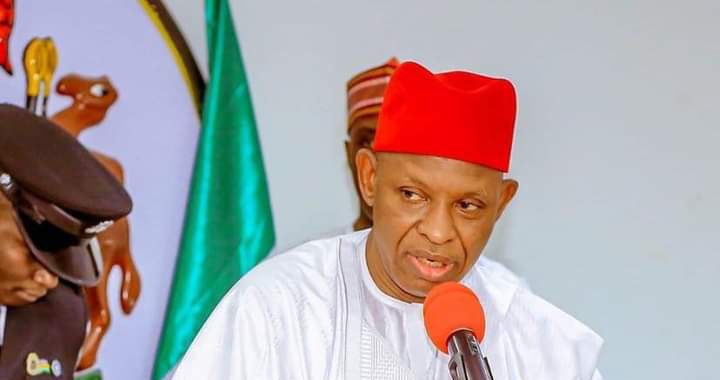
Gov Abba Yusuf
Political commentators, residents and stakeholders have expressed mixed reactions over the ban on live political programmes on radio and television stations in Kano State.
The ban came barely a week after Governor Abba Kabir Yusuf publicly expressed displeasure over the growing trend of individuals using political programmes on various media platforms in the state to display unruly behaviour, including insulting respected personalities and leaders.
In Kano State, live political programmes, particularly those aired on the more than 20 radio stations across the state, have long been seen as effective tools for reducing political thuggery.
Many politicians have used these platforms to promote their manifestos or those of their allies and to critique government policies, often citing Section 39 of the Nigerian Constitution as a safeguard for their right to free expression.
- Don’t hold more than 60,000 Riyals for Hajj, NAHCON cautions pilgrims
- Web3 ai, Aptos, Sui: 3 Crypto Projects That Raised Millions Overnight & Are Still Climbing
However, others have misused the platforms to insult, ridicule, and call respected individuals by derogatory names.
Prior to the announcement, concerns had been mounting among Kano residents over the direction these live political broadcasts were taking.
The ban is viewed by some as a response to these public concerns.
The state’s Commissioner for Information and Internal Affairs, Ibrahim Abdullahi Waiya, during a quarterly engagement with media executives, said the decision was taken to preserve Kano’s deeply rooted cultural and religious values, and to promote peaceful coexistence and mutual respect among citizens.
“The government’s position is not intended to stifle opposition or restrict freedom of expression, but rather to protect the dignity of our society and ensure that public discourse does not degenerate into hate speech or defamation,” Waiya stated in a statement signed by Sani Abba Yola, the Director of Special Duties at the Ministry of Information and Internal Affairs.
He said among the key resolutions reached at the meeting with media executives were the suspension of all live political programmes to prevent the dissemination of inflammatory or defamatory content.
He also said any guest invited for a media interview must now sign a pre-interview undertaking to refrain from making offensive, abusive, or culturally inappropriate remarks.
Broadcast presenters have also been barred from asking provocative questions or making suggestive gestures that could incite defamatory responses or actions.
Radio stations differ on ban directive
The Gauta Club, a coalition of political commentators in Kano recently revived by the state government, has endorsed the ban, citing its potential to curb vulgarity and promote peace.
“We support the resolution to censor content before it goes on air,” said the club’s chairman, Hamisu Danwawu Fagge, who added that the group would begin screening its members before any radio appearance.
Similarly, Ado Sa’idu Warawa, station manager of Freedom Radio-one of the prominent privately owned stations in Kano-argued that the ban was not imposed by the state government, but rather stemmed from self-regulation initiated by broadcast station heads across the state.
Warawa explained that he, along with other station managers, convened to deliberate and recommend the ban, which was then handed over to the state government for formal announcement.
“If this ban succeeds, then Kano has succeeded in returning to the right path of sanitising our political space and eliminating hate speech. But claiming that it was imposed by the Kano State Government, the commissioner, or even the governor, is incorrect. We, the heads of broadcast stations in the state, were the ones who recommended it in a bid to improve the quality of our work,” Warawa said.
However, Suyudi Jibril Bichi, station manager of another private radio station, Guarantee Radio, said he was neither consulted nor aware of any meeting where such a resolution was made.
“I was not contacted, nor was I part of any meeting that discussed this. I don’t know when or where it was held, or who attended it. Although I later saw representatives of Radio Kano, ARTV, Nasara Radio, Muhasa Radio and TV, Pyramid Radio, Liberty, and Freedom Radio involved.
“They acted on our behalf but without our consent. In fact, even the commissioner (Waiya), seeing the public backlash, later clarified that the government did not enact any law on the ban, but merely advised broadcast stations, which then adopted it,” Bichi said.
We’ll challenge the ban in court – Dan Bilki Kwamanda
Kano-based politician and All Progressives Congress (APC) chieftain, Alhaji Abdulmajid Dan Bilki Kwamanda, has vowed to challenge the ban in court alongside affected radio stations.
According to him, the ban and accompanying requirements imposed by the state government are unconstitutional and violate Section 39 of the Nigerian Constitution.
He criticised the NNPP-led government, calling it a major beneficiary of political live programmes, and labelled the move as selfish.
“This is a selfish and misguided attempt to deny people their constitutional rights. We won’t accept it and will challenge it in court,” he said.
Kwamanda, who has been an active participant in live political broadcasts, also argued that the decision would financially impact radio and TV stations across the state, as these programmes form a major part of their revenue stream.
A legal practitioner, Barrister Sanusi Musa, described the decision as both absurd and unconstitutional.
He said, “As a lawyer, I’m sure the commissioner has basic knowledge of the constitution, which he swore to uphold. Perhaps he overlooked section 20 of the Constitution and item 60 of the Exclusive Legislative List in the Second Schedule, Part I.
“If he had reviewed those provisions, he would realise that regulating radio station activities falls strictly under the jurisdiction of the federal government, not Kano State.
“The ban, with all due respect to my learned friend the commissioner, exceeds the constitutional powers of the Kano State Government. If the government has concerns about these programmes, it should approach the National Broadcasting Commission (NBC). If the NBC finds the concerns valid, it may take appropriate action.”
Follow NBC guidelines – APC
The Public Relations Officer of the APC in Kano, Ahmad Aruwa, criticised the handling of the ban and questioned the commissioner’s understanding of his role.
“The NBC has clear rules and guidelines. If the commissioner isn’t familiar with them, he should take the time to learn. You can’t just wake up and advise the government to ban live programmes. Did this directive come from NBC? Because I know the NBC usually communicates directly with stations and even conducts inspections before taking any action.
“To me, this feels like fear of losing the next election. That’s why they are trying to silence dissenting voices. This kind of censorship is unacceptable.
“From the APC’s standpoint, we support respectful discourse. However, this level of restriction didn’t come from us. If the government chooses this path, fine-but they must follow due process and adhere to NBC guidelines.
“The idea that people must submit written scripts before going on air is unbelievable. Are we in a military regime? The APC will not accept this and will challenge the directives through proper channels, including the NBC. This is undemocratic, and we strongly oppose it,” Aruwa said.
Listeners express diverse views
Listeners across Kano have taken varying positions on the ban. While some believe it threatens free speech and transparency, others see it as a necessary step to restore order.
Salisu Auwal, an indigene of Jigawa, said, “One thing I admire about Kano is the vibrancy of its political discourse. It keeps things transparent and engaging – banning live shows undermines that.”
Aisha Mohammed, a classroom teacher, supported the ban, saying, “Most of these programmes are filled with insults and language that go against our cultural and religious values. This will help restore decency.”
Yusuf Abdullahi, a civil servant, said, “In a politically tense environment like Kano, live broadcasts can incite violence. Pre-recording allows for proper moderation.”
Rabi’u Danladi, a public commentator, said, “Live shows often serve as platforms for propaganda and misinformation. Some level of control is necessary for public trust.”
Fatima Ibrahim, a media trainer, also expressed support. She said, “This will force broadcasters to be more professional and plan their content better. We need to move away from sensationalism.”
However, critics view the move as regressive. Salisu Ali, a student activist, said, “This is a clear attempt to silence the opposition. It contradicts democratic ideals and press freedom.”