
ECD: What government should do for children
With elections ongoing and new governments coming into office, some Nigerians share with our reporter what their expectations are for children in early childhood between ages zero to eight. Clamp down on illegal schools, better healthcare, school feeding Rev. Fr Christopher Emokhare, sma, Clergy Government should look into proper education system for children between […]
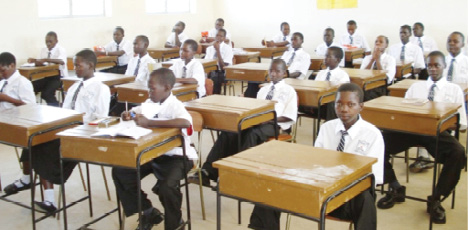
FILE PHOTO: children in school.
With elections ongoing and new governments coming into office, some Nigerians share with our reporter what their expectations are for children in early childhood between ages zero to eight.
Clamp down on illegal schools, better healthcare, school feeding

Rev. Fr Christopher Emokhare, sma, Clergy
Government should look into proper education system for children between the ages of 0 to 8. There should be a total clamp down on illegal schools in the names of Montessori, kindergarten. There should be proper assessment of those who are establishing these schools. I would also like the government to look into the health sector. Our health sector should be given proper attention so that little children are properly looked after schools should be equipped with sickbays that look after children. The Ministry of Health should collaborate with the Ministry of Agriculture to ensure that food given to children in early childhood and the imported foods are well screened so that children are not eating just anything. Also, the health of pregnant women should be prioritised.
Free healthcare and education
Ene Aba, Aid Worker

Free healthcare and free education should be given priority. For education, people who live in rural areas should be prioritised in this initiative, as poverty is one of the many reasons, children do not go to school. Parents find that the money is more useful to feed their families instead of using it on school fees. These same people can barely afford healthcare. Unfortunately, in Nigeria, without paying, people don’t get treated. It will greatly help to reduce the number of children who die of treatable diseases or become deformed from treatable diseases in early childhood when their organs and bodies are still being formed.
Free paediatric hospitals, trained ECD personnel and centres
Nafisah Atta, Entrepreneur
Early childhood should be given special catering in different ramifications by all strata of governments. There should be hospitals that are strictly paediatric with state-of-the-art health equipment, provided in every state at almost zero fee.

After school educational centres with different extra-curricular activities and almost free day cares should be established. These shouldn’t be just centres but an organised space with well-qualified child minders, special needs specialists, counsellors and trained extra-curricular activities personnel.
Protection from sexual predators, health insurance
Jerry Adesewo, Theatre Artist
Children in early childhood should be protected from sexual preys with laws enforcing severe punishments on predators. Primary school should be compulsory, not necessarily free. In Rwanda, it is a crime for your children not to be in school and not to have health insurance cover which gives children in ECD free healthcare including immunization. More platforms should be created to allow kids express themselves and learn without prejudice. Kids should be protected not exploited and should be taught to trust not fear. Government has a lot to do in this regard.
Capture early childhood education in budget
Stella Afolabi-Adeaga, Teacher
The government should make provision for grants to early childhood educational institutions in the national budget. There should also be provision of resource materials for formal and more importantly, informal classroom settings in public schools. This should also be regulated in private schools. There should be provision of play facilities and more training for the teachers in early childhood.
Prioritise free early childhood care & vaccinations
Michaela Moye, Communication Consultant
I would like the government to prioritise free early childcare. This will benefit both parents, particularly the mothers and will provide work opportunities at creches and day care centres. Also, vaccinations for children past the age of six months is currently a paid service. I would like the government to extend all children’s vaccinations to at least age six.
Free quality education, healthcare, child care support
Ejemai Eborieme, Medical Doctor/Researcher
Zero to eight years are important foundational years for children. Government should provide free and quality education and healthcare services. These must be irrespective of income levels of their guardians. Also, families with low income should be provided with support for child care.
End to out of pocket payment
 Daniel Ogbuabor, Public Health Physician, Health Economist, Member of Parliament
Government should ensure children have unhindered access to immunization especially as the immunization data is fluctuating across the country. Children should have access to healthcare and essential health services without financial constraints. The free maternal and child health programmes in health centres don’t have the institutional capacity to offer such services. These should be upgraded in terms of manpower and the facilities and also so that mothers who patronise them, stop out of pocket payment for such services. Government should ensure there is financial protection for child health services.
Looking at education, I don’t know any state which has institutionalised early childhood education. In Enugu State, lawmakers amended the law to include early childhood education. The Nigerian government should prioritise this. Public primary schools should be able to provide early childhood education. Also, the intersection between health and education means we need to rejig school health services, not as international partners dictate but using a Nigerian-based evidence to dictate and inform the interventions. Again, a child who is malnourished cannot grow into useful community member. Having an institutional policy is not sufficient to have nutritional policy. Policies must be translated into concrete action to improve early childhood nutrition. Nutrition in the first 1,000 days of a child’s life is the first most critical kick he or she gets in life. If you miss it at that point, the child is likely to be malnourished and under-performing.
Side bar
77% of children aged 12 – 23 months in Nigeria have not received all the routine vaccinations as recommended by the national EPI schedule while forty percent (40%) of children in this age group did not receive any vaccinations putting it to be far below the ninety percent (90%) national target that has been set by the country. Source: WHO
17.2m Nigerian children suffer from stunted growth. The figure represents 43.6 per cent of an estimated 40 million Nigerian children under age five. 19.4 per cent children in the South-west are stunted resulting from malnourishment. Source: UNICEF
9.1 million children are out-of-school in Nigeria Source: 2016/2017 Multiple Index Cluster Survey by the National Bureau of Statistics and UNICEF.