
Economic bleeding has stopped, says Rep C’ttee Chair
The Chairman of the House of Representatives Committee on National Planning and Economic Development, Gboyega Nasiru Isiaka, has backed President Bola Tinubu’s statement on the economic recovery, saying the bleeding has stopped. Tinubu had told Nigerians that the country has overcome its most difficult phase and is now on a path of economic recovery and […]
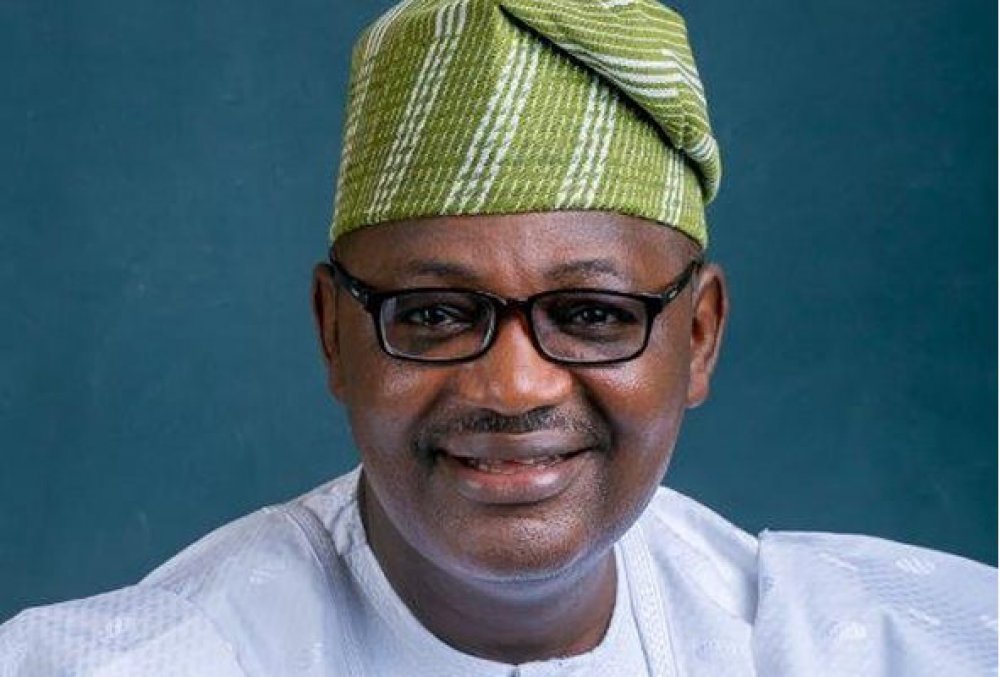
The Chairman of the House of Representatives Committee on National Planning and Economic Development, Gboyega Nasiru Isiaka, has backed President Bola Tinubu’s statement on the economic recovery, saying the bleeding has stopped.
Tinubu had told Nigerians that the country has overcome its most difficult phase and is now on a path of economic recovery and stability.
Speaking in Abeokuta, Ogun State, at the Special 65th Independence Anniversary Business Meeting of the State Chapter of the Nigerian Institute of Public Relations (NIPR), the federal lawmaker backed the president, saying the administration’s reforms are now yielding results.
Isiaka said “I also believe the economy has turned the corner. I endorse that statement in my own small capacity as the Chairman of the House Committee on National Planning and Economic Development.
“But what that means is not that we have solved all the problems, but we have stopped the bleeding.
“When this government came into power because of the policies introduced so that we began to restructure our fiscal regime, we all knew the way inflation, exchange rate, interest rates were going. All of that has stopped.”
Delivering his paper on the business meeting’s theme: “Nigeria at 65: Pathways for National Development and Economic Sustainability,” Isiaka, representing Imeko-Afon/Yewa North Federal constituency, submitted that despite many challenges including recession, Nigeria’s economy has recorded tremendous growth between 1960 and the current dispensation.
Citing different national development planning blueprints by successive administrations, the three-time governorship candidate in Ogun State, said over the years, Nigeria has been able to achieve political stability, leadership succession and economic growth.
“Our Gross Domestic Products (GDP) of 4billion dollars in 1960 is now hovering around 200billion dollars. There has been so much sectoral diversification, growth has been extended to oil, agriculture and many others.
“Non-oil revenue for the first time surpassed 20 trillion in 2025, exceeding fiscal target. There have been a lot of trade rebalancing and so many infrastructure projects,” he said.
He also listed ICT dominance in Africa, mobile revolution, advancement in education and creative industry as well as growth in the external reserve as some of the country’s gains since independence.
The lawmaker, however, identified high poverty rate, unemployment and infrastructure deficits across the country as drawbacks.
Isiaka also described uncompleted projects, power outages, microeconomy fragility and weak institutional capacity as some of the challenges confronting Nigeria.
“That tells us that there’s still a long way to go,” he submitted.
Moving forward, he called for political and governance reforms as well as a change in the leadership recruitment process and value system.
He also called for economic diversification and regional integration, and the need to tackle security challenges headlong in order to boost agriculture and food production.
Responding to questions on the agitation for more states creation, Isiaka described the demands from different parts of the country as legitimate, but expressed fears that the agitation may come into reality by before 2027 general election.
In her opening remarks, the State Chairman of NIPR, Oluwaseun Boye emphasised the need to change the narrative of negative news about Nigeria
“At 65, Nigeria needs us to do more, to uphold integrity and protect our reputation gate; to reset the national mindset by telling authentic, uplifting stories;
And to be ambassadors of hope and progress wherever we find ourselves.
“Let us be reminded: we are not who they say we are; we are who we truly are. The world is already drawn to Nigeria , they watch our movies, admire our fashion, eat our food, dance to our music, and celebrate our creativity.
“These are powerful assets of nation branding and soft power that we must leverage.
“It is time to change the narrative. Enough of the bad news. Enough of saying “Nigeria happened to us.” From today, let Nigeria happen to us in positive ways,” Boye said.