
ECOWAS and its survival
Let me begin by congratulating the government and people of Ghana on the occasion of this year’s Republic Day celebrations. I must also commend the Ghana Armed Forces Command and Staff College, Teshie, for organising this lecture. As you may be aware, Teshie holds a special place in my heart. This is where I began […]
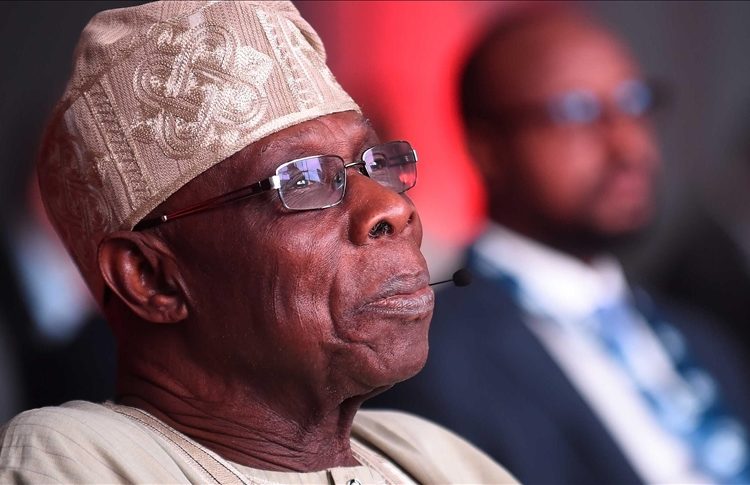
obasanjo
Let me begin by congratulating the government and people of Ghana on the occasion of this year’s Republic Day celebrations. I must also commend the Ghana Armed Forces Command and Staff College, Teshie, for organising this lecture. As you may be aware, Teshie holds a special place in my heart. This is where I began my military training sixty-seven years ago, in 1958, when I enrolled as a cadet at the then Regular Officer Special Training School (ROSTS). My presence in Teshie today brings back fond memories of my experience at ROSTS alongside brothers like the late General Joshua Hamidu and the late General Emmanuel Erskine. I am, therefore, greatly honoured that the Command and Staff College has found me worthy of delivering this year’s Republic Day Lecture.
When I accepted the invitation to deliver this lecture, I did so with mixed feelings. On one hand, I was excited to return to Teshie and speak at such an auspicious occasion. On the other hand, I was gloomy about the topic of this year’s Republic Day Lecture which is “ECOWAS and its Survival – Impact of the Alliance of the Sahelian States and Way Forward”. I was gloomy because of the dilemma in which the region has found itself. I asked myself the question which many well-meaning people have been asking recently; “How did we get here?”
Indeed, today’s lecture centres on two questions. First, how did we get here? Second, where do we go from here?
THERE WAS A UNION
Let me attempt to delve into the question of how we got here.
Fifty years ago, in1975, leaders of our West African region took the bold and visionary decision to create the Economic Community of West African States (ECOWAS) as a vehicle to foster economic cooperation, integration, and development among member states. The regional bloc operated on several fundamental principles including equality and interdependence of member states, solidarity and collective self-reliance, cooperation and harmonization of policies, non-aggression, peaceful dispute resolution, promotion of human rights, and good governance. With such principles, it didn’t take long for ECOWAS to become the pride of Africa as the continent’s most vibrant regional economic bloc. Until recently, the union recorded many accomplishments and successes which made it the envy of other regional blocs.
In the area of peacekeeping, ECOWAS interventions in countries like Liberia, Sierra Leone, Guinea-Bissau, and The Gambia among many others, helped to end conflict and provide stability.
The creation and deployment of a peacekeeping force – the Economic Community of West African States Monitoring Group (ECOMOG) – in 1990 primarily in response to the Liberian Civil War, was in my view the high point of ECOWAS’ regional peace and security initiatives and I am proud that Nigeria and Ghana were at the forefront of the contribution of troops to ECOMOG missions. In the 1990s, ECOMOG became a household name in the region and took it pride of place as Africa’s most celebrated success peacekeeping case study. In homes across the region, there was a deep connection with, and appreciation of, other West African nationals due in large part to ECOMOG. Regional solidarity and confidence in the union reached unprecedented levels. ECOMOG troops were welcomed and celebrated in troubled countries across the region in spite of allegations of human rights abuses in some cases. The achievements of ECOMOG in conflict situations in West Africa have led some commentators to describe it as “an example for the rest of the world to follow” and a “unique feat in both military and peacekeeping terms.”
In the areas of social and economic integration, the ECOWAS passport and protocol on free movement enabled citizens of member states to travel, reside, and establish businesses within the region without visas. Policies like the ECOWAS Trade Liberalization Scheme (ETLS) aimed to promote duty-free trade among member states, fostering economic integration.
Another area in which ECOWAS has achieved significant success is the area of strengthening democracy and democratic institutions in member states. In 1975 when ECOWAS was established, many of the member states were led by military juntas. The 1980s and 1990s saw a wave of democratization across the sub-region, with ECOWAS at the centre of promoting democracy by setting and enforcing democratic norms, promoting good governance, and addressing unconstitutional changes of government. This was made possible by a change in the scope of ECOWAS to include democratic principles.
ECOWAS, at its inception, was purely an economic tool with the key pillars of its establishing Treaty being (i) Economic integration, (ii) Free movement and (iii) Harmonization of policies. The treaty was established to promote cooperation and integration in order to create an economic and monetary union for economic development, growth and prosperity in West Africa. It was meant to cover all aspects of economic activity, particularly industrialization, transportation, telecommunications, energy, agribusiness, monetary and financial areas, social and cultural matters. The focus was the economic welfare and well-being of the people of West Africa through monetary and custom union binding together through legislation productive capacities and capabilities and markets of West Africa.
It took about twenty years for the scope of ECOWAS to be expanded to include issues such as democratic governance, economic and social justice, and the promotion of human rights. This expansion of the scope of ECOWAS was captured in the revised Treaty of July 1993. The difference between the 1975 Treaty and the 1993 Treaty is important to highlight because it sets the stage for understanding some of the successes of ECOWAS as well as some of the challenges bedevilling the organisation and indeed, the West African sub-region today.
I believe that some of the criticisms of ECOWAS today stem from this fundamental shift of the organisation from one which focused on regional economic integration to one which dabbled into internal political issues of member states. That shift has proven to be a double-edged sword. On the one hand, it has been used to bring peace and stability in some countries in the region such as Liberia and Sierra Leone among others. On the other hand, it has created problems that have now led to the withdrawal of three key member states, showcasing the apparent weakness of the organisation in dealing with internal political issues of member states especially when confronted by defiant leaderships.
WEST AFRICA AT A CROSSROADS
Events of the recent past have caused great concern about the fate of the union as it confronts the challenges caused by withdrawal of Mali, Burkina Faso, and Niger from ECOWAS, and their subsequent formation of the Alliance of Sahel States (AES). The region also faces challenges around the security, safety, well-being and progress of the people of West Africa. Some of these challenges include;
(i) terrorism and extremism, particularly in the Sahel states, which has led to increased violence and instability across the West African sub-region.
(ii) Increased poverty and inequality: According to reports, seven of the world’s ten most unequal countries are in Africa with West African governments being the least committed to reducing inequality on the continent.
(iii) Increased political instability leading to coups and counter-coups with six successful coups and numerous unsuccessful coups in the last five years alone.
Permit me to remind you of some of the successful coups in West Africa since 2020.
• Mali (2020): President Ibrahim Boubacar Keita was overthrown by Colonel Assimi Goïta on August 18-19, 2020.
• Also Mali (2021): Transitional President Bah N’Daw was ousted by Vice-President Colonel Assimi Goïta on May 24, 2021.
• Guinea (2021): President Alpha Condé was detained and the constitution dissolved by Colonel Mamady Doumbouya on September 5, 2021.
• Burkina Faso (2022):
• January 2022: President Roch Marc Christian Kaboré was overthrown by Lieutenant Colonel Paul-Henri Sandaogo Damiba on January 24, 2022.
• September 2022: Lieutenant Colonel Paul-Henri Sandaogo Damiba was ousted by Captain Ibrahim Traoré on September 30, 2022.
• Niger (2023): President Mohamed Bazoum was ousted by Colonel Amadou Abdramane and General Abdourahamane Tchiani on July 26-28, 2023.
Let us not bother to mention the foiled coups or alleged coups because it would seem that in a country like Burkina Faso, foiled coups have become a regular occurrence.
THE DISINTEGRATION CHALLENGE
The resurgence of coups and unconstitutional change of governments in West Africa has been a litmus test for the effectiveness and relevance, if not survival, of ECOWAS. The coups trend and the efforts by ECOWAS leaders to push back with sanctions and threats of military intervention, led to the withdrawal of Mali, Burkina Faso, and Niger from ECOWAS and their subsequent establishment of a new union, the Alliance of Sahel States (AES) about a year ago. The split by the trio has left ECOWAS in a very precarious situation. We should bear in mind that in the fifty-year history of the organisation, the exit by the AES countries was the first of such exit. The unprecedented move caught ECOWAS off guard and exposed the regional bloc’s weaknesses in dealing with defiant member states. It showed that sanctions and threats of military action were no longer enough to keep member states in check. Many fear that a heavy-handed ECOWAS would only alienate member states. And yet, what is the point of having a union if it cannot exert influence, if not control, over member states?
Ladies and gentlemen, this is the true colour of our situation in West Africa. Where then do we really go from here?
LESSONS TO LEARN AND THE WAY FORWARD
From my experience, and as is now obvious to all, regional and continental organisations are effective only to the extent to which they are able to enshrine common goals and shared benefits.
The ECOWAS story today is one which should serve as a reference point to all who are tasked with managing regional and continental organisations.
As President of Nigeria from 1999 to 2007, I have had my fair share of interaction with ECOWAS to know that what is confronting the organisation today is mostly a leadership issue. It takes great understanding of the issues confronting the West African sub-region to navigate the leadership of ECOWAS.
From 1976 to 1979, I had the opportunity to run the affairs of Nigeria as military Head of State. I assumed office just about a year after the signing of the Lagos Treaty that created ECOWAS and I immediately recognised that it was my responsibility and duty as Nigeria’s leader to join hands with my colleagues across West Africa to nurse the newly birthed ECOWAS and put it on the path of survival, growth, and progress.
My early involvement with ECOWAS culminated in my appointment as Chairman of the regional bloc from 1978 to 1979. Indeed, it was a most challenging task building such a regional organisation from scratch but with the commitment, dedication and support of all member states, we succeeded in keeping ECOWAS alive during those critical infant years of the organisation. Had we, the leaders of the West African sub-region at the time, allowed our prejudices or our egos get the better of us, ECOWAS would have never been born or would have been dead on arrival. Even in those days, we were confronted with some of the challenges of today. Yet, as responsible leaders, we managed those challenges bearing in mind that shared prosperity, collective security and collective self-sufficiency were more beneficial than ego trips, muscle flexing, or grandstanding. We were able to reach compromises even on matters bothering on sovereignty of our countries and on our individual national interests. A lot of work was put into building confidence, trust, consensus, and cooperation among member states such that even where the stick was applied, there was little doubt as to the overall motive of the initiative.
In my view, ECOWAS remains a worthy initiative and its accomplishments over the years cannot be wished away or easily forgotten in spite of overwhelming current realities, gaps, and challenges.
If we are to make any progress with ECOWAS and indeed in the West African subregion, let us consider some of the difficulties and handicaps of the Organization since its establishment and try to find solutions where possible. The first and major challenge, in my opinion, is its colonial heritage and the baggage of divisions along Francophone, Anglophone and Lusophone countries with reasonable grip on lives, economy and monetary matters by erstwhile colonial powers especially in francophone countries. Added to this are issues of political instability, corruption, internal conflicts and violence emanating from youth’s lack of education, empowerment, skills and their unemployment. Other dangers and criminalities go with these such as banditry, terrorism, violent extremism, drug and human trafficking. Elections-related violence and deadly epidemic and pandemic must not be left out.
But what are the organs and the instruments of ECOWAS to execute its program to achieve its objectives and to ward off the unwanted? Of the five major organs of ECOWAS are the Authority of the Heads of State and Government which is the highest executive body of the Organization with the Council of Ministers, followed by the Commission which carries out the day-to-day functions of running the office or the Executive Secretariat of the Organization and implementing the decisions of the executive body, the Authority and the Council. The third major organ is the Parliament which is supposed to make laws that will gradually bind the economies of the countries together. The fourth is the ECOWAS Court of Justice. And the fifth major organ is the Bank for development and Investment. There are other minor organs and instruments that are purposely created for specific functions. The structure is akin to the structure of governance of a country with executive, legislature and judiciary but in this case lacking in defence and security apparatus and maintenance of law and order.
Although progress has been admittedly slow, we have something to show for and to be proud of. ECOWAS was the most advanced and most successful of the five regional economic communities in Africa. We have common passport and we need no visa to visit the fifteen countries of ECOWAS. It would have been significantly progressive if we had immediately followed common passport with common visa which would have provided free movement within the fifteen countries for investors and visitors who want to do business with West Africa. The Bank is established and functioning. Apart from the offices of the major organs being structurally and functionally established, offices of minor organs and instruments are also functionally operational. These include Council of Ministers, the Tribunal, Intergovernmental Action Group against Money Laundering and Terrorism Financing in West Africa, ECOWAS Peace Fund, ECOWAS Plan of Action against Climate Change, Protocol on dealing with corruption: prevent, suppress and eradicate, Organization’s regional resilience strategy including governance, social protection and inclusion. Provision was made for four pillars of peace, security, stability and good governance. There is even provision of code of ethics for the States, institutions and personnel within ECOWAS. Almost every aspect that could make for a thriving, peaceful, harmonious, inclusive and united fast-developing regional economic community organization was put on paper. But they are not useful enough because they are kept more by breach, neglect and lack of accountability, transparency and implementation.
The lacuna made ECOWAS more of a paper organization not adequately fulfilling the real and genuine purpose and objectives of its founding fathers. The enthusiasm and commitment of the founders were neither matched nor maintained. Take just one aspect, corruption. Let anyone point with certainty to any country in ECOWAS where corruption in different forms or guises is not the bane of development and progress. All the four principles of equality of States, interstate cooperation and harmonization of policies, no aggression between member states and maintenance of regional peace, security, stability, predictability and prosperity through good neighbourliness were all jettisoned at one time or the other.
We do not need to go back to the drawing board, we have all we need for a bouncing, thriving and the best regional economic community organization in the world. We have made mistakes of omission and commission. Let’s follow the spirit and the letters of the Treaty, the Protocols and the essential principles, instruments and guidelines of the Organization. Let our leaders study the Treaty in detail and act to fulfil the principles and objectives of it, rather than rashly act in seeming ignorance, recklessness, and abandonment.
Let us closely look at the action of the three countries that have opted out of ECOWAS, their complaints and grievances, their reaction, the communality of interests and the need for gradual re-engineering to rebuild confidence and trust, to work together in areas of common interest such as peace, security, stability, predictability, climate, economic development of the same people across our porous borders. The grievances of the three of them were (1) no support by ECOWAS for them to fight insurgency and terrorism. (2) Threats of attack by ECOWAS countries of Nigeria, Benin Republic, and Cote d’Iviore, (3) Closure of borders against them (4) cutting off of power (5) non-provision of foreign exchange for them to import fuel. For now, they feel sore and very strongly anti-ECOWAS.
But when President John Mahama was being inaugurated as President of Ghana in January this year, the three countries were fully represented. In the case of Burkina Faso, the military leader, Captain Ibrahim Traore, was present himself and was greeted with loud and deafening ovation by the youth when he was introduced. The other two countries were represented by their Prime Ministers. In the evening of the inauguration day, I met with President Mahama. We agreed that he may be the entry point of ECOWAS in the diplomacy with the Alliance of Sahel States. His feedback after a visit to the countries indicated that with the grievances listed, they would not consider returning to ECOWAS. But they appreciated areas of common interest mentioned earlier, where bilaterally or multilaterally, ECOWAS and AES can work together. Such areas as free movement of goods and people, climate change and so on.
With the high risk of coups in the region, West Africa must find new solutions to governments emerging from non-constitutional means. The old measures have woefully failed. ECOWAS is wounded for now maybe not mortally but it is in intensive care unit. It would require strong and proactive political attention to keep it alive and healthy again, and that may take a generation.
I have two great fears – One is youth reaction to events in West Africa. They support every phase of it. Two is miliary confrontation between ECOWAS and AES with proxy war being staged in the two sub-regions of Africa. The leaders must be made conscious of these fears and avoid them like plagues.
Our leaders don’t need to act out of fear of themselves and among themselves. What they need to fear is the outside support which some of them cling to and which is expensive and may not be altogether reliable in the end. Let us correct the errors of the past without blame game. We are intertwined, intermixed, interconnected and intermingled. We cannot decouple. Whatever it is, we will remain in this region of West Africa together and we must understand that as a reality, and make amends to walk and work together regionally and as soon as we can within the same organization. We live in a common house and we should mend the house together for our common good. Living in silos makes us weak and exposed and turn us to prey for predators, no matter our population size or our land mass. But together we are strong and can face and overcome difficulties and succeed together, in common security, and shared prosperity.
Just as a matter of information, let me conclude my remarks by reflecting on fifty years of the contributions of Nigeria to the cause or objectives of ECOWAS. Let me begin with the building of befitting Headquarters and facilities to accommodate the organs of ECOWAS that are located in Nigeria. It is the obligation we accepted along with the location of the Headquarters in our country. Nigeria provided majority of troops of ECOMOG that resolved the conflicts in Liberia, Sierra Leone and Guinea Bissau and to end violence in those countries. Nigeria built roads across the border into Benin Republic and Niger Republic. Nigeria invested heavily in cement and sugar industries in Republic of Benin. Nigerian investors were encouraged and assisted to invest in cement industry in Senegal and Niger Republic. Nigeria built technical training centre for Sierra Leone to help training and rehabilitation of the demobilised fighters. Nigerian investment and investors are dotted all over West Africa with Nigerians being in command of the so-called informal economy of West Africa. The West African gas project and the power plant were spearheaded by Nigeria with loan given at concession rate for member states to contribute to the execution of the project. There are a number of other collaboration and cooperation areas where Nigeria has rightly taken lead in the past. It would appear that where Nigeria fails, other efforts fail. Nigeria has overwhelming responsibilities and obligation for the success of the sub-region in the best interest of the Organisation and particularly in her best self-interest.
Let me reiterate that West African leaders must at all times recognise that the region needs common security, peace and shared values, shared prosperity and progress. Let’s make ECOWAS a solid bloc of implementing Africa Continental Free Trade Agreement and Agenda 2063. Our collective economic prosperity and progress in Africa depend on it.
Thank you, Ladies and Gentlemen, for your attention.
The above speech was delivered by former President at the 2025 Republic Day Lecture in Ghana