
ECOWAS Court unveils roadmap to bring justice closer to West Africans
The ECOWAS Court of Justice has launched its 2026–2030 Strategic Plan in a move set to redefine the legal landscape of West Africa. Unveiled over the weekend in Abuja, the roadmap is more than just a policy document—it is a five-year pledge to make the court more accessible, efficient, and deeply woven into the lives […]
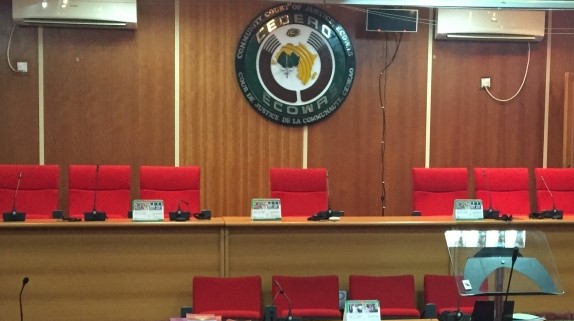
ECOWAS Court
The ECOWAS Court of Justice has launched its 2026–2030 Strategic Plan in a move set to redefine the legal landscape of West Africa.
Unveiled over the weekend in Abuja, the roadmap is more than just a policy document—it is a five-year pledge to make the court more accessible, efficient, and deeply woven into the lives of the region’s citizens.
Speaking at the launch, the President of the Court, Justice Ricardo Goncalves, described the plan as a “turning point.”
He framed the moment not as a mere ceremony, but as a firm commitment to ensuring the court remains a true pillar of regional stability.
“This moment is not merely symbolic,” Justice Goncalves told the audience. “Above all, it represents a shift. It is a clear affirmation of our collective resolve to strengthen the Court as a guarantor of the rule of law and a vital promoter of justice in West Africa.”
He emphasised that the strategy’s success depends on the “backbone” of the institution—its staff—and the “technical rigor” of its judges.
He called for a new work culture rooted in accountability, where decisions are consistent, legal processes are faster, and the court’s authority is respected across all member states.
Justice Goncalves called for the support of the civil society, legal networks, and development partners, noting that the court’s true relevance is measured by how effectively its decisions are enforced on the ground.
Earlier, the Deputy Registrar, Marie Saine, welcomed guests by highlighting the “rigorous reflection” that went into crafting the 2026–2030 framework.
According to her, the plan is guided by five strategic goals, including guaranteeing timely and impartial justice; expanding access to justice, legal empowerment and alternative dispute resolution; advancing regional integration, human rights protection and legal harmonisation; ensuring transparency, stakeholder engagement and strategic accountability; and strengthening institutional capacity, governance and resource management.
The ECOWAS Court of Justice serves as the judicial arm of the regional bloc, mandated to safeguard the rule of law, protect human rights and support regional integration among member states.