
Edo Governorship tribunal: INEC Fails to Defend Allegations of Rigging
The Independent National Electoral Commission (INEC) has failed to call any witnesses to defend itself against allegations that it colluded with the All Progressives Congress (APC) to manipulate the election in favor of Governor Monday Okpebholo. This came after INEC’s legal counsel formally moved to close its case without presenting any witnesses—a motion accepted by […]
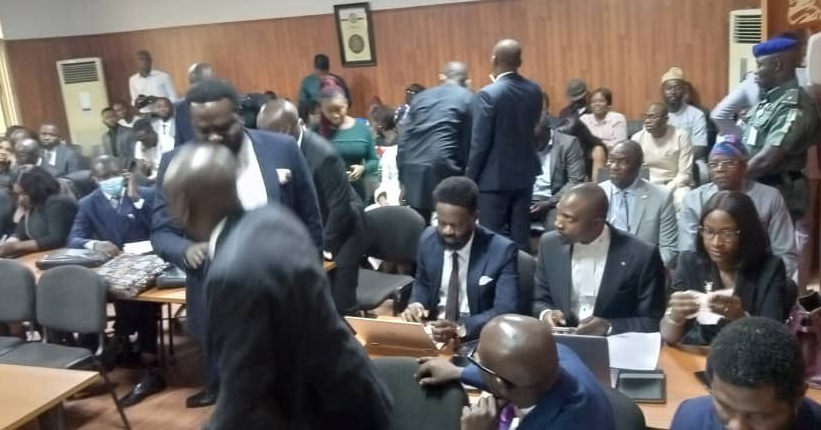
The Independent National Electoral Commission (INEC) has failed to call any witnesses to defend itself against allegations that it colluded with the All Progressives Congress (APC) to manipulate the election in favor of Governor Monday Okpebholo.
This came after INEC’s legal counsel formally moved to close its case without presenting any witnesses—a motion accepted by the Tribunal.
This abrupt end to INEC’s defence could be seen as making the electoral body relying solely on cross-examinations and arguments from APC and Okpebholo’s lawyers.
The Peoples Democratic Party (PDP) had challenged the election results, accusing INEC of orchestrating widespread irregularities and vote manipulation.
Citing the 2022 Electoral Act, PDP’s legal team presented evidence and hardly relied on oral testimony before closing its case.
Key provisions of the Act—such as Section 137, which prioritizes documentary evidence over oral testimony, and Section 73(2), which mandates the nullification of results in polling units where ballot paper and BVAS serial numbers were not pre-recorded—form the crux of the PDP’s petition.
The Tribunal has already admitted critical BVAS machines into evidence, devices the PDP claims will expose over-voting and discrepancies in the declared results.
Testimonies from witnesses, including local government agents and an expert witness (PW12), detailed alleged systemic manipulation during result collation.
Independent monitors, such as Athena Centre and TAP Initiative, Yiaga Africa have corroborated these claims.