
EFCC chairman’s alarming claim
Last week, the Chairman of the Economic and Financial Crimes Commission (EFCC), Ola Olukoyede, made a sweeping assertion that has since stirred widespread concern and debate. Speaking at the 8th Biennial Conference of the Committee of Pro-Chancellors of State-Owned Universities in Nigeria in Kano, he claimed, without presenting verifiable evidence, that six out of every […]
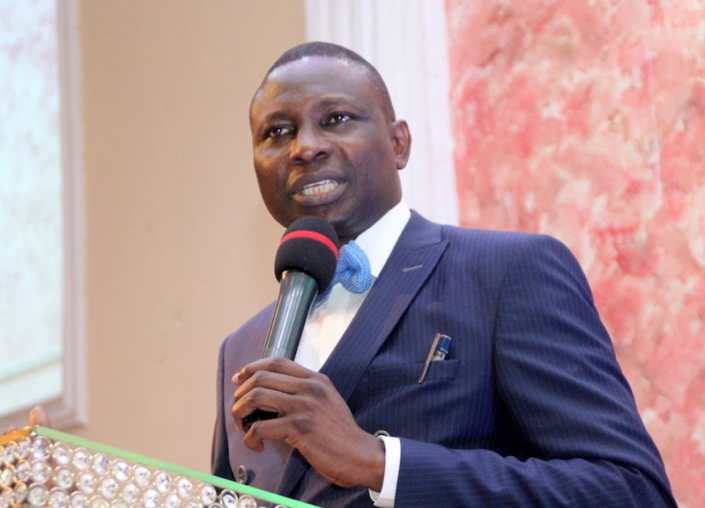
Last week, the Chairman of the Economic and Financial Crimes Commission (EFCC), Ola Olukoyede, made a sweeping assertion that has since stirred widespread concern and debate.
Speaking at the 8th Biennial Conference of the Committee of Pro-Chancellors of State-Owned Universities in Nigeria in Kano, he claimed, without presenting verifiable evidence, that six out of every 10 students in Nigerian universities are involved in cybercrime, popularly referred to as “Yahoo Yahoo.”
It is a grave claim. It is also a troubling one.
Public officials, particularly those entrusted with sensitive national mandates, must be circumspect in their public engagements. Words spoken from such high offices do not exist in a vacuum; they shape perceptions, influence policy debates, and, in many cases, define how a nation is viewed beyond its borders. When such statements are not backed by clear evidence, they risk doing more harm than the good they may have been intended to achieve.
The EFCC chairman described the alleged trend as “a sad development,” attributing the claim to findings from the commission’s investigations and field operations. He further suggested that many undergraduates were not only involved in internet fraud but had gone as far as compromising academic integrity by placing lecturers on their payroll. Yet, beyond these assertions, no data, methodology, or verifiable research has been presented to support the claim.
This absence of evidence is not a minor oversight; it is a fundamental flaw. Nigeria’s university system accommodates an estimated 2.5 million students. To conclude that a majority of them are engaged in criminal activity demands rigorous empirical backing: clear methodology, defined sample size, and transparent analytical processes. Without these, the statement remains speculative at best and damaging at worst.
The implications are far-reaching. Nigeria is a youthful nation, with over 60 per cent of its population under the age of 30, according to the National Population Commission (NPC). To suggest that a majority of its university students, arguably among the most educated segment of this demographic, are involved in cybercrime is to cast a shadow over the country’s future workforce and leadership pool. It raises uncomfortable questions: Is the EFCC chairman implying that most Nigerian youths are complicit in crime? What does this say about the country’s education system, its values, and its prospects?
The backlash from the student community has been swift and unequivocal. The National Association of Nigerian Students (NANS) rejected the claim as misleading, unfounded, and damaging, warning that such sweeping generalisations are capable of bringing the entire student population into disrepute. The association maintained that while it remains firmly opposed to all forms of financial crime, it is both inaccurate and unfair to characterise a majority of Nigerian students as criminals, urging the EFCC chairman to retract the statement in the interest of fairness, national cohesion, and the preservation of students’ reputation.
These concerns are not misplaced. They go to the heart of national identity and global reputation.
This is not to downplay the seriousness of cybercrime. Internet fraud remains a persistent and evolving threat, one that undermines economic stability, erodes trust, and damages Nigeria’s international standing. The EFCC, by the nature of its mandate, is at the forefront of this battle and deserves commendation for its efforts in tackling financial crimes.
However, addressing a systemic problem requires more than alarming rhetoric. It demands a holistic, evidence-based approach, one that identifies root causes, strengthens institutions, and fosters ethical reorientation. Sweeping, unsubstantiated claims risk trivialising the issue by reducing it to sensational soundbites rather than informed policy discourse.
There is also the question of national image. In an increasingly interconnected world, statements by senior officials are quickly amplified across global platforms. An assertion of this magnitude, made without proof, does not merely reflect on Nigerian students; it reflects on the country as a whole. It reinforces negative stereotypes and may inadvertently validate existing prejudices about Nigeria and its people.
Public communication, particularly from those in positions of authority, should strike a careful balance between acknowledging challenges and projecting confidence in national potential. Emphasising a problem does not require overstating its prevalence, nor should it lead to the normalisation of criminal behaviour by presenting it as a dominant social reality.
It is, therefore, the considered position of this newspaper that the EFCC chairman owes Nigerians a clarification and, indeed, an apology. If there exists credible research to support such a claim, it should be made public and subjected to independent scrutiny. If not, the statement should be retracted.
Accountability in public office extends beyond actions; it includes words. In a country striving to attract investment, build global partnerships, and empower its youthful population, narratives matter. They must be grounded in fact, guided by responsibility, and aligned with the broader national interest.
Nigeria’s students, like its youths, are not without challenges. But they are also not without promise. It would be a disservice to both the present and the future to define them by unverified generalisations.
Public officials must remember that, in speaking about the nation, they are, in many ways, speaking for it. And in doing so, they carry the burden of accuracy, balance, and responsibility.