
EFCC: Governorship aspirants spend N20bn on elections
The Executive Chairman of the Economic and Financial Crimes Commission (EFCC), Ola Olukoyede, has raised concerns over the rising cost of contesting political offices in Nigeria. He said governorship aspirants reportedly spend between N20 billion and N30 billion during the electoral cycle. Olukoyede stated this in Ilorin, Kwara State, at the inaugural High-Level Guest Speakers’ […]
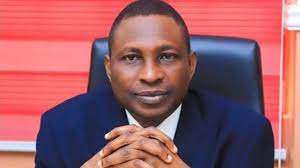
The Executive Chairman of the Economic and Financial Crimes Commission (EFCC), Ola Olukoyede, has raised concerns over the rising cost of contesting political offices in Nigeria.
He said governorship aspirants reportedly spend between N20 billion and N30 billion during the electoral cycle.
Olukoyede stated this in Ilorin, Kwara State, at the inaugural High-Level Guest Speakers’ Series organised by the Centre for Peace and Strategic Studies, University of Ilorin.
He explained that the commission conducted an assessment of election spending patterns, including primaries, general elections, and post-election tribunal processes, which revealed the massive financial burden associated with securing political office.
He said the trend has dangerously transformed politics into an investment venture, with serious consequences for governance and public trust.
“Sometime late last year, we took an assessment of how much those who contended for the office of governor in Nigeria spent in the build-up to the election, during the primaries, during the election itself, and in post-election tribunal issues.
“We found that it was between N20 billion and N30 billion. So, if you spend that kind of money to get into office, of course, everybody sees it as an investment,” he said.
The EFCC boss warned that the commercialisation of elections weakens governance, as office holders may feel compelled to recover campaign expenses through public resources.
He stressed that the agency remains committed to tackling vote-buying and electoral corruption, noting that several arrests and convictions have already been recorded across the country.
Olukoyede further disclosed that the commission is stepping up preparations for the 2027 general elections with plans to deploy drones and other advanced technological tools to monitor polling units and track financial inducements in real time.
He urged political actors to embrace issue-based campaigns and avoid actions capable of triggering violence.
Earlier, the Vice-Chancellor of the University of Ilorin, Professor Wahab Egbewole (SAN), described electoral corruption as a major threat to democracy and national security.
Director of the Centre for Peace and Strategic Studies, Professor G.A. Animasawun, said the lecture series was designed to strengthen preparedness ahead of the polls.