
Ekiti governorship election 2026: Vote buying, altered result sheets, 71,000-voter discrepancy
Ekiti State held its off-cycle governorship election on June 20, 2026, resulting in the re-election of the All Progressives Congress (APC) candidate and incumbent governor, Biodun Oyebanji. He was declared the winner after securing nearly 85 per cent of the 375,777 valid votes cast across the state. The election, however, was marked by widespread voter […]
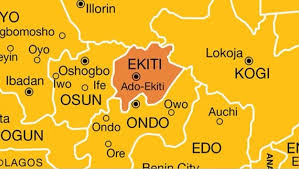
Ekiti State Map
Ekiti State held its off-cycle governorship election on June 20, 2026, resulting in the re-election of the All Progressives Congress (APC) candidate and incumbent governor, Biodun Oyebanji. He was declared the winner after securing nearly 85 per cent of the 375,777 valid votes cast across the state.
The election, however, was marked by widespread voter apathy, reports of vote buying, voter intimidation, discrepancies in official figures, and alterations to election result sheets, according to Dataphyte’s observations across the state. These findings raise questions about the integrity of the electoral process and the authenticity of the final results announced by INEC.
As part of its election monitoring, Dataphyte analysed 2,425 polling unit result sheets (EC8A) uploaded to the INEC Result Viewing (IReV) portal.
The analysis flagged 452 result sheets for inconsistencies, with the most common issue being arithmetic mismatches on ballot papers. In many cases, the number of ballot papers issued, used, unused, spoiled, rejected, valid, and total ballots did not reconcile, indicating arithmetic inconsistencies in the official election records.
The analysis also revealed an inconsistency between the total number of registered voters announced by INEC before the election and the cumulative number recorded across polling unit result sheets after the election.
Outlier One: Altered Result Sheets and Incomplete Records Raise Questions Over Documentation
Dataphyte’s review of the polling unit result sheets uploaded to the INEC Result Viewing (IReV) portal identified documentation issues that raise further concerns about the integrity of some official election records.
As of July 2026, INEC had uploaded only about 97 per cent of the Ekiti polling unit results on its portal. This leaves about 55 result sheets still to be uploaded.

The analysis flagged 452 result sheets with numerical inconsistencies out of a total of 2,390 result sheets from the Ekiti State elections, and more than 100 of these contained visible alterations to the figures recorded on the forms.

A compilation of different polling unit election results from the Ekiti election, highlighting apparent inconsistencies, including shaded entries, incomplete forms, and other irregularities
In several cases, party vote totals, valid votes or total votes cast appeared to have been amended after the original entries were made. Some forms showed signs that correction fluid, such as Tipp-Ex or white-out, had been applied before new figures were written over the original entries, making it difficult to determine the originally recorded results.
The highest concentration of these altered result sheets was found in Ado Ekiti, Irepodun/Ifelodun, Ekiti West, Ijero and Ilejemeje local government areas.

The review also uncovered gaps in the completion of statutory election forms. At least 72 polling unit result sheets uploaded to the IReV portal did not contain the final tally of valid votes, even though this figure is one of the key entries required before a presiding officer certifies the result.
Despite the missing information, the forms had already been signed and stamped by election officials, indicating that they were treated as completed records. Although the missing totals do not, on their own, prove that the declared results were inaccurate, they weaken the completeness and transparency of the official documentation and make independent verification more difficult.
Outlier Two: Conflicting Registered Voter Figures Leave a 71,000-Voter Gap
Dataphyte’s review also identified inconsistencies in the official voter statistics released by INEC before and after the election.
Ahead of the governorship poll, the commission announced that Ekiti State had 1,059,360 registered voters, an increase from the 987,647 recorded during the 2023 general election.
However, during the official declaration of results, the Returning Officer, Adenike Oladiji, announced a different figure, stating that the state had 988,251 registered voters.

Registered voters published by INEC before the election
The post-election figure is more than 71,000 lower than the number INEC had published before Election Day, creating an unexplained discrepancy in one of the election’s most fundamental statistics.

Registered voters announced by INEC during the declaration of results
The final declaration also showed that 383,940 voters were accredited, while 382,109 votes were cast.
Registered voter figures form the basis for calculating voter turnout, assessing electoral participation and evaluating the credibility of election statistics. Any unexplained variation between pre- and post-election figures can complicate independent verification and raise questions requiring clarification from the electoral commission.
Election Day: Peaceful Voting Overshadowed by Allegations of Vote Buying and Intimidation
According to INEC, more than 1.02 million voters, representing about 97 per cent of the state’s 1.05 million registered voters, had collected their Permanent Voter Cards (PVCs) ahead of the election. The commission also deployed 9,780 ad hoc staff and 2,400 Bimodal Voter Accreditation System (BVAS) devices across the state’s 16 local government areas, 177 registration areas and 2,445 polling units.
Security agencies, including the Nigeria Police Force and the Nigeria Security and Civil Defence Corps (NSCDC), also announced extensive deployments to ensure a peaceful and credible election.
The governorship election featured 14 candidates following months of legal disputes, intra-party crises and court rulings over candidate nominations. Despite these preparations, reports from Dataphyte observers painted a different picture of Election Day.
Across several polling units, observers documented alleged vote buying, BVAS malfunctions, suspected underage voting, voter intimidation and, in some locations, the absence of security personnel.
These observations echoed concerns raised by opposition candidates. The African Democratic Congress (ADC) candidate, Dare Bejide, alleged that vote buying was taking place at his polling unit.
“They also brought in a large amount of money to share, and I told them that can’t happen here because today is Election Day. That is what caused all this brouhaha. This is not his polling booth, and he has refused to leave,” Bejide said.
Similarly, the Peoples Democratic Party (PDP) candidate, Wole Oluyede, alleged voter intimidation and complained about delays in voter accreditation. The Accord Party candidate, Opeyemi Falegan, also accused security personnel of failing to stop vote buying.
Dataphyte observers documented more than 30 reported incidents of alleged vote buying across polling units in the state. The newsroom also verified several videos circulating online that appeared to reference similar incidents during the election.
In several instances, voters were reportedly offered between N10,000 and N20,000 in exchange for supporting a political party. The highest concentration of these allegations came from polling units in Ado-Ekiti, Emure and Ekiti West local government areas.

At a polling unit located at St. Michael’s Primary School, Olubobokun Compound, observers reported that an APC agent was recording the names, phone numbers and bank account details of some voters. According to accounts obtained at the polling unit, voters were also asked to provide evidence of having voted and were allegedly promised N10,000 in return.
Overall, the European Union Support to Democratic Governance in Nigeria (EU-SDGN) Election Observation Hub, Yiaga Africa, and the Centre for Democracy and Development concluded that the Ekiti State governorship election was generally peaceful, orderly, and well administered, with improvements in election logistics and the use of technology for voter accreditation and result management.
However, the observer groups expressed concern over the persistence of vote buying, voter inducement, and other procedural shortcomings that could undermine public confidence in the electoral process.
They recommended stronger enforcement of electoral laws, greater transparency and continued electoral reforms to improve the credibility and integrity of future elections.
Concerns over electoral inducement had surfaced even before polling day.
On June 19, one day before the election, a video began circulating online showing a large bus bearing the campaign materials of APC candidate Biodun Oyebanji stopping along a roadside as items believed by members of the public to be bread were distributed to residents.
Although Dataphyte could not independently verify that the items distributed were bread, election observers confirmed that the distribution took place along the Erifun–Federal Polytechnic, Ado-Ekiti Road.
The footage quickly sparked debate, with critics arguing that the distribution could constitute voter inducement and potentially breached INEC’s directive requiring all campaigns to end at least 24 hours before election day.
Kehinde Ogunyale- Dataphyte