
El-Rufai’s SDP project
It is easy to dismiss former Governor of Kaduna State, Nasir El-Rufai’s recent politics as no more than the equivalent of what in Nigerian political journalism we call an “aggrieved source”. That is, a news source that is blowing the whistle on former comrades with whom they had previously wined, dined, or even sinned. An […]
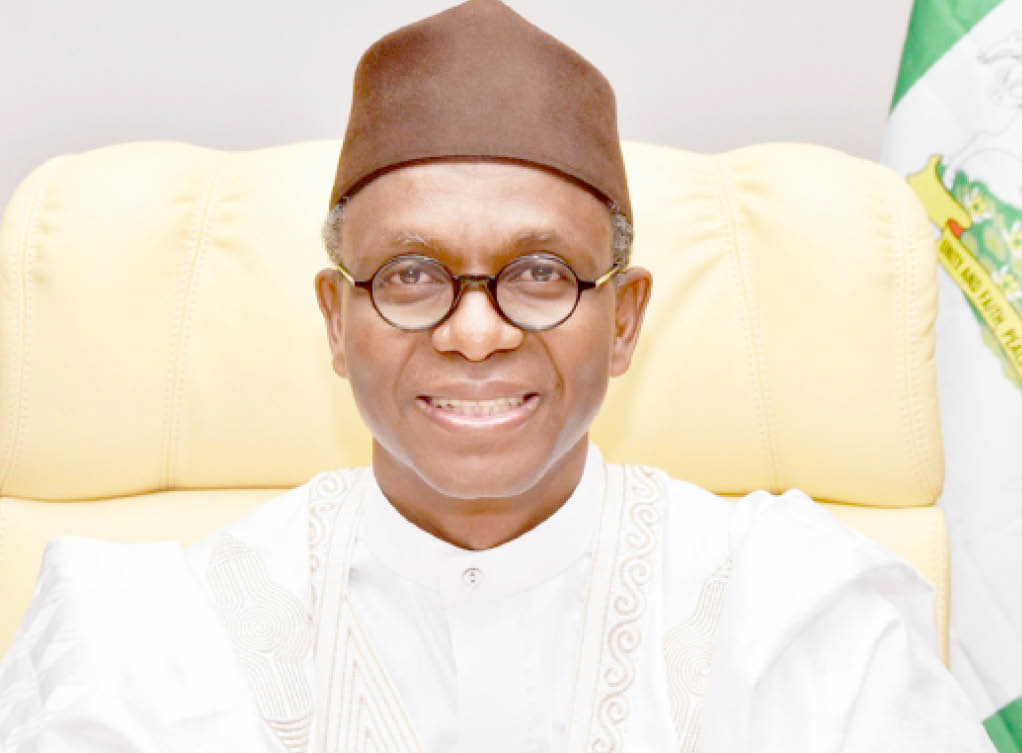
Former Governor of Kaduna State, Nasir El-Rufai
It is easy to dismiss former Governor of Kaduna State, Nasir El-Rufai’s recent politics as no more than the equivalent of what in Nigerian political journalism we call an “aggrieved source”. That is, a news source that is blowing the whistle on former comrades with whom they had previously wined, dined, or even sinned. An aggrieved source is driven by personal grievance and vengeance, not the journalist’s need to hold power accountable in the public interest through exposure.
This is precisely how the government and other observers have cast El-Rufai’s recent political moves. Former governor of Jigawa State, Sule Lamido, for example, has said that “If El-Rufai’s goal is to unseat President Bola Ahmed Tinubu, it should not be based on personal grievances” or just for seeking revenge. El-Rufai’s own recent interviews have more than confirmed this. Yet, the aggrieved source is sometimes right, and their squealing on former chums can still work more in the public interest.
Whatever his motivations, El-Rufai is spot on about two things. Nigeria needs an organised opposition to what President Tinubu’s government is shaping up to be. More importantly, Nigeria needs a political party worth the name. As of today, we have neither, and El-Rufai’s current politics appear to speak to both. This is what makes his project at his new political home, the Social Democratic Party (SDP), appealing to independent observers, and why it should not be quickly dismissed.
I do not know how many Nigerians are paying close attention to President Tinubu’s brand of politics, nor how many are thinking carefully about a positive response to it. What is clear is that, as president, Tinubu’s style is increasingly looking and smelling like what Lagos lawyer, Femi Falana, has aptly called a Kabiyesi president. It should by now be clear to his friends and foes alike—I am neither—that President Tinubu wants nothing short of monarchical powers to achieve his political objectives. Most of those objectives so far remain vague, but one of them is definitely to win a second term in 2027 by all means necessary, a scary prospect for a still nascent democracy.
- Kwankwaso’s political future in limbo as defections rock NNPP, Kwankwasiyya movement
- Hunger worsens in IDP camps as UN agencies cut operations
Monarchical powers are, of course, antithetical to and unavailable to anyone within our constitutional order. Gradually but definitively, however, President Tinubu has been appropriating those powers by compromising, infiltrating, or otherwise encroaching onto the very institutions that are supposed to serve as the constitutional guardrails against any kind of monarchical presidency in the country. National Assembly. Courts. Governors. Opposition political parties. The press. Civil society. One by one, President Tinubu has been trying to bend all of these to his will. And so far, he is succeeding across the board, if to varying degrees.
True, these institutions have hardly lived up to their constitutional promise of preventing the rise of a president-monarch, with the exception of Obasanjo’s third-term bid.
The National Assembly has scarcely been more than a pliant lapdog of whichever president is in power. The courts, including the Supreme Court, have tended to side more with the government of the day on the most politically sensitive issues, although less overtly. The governors, nominally a countervailing force, have always followed where the money goes—and the money goes where a president directs—regardless of party differences or the interests of their individual states.
The press and civil society have also been as much sectionist in their agendas as the politicians they like to lampoon. They go hysterical today but silent tomorrow, depending on who’s in power, not what constitutional principles are at issue.
Still, things appear to have advanced or degenerated to a qualitatively different degree. I don’t know if I am seeing too closely from a long distance, but it seems like even the president’s cabinet ministers, advisers and aides appear to be simply afraid. Obasanjo certainly wanted to be and, in many ways, behaved like a Kabiyesi president. But throughout his eight years in office, he was vigorously challenged by other actors in the political space, including most effectively by then Governor of Lagos State, today’s President Bola Ahmed Tinubu. But today, our main opposition parties—PDP, LP, NNPP—for example, are on the hangman’s noose or near it: infiltrated, compromised or otherwise under a hostile takeover.
None of these three parties can effectively stand for Nigerians in the constitutional challenges that could well lie ahead or just to help prevent our descent into a one-party state, which is a de facto dictatorship. This is one reason why El-Rufai’s SDP project should be appealing to those for whom a healthy democracy for Nigeria, in both form and substance, is a non-negotiable first principle.
But more than just an opposition party, Nigeria needs a political party worthy of the name in every sense. A party established to promote clear ideological values, wherever those values might lie on the political spectrum. A party that has a clear vision to transform Nigeria, and clear ideas about some of our thorniest problems. A political party that is the engine room of policy, locally derived. A political party that actively seeks and recruits new political talents from the universities or from the streets, and nurtures them to help advance the country and its people. A party that is organised, independently funded, and enforces its own rules on all its members.
Needless to say, such a party cannot be just another APC, or be driven by one man’s political grievances. It certainly cannot be thinking of adopting APC’s 2013-2015 strategies and tactics, however seductive those might be. Above all, such a party’s agenda must go beyond the next election. It must think and plan for the longer term, even as it prepares for every election from today onwards. In Europe over the past two decades, such parties have emerged, mostly on the right of the ideological divides, but are gaining ground at successive elections in Britain, France, Germany, Italy, Spain, the Netherlands, etc. It can happen here, too, because the time is ripe.
This is why I think El-Rufai is getting it wrong to think that he can redraw the path travelled by the APC to defeat the same APC with someone like Tinubu at the helm. He is also wrong to think that his personal motivations would be sufficient to sustain such a political agenda. But he is right that Nigeria needs an effective opposition party right now. He is also right that the PDP, LP and NNP cannot be that party now or in the near future. And above all, he is right that the new opposition party must be based on progressive values, must enforce internal democracy, must envision new policies that meet the needs of Nigerians, must be led by competent people at all levels, and must be independent of funding from the government it forms.
El-Rufai said all of those things even before he left APC for SDP. And the SDP seems like the right place for this new kind of politics, and this new kind of party. It is the oldest political party in Nigeria today, bar only the Peoples Redemption Party (PRP). And as we now know, the SDP once won a presidential election in this country, even if that election was annulled.
Many prominent politicians can still trace their political roots to it. It also espoused clear progressive values based on social democracy. So, the SDP has the history and the pedigree to become the launchpad for this new kind of political party Nigeria so sorely needs right now.
Finally, I have written four times previously about El-Rufai on this page, three of them highly critical of him. A well-known historian and former university chancellor even replied to one of them on his behalf. Yet, if El-Rufai can deliver his SDP project, as I have tried to reframe it here, he would be leaving a more enduring legacy than anyone in Nigerian politics since 1999. And I hereby yield the floor back to him.