
Elections in Africa: Nothing has changed
In October, millions of voters yearning for change from deeply entrenched anti-democratic tendencies went to the polls to elect presidents in three African countries – Cameroon, Cote d’Ivoire and Tanzania. The outcomes were nothing but gale of disappointments as deeply disenfranchised citizens were forced to lick their wounds. The election was held on October 12 […]
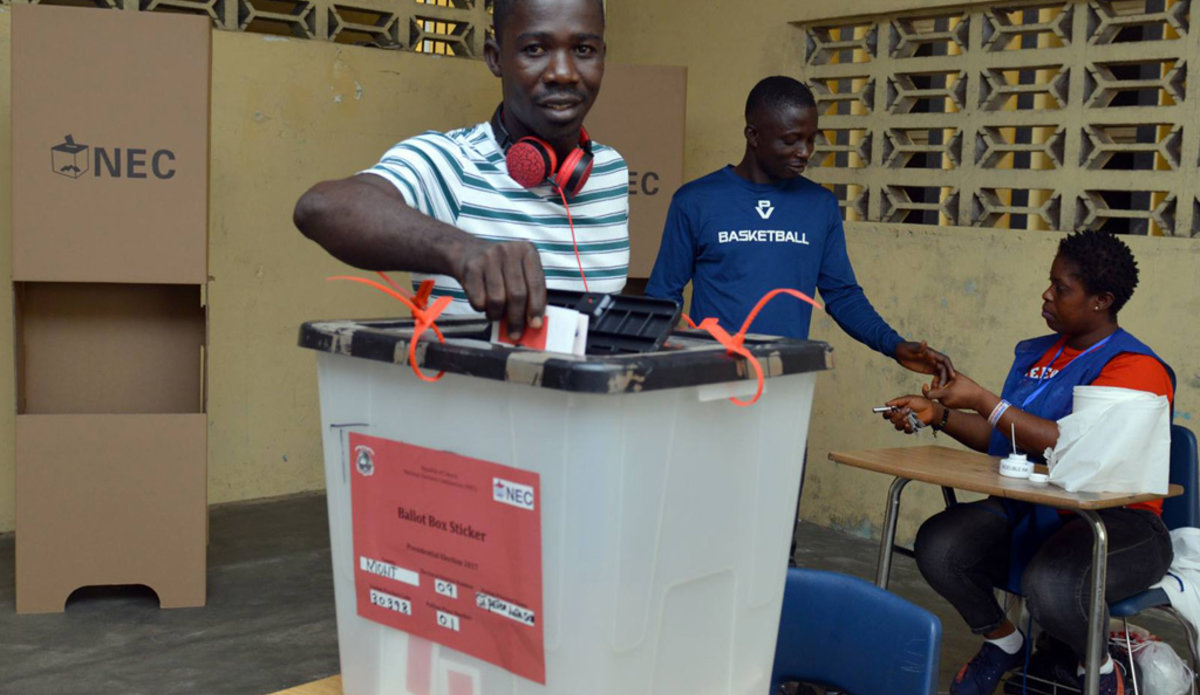
A Liberian votes during the country’s 2023 general election
In October, millions of voters yearning for change from deeply entrenched anti-democratic tendencies went to the polls to elect presidents in three African countries – Cameroon, Cote d’Ivoire and Tanzania.
The outcomes were nothing but gale of disappointments as deeply disenfranchised citizens were forced to lick their wounds.
The election was held on October 12 in Cameroon; October 25 in Cote d’Ivoire, and October 29 in Tanzania.
In the three elections, all the incumbent leaders were on the ballot. In Cameroon and Cote d’Ivoire, incumbents Paul Biya and Alassane Ouattara were seeking re-elections after having served previous terms in office.
Meanwhile, in Tanzania, Samia Suluhu Hassan, the former Vice-President of the country who became first female President in March 2021, following the death of President John Magufuli, sought to remain in office by all means.
One common feature of the three elections is that they were characterised by severe irregularities ahead, during and after the elections.
In Tanzania, President Samia who was contesting for the position as a candidate for the first time, took the unprecedented step of banning and jailing opposition candidates on trumped up excuses despite all entreaties to allow free participation in the election. As a result, in the run up to the elections, tension gripped the country with opposition groups mobilising potential voters to reject the planned election and its outcome.
The election was followed by violent protests by supporters of the opposition parties which was put down heavily by security forces leading to deaths and injuries.
In Cameroon, the hugely popular Issa Tchiroma faced up to the 92-year-old incumbent President Paul Biya who has been in power since 1982. Many of the voters in the country and indeed over half of the citizens had known no other ruler in their lifetime. Therefore, leading up to the elections, the expectation both inside Cameroon and outside was that it was time for Cameroon to be rid of Biya who has been in power for 43 years. This was as Biya remains an absentee leader for over 10 years as he mostly lives in Geneva, Switzerland rather than stay at home and attend to the business of governing his country effectively as required.
Even though some opposition figures were allowed to contest in Cameroon, the looming fear was that the election results and outcome might be doctored to favour President Biya by the country’s electoral agency and as predicted, that was exactly what happened.
As widely expected, protests followed the announcement of the election which Biya was declared the winner. Cameroonians strongly believed they were short-changed by those around Biya. Their outcry was ignored and the reservations voiced our by local and foreign observers did not change anything. Instead, in a brazing display of affront on democratic tenets, the sit-tight regime has vowed to prosecute the leading contender in the election, Tchiroma, for daring to give Biya a justified challenge and for declaring himself winner out of frustration.
For Cote d’Ivoire, it was a combination of the Tanzanian and Cameroon situations. President Alassane Ouattara reneged on his promise to respect constitutional term limits by amending the constitution of the country to seek re-election. Ouattara also borrowed a leaf from Tanzania by restricting his opponents on one trumped charge or the other. The result is that the election was marred by protests occasioned by irregularities and the outcome was already a foregone conclusion which fell far short of democratic ideals.
By all assessments, the elections in all the three countries cannot by any stretch of imagination be termed as reflecting the tenets of democracy and the yearnings of the people. From the clampdown of opposition figures and interference in the electoral process, all the three elections did not measure up to international best practice.
The Tanzanian case in particular was quite instructive. When Samia came to power following the death of her principal, President Mugufuli, she initially received praises for her style of leadership which was seen as pro-masses. But this did not last as she soon brought to the fore her true colours amid arrogance and extravagance. It was thought that as the first female president of Tanzania, she was going to deviate from the very issues that has bedeviled African politics and governance.
But to the dismay of most observers who looked forward to the Tanzanian elections as her litmus test, President Samia has proven to be the opposite of that expectation. She not only clamped down on the opposition, she ordered the internet closed down during the elections which goes against the democratic tenets of free speech and association.
Given all these breaches in all the three elections, it is hardly surprising that there were eruptions of violent protests by the citizens of these countries in the aftermath. It must be stated that had the authorities allowed the genuine democratic will of the people to prevail, there would not have been the need to go to such lengths.
The conclusion from the conduct and outcome of the three election is the sad reality that African leaders are yet to imbibe the tenets of true democracy.
Daily Trust believes that as long as African countries and leaderships continue to fall short of the basic requirements of democracy in their governance, especially in such critical areas as elections and related matters, the continent will not achieve much progress in its quest for democracy and development.
We therefore call on the African Union to urgently review its stance on congratulating leaders who muzzle their way to power against the tenets of free and fair elections. Such attitude will continue to leave the continent behind. Africans deserve to have the freedom to choose their leaders without intimidation. This is the only way the continent will remain relevant and ensure that it has come of age.