
Enough is enough, Tinubu tells security chiefs
President Bola Ahmed Tinubu yesterday met with the National Security Adviser (NSA), Malam Nuhu Ribadu and other security chiefs over the lingering insecurity in the country and charged them to deploy new strategies towards ending the menace. The meeting, which was at the instance of the president, took place at the Presidential Villa, Abuja. The […]
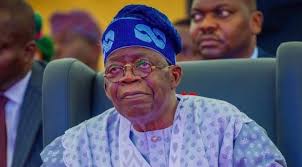
Tinubu
President Bola Ahmed Tinubu yesterday met with the National Security Adviser (NSA), Malam Nuhu Ribadu and other security chiefs over the lingering insecurity in the country and charged them to deploy new strategies towards ending the menace.
The meeting, which was at the instance of the president, took place at the Presidential Villa, Abuja.
The security chiefs arrived at the Presidential Villa around 3pm and went into a closed-door meeting with the president.
Among those who attended the meeting were the Director General of the National Intelligence Agency (NIA), Mohammed Mohammed; Director General Department of State Services, Mr Oluwatosin Ajayi; and Chief of Staff to the President, Femi Gbajabiamila.
Previous meetings
This is not the first time that President Tinubu is meeting with the security chiefs over the security situation or other issues in the country.
On March 18, he met with the service chiefs, chiefs of intelligence and the Inspector-General of Police at the State House.
Among those who attended the meeting, which was on the Rivers Crisis before the president declared a state of emergency in the state, were the leadership of the National Assembly, led by Senate President Godswill Akpabio and Speaker of the House of Representatives Tajudeen Abbas.
The meeting followed a series of explosions in Rivers as the political crisis between the now-suspended Governor Siminalayi Fubara and his estranged godfather, Nyesom Wike, escalated.
In August last year, President Tinubu postponed a Federal Executive Council meeting and met with the Service Chiefs.
The meeting, which had in attendance the vice president, the National Security Adviser, all service chiefs, the inspector general of police, the comptroller generals of customs and immigration, and the chief of staff to the president, followed widespread protests against hunger and hardship.
Nigeria battling 5 terror groups
A new terror group, Mahmuda, is said to have emerged and is attacking communities in Kwara and Niger states.
Suspected members of the new terrorist group, are said to have attacked Ilesha Baruba and Kemaanji, Baruten and Kaiama LGAs of Kwara State on Sunday night.
They had on Friday reportedly killed some vigilantes in the state.
Before the emergence of this new terror group, the country had a herculean task grappling with the deadly activities of Boko Haram, the Islamic State West Africa Province (ISWAP), Lakurawa and Ansaru.
They have all been attacking and killing Nigerians, with security operatives having a tough time dealing with them.
The Boko Haram, began in Niger State but is now domiciled in Borno after the split that produced the late Abubakar Shekau.
Its fighters have also attacked villages in Yobe and Adamawa States.
Boko Haram is said to be active in Chad, Niger, northern Cameroon and Mali. Since the insurgency started in 2009, the group has reportedly killed tens of thousands of people in attacks against the police, armed forces and civilians.
The Lakurawa militant group emerged within Sokoto and Kebbi states in north-western Nigeria and across the border with Niger. It initially promised to help the government tackle banditry but later became deadly with affiliation of groups in Mali and Niger.
The Islamic State’s West Africa Province (ISWAP) is said to be an offshoot of Boko Haram with which it has a violent rivalry. Until March 2022, ISWAP had reportedly acted as an umbrella organisation for all IS factions in West Africa, including the Islamic State in the Greater Sahara (IS-GS), which gave it access to resources and technical assistance.
It recently deployed four armed drones carrying locally made grenades in an attack on the Forward Operating Base in the Wajikoro area of Borno, reportedly leaving about five soldiers injured.
Also, Ansaru is observed to be active in the North-West and the North Central, where bandits and kidnappers also operate. It is reported to be a former faction of Boko Haram that rejected Shekau’s leadership after the death of Yusuf.
President tasks them on new strategies
At the meeting, President Tinubu directed an immediate and comprehensive overhaul of national security strategies, demanding urgent action to end the escalating violence, especially in Borno, Benue, Plateau and Kwara states.
The president, who also condemned the killing of innocent Nigerians, declared that “Enough is enough.”
The National Security Adviser told newsmen after the meeting that the service chiefs briefed the president on the attacks in the states, the death toll, and the destruction of properties.
The NSA said President Tinubu ordered a new approach to tackling the insecurity problems.
Ribadu noted that President Tinubu was also actively monitoring and giving instructions during his working visit to Paris and London.
“Mr President gave us the chance to come and brief him again. It lasted very long. We gave him an update on what was going on.
“Even when he was out there, he was constantly in touch, giving directives and following developments.
“Today, we had the opportunity to come and brief him again, and it lasted hours. It was a very detailed briefing, and it was exhaustive.
“We listened, and we took instructions from him. He gave us new directives. The fact is that Mr President is insisting that we work harder to restore security in the country.
“We gave him information on what has been happening and assured him of our commitment.
“We had carried out his instructions. We went to places with incidences of insecurity, such as Plateau, Benue and Borno states.”
The NSA said the president highlighted the need to involve the local councils and state governments more in tackling insecurity.
“The issue of insecurity often is not just at the higher levels. It involves the subunits. They are the ones who are directly with the people, especially when some of the challenges border on community problems.
“We need to work with the communities. We need to work with the local governments, and we need to work with the governors.
“The president directed that we work more with governors,” he said.
Ribadu noted that President Tinubu was very worried and concerned, he said, “’Enough is enough’. We are working to ensure that we restore peace and security. We were all at the meeting with the president; armed forces, police and intelligence community.”
The NSA also said the attackers usually targeted innocent citizens by planting Improvised Explosive Devices (IEDs) and targeting ungoverned areas.
Killings in Plateau
No fewer than 100 persons have been killed in Plateau State in the last two weeks.
Suspects arrested – Plateau govt
Brigadier-General Gakji Shipi (rtd), the acting coordinator of Operation Rainbow and special adviser to Governor Caleb Mutfwang on security, confirmed that several suspects had been arrested in connection with the attacks, which he said were unprovoked.
…In Benue
The situation is not different in Benue State, where several persons have been killed in renewed attacks on some communities in the state.
Among local government areas affected were Logo, Katsina-Ala and Otukpo.
According to the state governor, Hyacinth Alia, the attackers were not Nigerians, but Malians.
Bandits hold sway in Zamfara
Another state battling insecurity is Zamfara in the North West, where bandits have killed several people, sacked communities and kidnapped many.
In one of the latest attacks, the bandits were said to have killed 10 people, including a member of the Community Protection Guards identified as Murtala Fachi, in a series of violent attacks across the state.
Fachi was killed alongside two other passengers while travelling along the Anka-Gusau road on Tuesday.
He was said to be on his way to Gusau to testify in a court case when gunmen ambushed their commercial vehicle near Tashan Kuturu, a known flashpoint on the Anka-Mayanchi route.
The bandits that have been killing people at will are also said to have imposed levies running into millions of naira on farmers at various times before allowing them to access their farms.
While at the Presidential Villa last year, Zamfara State Governor, Dauda Lawal, had said the North will not enjoy sustainable peace if banditry persists in the state, which he described as the centre of terror.
Speakers urge FG, governors to end killings
The Conference of Speakers of State Legislatures of Nigeria has condemned the recent wave of killings in Plateau, Borno, Benue Niger and most recently, Kwara State, calling on the federal and state governments to take urgent steps to stem the growing menace.
Adebo Ogundoyin, Chairman, Conference of Speakers of State Legislatures of Nigeria, stated this in a statement issued in Ibadan, Oyo State.
Ogundoyin, who is the Speaker of Oyo Assembly, said the gruesome killings had led to the tragic loss of lives, widespread displacement, and unimaginable trauma for thousands of Nigerians.
“We are alarmed by the escalating insecurity in the land and the seeming helplessness with which these attacks are met. The time for mere condemnation and rhetoric has passed; urgent and coordinated action is now required at all levels of government to end these bloodbaths and restore peace and order.
“While we acknowledge that defense and national security fall within the exclusive jurisdiction of the federal government, we must stress that every level of government bears responsibility for the security and welfare of the people. State governors, in particular, must rise to the occasion and fully understand that governance is not limited to road construction and ceremonial functions.
“True governance is rooted in the protection of lives, the preservation of order, and the alleviation of suffering,” he said.
Ogundoyin called on state governments to complement the efforts of the federal government by making and enforcing enabling laws for community policing and other grassroots-driven security models.
He said states must develop proactive frameworks that integrate local intelligence, social support systems, and youth engagement in the fight against insecurity.