
Entry points for Nigeria’s diplomacy in Biden’s era
The inauguration of Mr. Joe Biden as the 46th President of the United States of America on 20th January, 2021 and the policy changes so far enacted by the new president represent a forceful repudiation of President Donald Trump and his belligerent, isolationist ‘America first’ policy. In international affairs, Trump antagonised friends and allies and […]
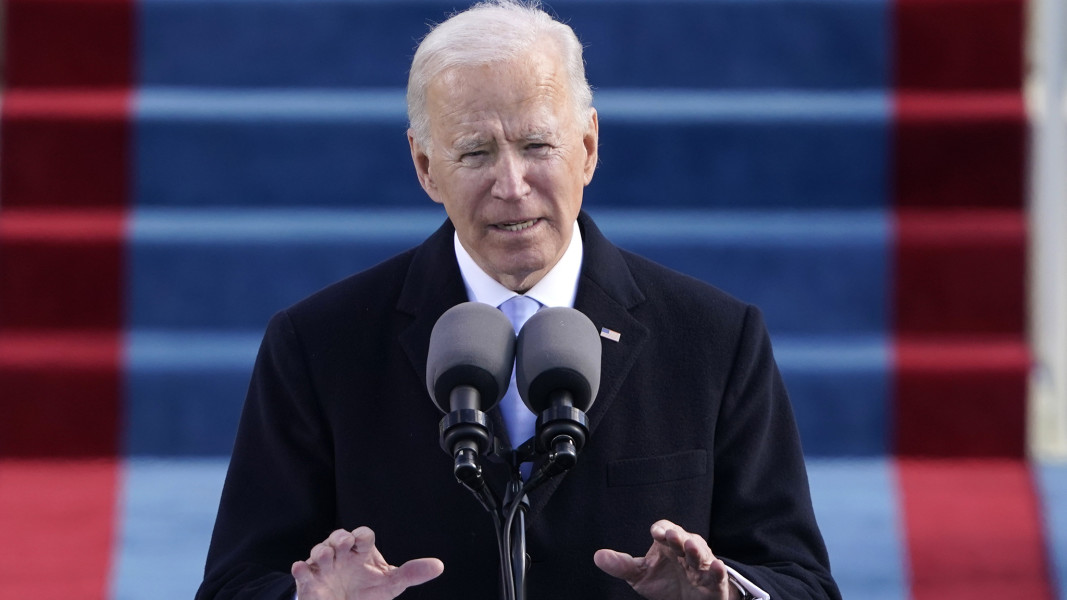
U.S President, Joe Biden
The inauguration of Mr. Joe Biden as the 46th President of the United States of America on 20th January, 2021 and the policy changes so far enacted by the new president represent a forceful repudiation of President Donald Trump and his belligerent, isolationist ‘America first’ policy. In international affairs, Trump antagonised friends and allies and gravely undermined the pivotal transatlantic alliance that has been the foundation of US security and foreign policy since the end of World War 11.
In the Trump era, Africa fared even worse. Some say that in the four long years of his presidency, Africa never featured on his policy radar, except in derogatory stereotyping. Early in his presidency, Trump roundly rejected the idea of state-building, a euphemism for long standing US policy of providing development assistance to Third World countries. In his first budget to Congress in 2017, Trump proposed deep cuts to programs in Africa. Trump’s rejection of a policy that has been one of the enduring features of US partnership with African countries unsurprisingly set the stage for what has turned out to be a particularly low point in US-Nigeria relations in decades. Apparently not done, Trump withheld US contributions to several UN agencies, including the UNESCO.
Against this backdrop, analysts have been quick to celebrate the Biden’s Presidency as offering an opportunity to revive a broken relationship that had long been touted in US policy circles as one of the most consequential in Africa. It is not only Nigerians that are optimistic about the Biden Presidency.
So far, Biden has not disappointed. In one of his first acts as President, Biden promptly took the US back into the Paris Climate agreement and reversed US withdrawal from the World Health Organization (WHO). He also scrapped Trump’s controversial travel ban on citizens from seven Muslim and African countries and vowed to place racial equality at the heart of his administration’s policy making. The new US President also took his country into the COVID-19 Global Access (COVAX) Facility, an initiative to help low-income get much needed vaccines.
It is, of course, not insignificant to mention that Biden has already appointed three Nigeria-Americans to senior positions in his administration, the most notable being Adewale Adeyemo, who would be Deputy Secretary of the Treasury upon confirmation by the US Senate.
The apparent Biden-Nigeria love affair was accentuated in a trending video that plays out a telephone conversation between Biden and a Chicago-based Nigerian supporter and his family, in which Biden was heard saying nice things about his interlocutor and his country, and making the point that he knows Nigeria very well. These are reassuring steps and images that could provide entry points for Nigeria’s engagement with the Biden administration.
As a long serving US Senator and Vice President, Biden is familiar with Nigeria and the country’s security, governance and economic challenges. The same is true of several of his top nominees, including Antony Blinken, the Secretary of State, Susan Rice, Domestic Policy Adviser, and Linda Thomas-Greenfield, Ambassador to the United Nations, all of whom, like Biden himself, are alumni of the Obama administration.
The Biden administration’s familiarity with Nigeria, unlike the insular Trump administration, must not be left to waste. The smart thing for the Buhari administration would, therefore, be to leverage this goodwill to extract the best possible outcomes for Nigeria. Towards this objective, no issue is more urgent than the revitalization of the stalled Nigeria-United States Bi-national Commission (BNC).
At a 2012 BNC meeting at Washington DC, Hilary Clinton who, as US Secretary of State, helped designed the BNC, described it as “our (US) flagship agreement for bilateral cooperation on the entire African continent.” As the overarching framework for US-Nigeria relations, the BNC was designed to provide a regular platform for senior officials of both countries to engage on issues identified by both governments as critical in the relationship. In the decade since this cooperation mechanism was formalised, such shared priorities have included security cooperation, economic development, and governance and democracy. Significantly, these issues align with the security, job creation, and anti-corruption priorities of the Buhari administration.
The revamping of the BNC, after a pause under the Trump administration, will not only signal that bilateral relations are back on track, but earn the Buhari administration political mileage in Washington DC. Reviving the BNC should not prove difficult, given that Biden and key members of his national security and foreign policy team were the architects and drivers of the BNC process during the Obama years. Notably, as recently as 2016, Antony Blinken, as US Deputy Secretary of State in the Obama Presidency, co-chaired with Foreign Minister, Geoffrey Onyeama, the 2016 BNC meeting held in Washington DC.
Under the Obama administration, it was fashionable for senior US government officials to play up the US-Nigeria partnership as the most important in Africa. The common refrain was that Nigeria is too important to fail, implying a policy imperative on the part of the US government to take extraordinary measures to support Nigeria in the critical areas of security cooperation, economic development, and governance. Given that these challenges are not less now than they were way back in 2010 when the BNC agreement was signed, the Nigerian government can do worse than challenge the Biden administration to walk its talk.
To be sure, it may seem naïve to imagine that the BNC is the silver bullet to resolve the conundrum of Nigeria’s security and economic malaise. Far from it. Indeed, putting all of Nigeria’s eggs in one policy basket cannot be a smart strategy. The Nigerian government must at all times reserve the prerogative to deploy other tools and engage other partners to try to fix the country. However, what makes the US partnership particularly attractive is that there is an existing cooperation framework that has proved useful in the past and needs only to be revived and put to good use. However, as it is typical of strategic partnerships between two unequal partners, Nigeria will benefit only to the extent that it is able to leverage on the goodwill and policy memory of key members of the Biden administration who played pivotal roles in negotiating and formalizing the BNC over a decade ago.
The federal government appears ready for the challenge, with the assigning of Dr. Uzoma Elizabeth Emenike, a veteran diplomat, as Nigeria’s ambassador to the United States. This is the right first substantive move. The Ministry of Foreign Affairs must now move fast to ensure she presents her credentials as soon as possible, and also empower her with a strong team of officers. Once in place, the ambassador and her team need to cast their nets wide beyond the State Department, given that the US foreign policy establishment consists of a diffused cast of officials and institutions that also include members of Congress and Africa/Nigeria specialists on the National Security Council at the White House, amongst others.
At the strategic level, President Buhari should, at the earliest opportunity, consider extending an invitation to Biden to visit Nigeria or, in the alternative, explore an early possibility to visit the US President at the White House to make the case for elevated engagement of both governments to promote shared priorities.
As Nigeria seeks to reset Nigeria-US relations, our officials need to keep in mind that, while the Biden administration may be philosophically and temperamentally attuned to international cooperation, America’s national interest will not fundamentally change because a new administration has displaced the old, no matter how despised the old administration was.
As in all strategic relations, Nigeria would do well to retain a clear eye about the promise and limits of international cooperation and solidarity; about what it can and must do all by itself, when to call in help, and how much help could help solve a clearly defined problem.
Dr. Awanen, mni is a retired Foreign Service officer