
Expectations as MPC meets November 22
All eyes are on Nigeria’s Monetary Policy Committee (MPC), chaired by the governor of the Central Bank of Nigeria (CBN), Mr Godwin Emefiele, as it meets on November 22 and 23, 2021 to review economic trends and decide on key monetary policy instruments. The most popular anxiety is always whether or not the MPC would […]
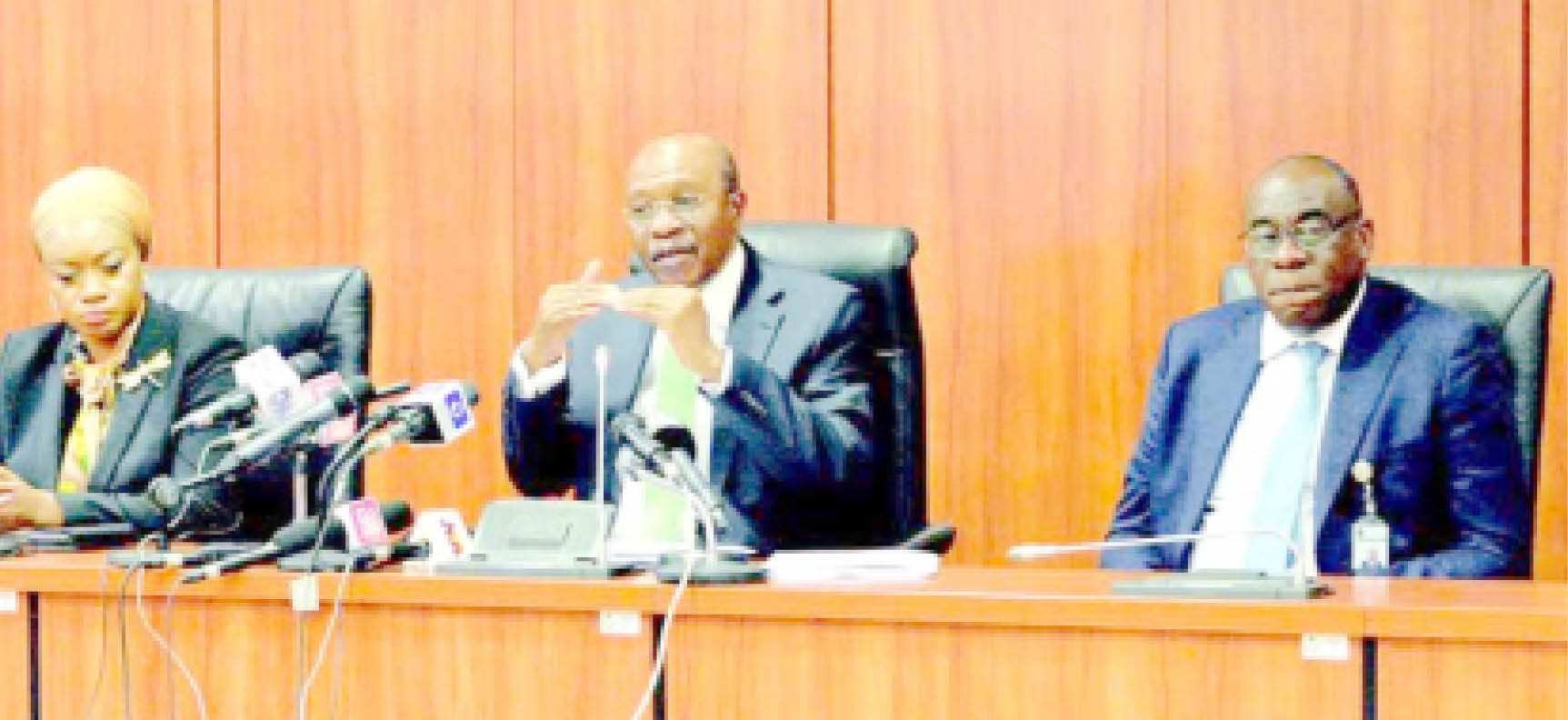
Members of the MPC meeting led by CBN Governor Godwin Emefiele (middle)
All eyes are on Nigeria’s Monetary Policy Committee (MPC), chaired by the governor of the Central Bank of Nigeria (CBN), Mr Godwin Emefiele, as it meets on November 22 and 23, 2021 to review economic trends and decide on key monetary policy instruments.
The most popular anxiety is always whether or not the MPC would increase or reduce the benchmark interest rate, which influences the cost of borrowing for businesses and the government, as well as the potential returns on savings and investments.
The key considerations for members will also include prevailing external conditions, where the fear of inflation is driving banks to commence a gradual wind-down of monetary easing, which has implications for capital flows to emerging and frontier markets like Nigeria, says Pabina Yinkere, chief investment officer at Sigma Pensions.
Interestingly, the Gross Domestic Product (GDP) grew by 4.03 per cent in the third quarter of the year, the fourth consecutive quarterly expansion of the economy, reinforcing the excitement that Nigeria’s economy may have sustainably come out of the woods. The growth in the country’s economic output was driven by the sustained improvement in non-oil productive activities, as the strong 5.44 per cent growth of the non-oil sector masked the deep contraction of 10.73 per cent in the oil sector.
With the strong momentum in output, the MPC has the headroom to begin to tighten the monetary policy environment to achieve its objective of macroeconomic stability, especially to checkmate the double-digit inflation rate.
While agricultural output remains subdued, with the sector growing barely 1.22 per cent in the third quarter, transportation and storage, trade and information and communication sectors recorded strong growth of 20.61 per cent, 11.9 per cent, and 9.66 per cent respectively.
The question is whether or not the four quarters of positive growth are strong enough to convince the monetary authority on a gradual withdrawal of stimulus programmes.
Contrarily, the continuous ease of headline inflation rate over the past seven months to 15.99 per cent in October suggests that inflation concerns may not dominate the consideration of the committee and such sentiment would contradict the potential consideration to wind down the prolonged accommodative monetary policy.
Similarly, the naira has been relatively stable around the N415/USD corridor at the official window, while it has also appreciated some 8.5 per cent in the parallel market to about N540/USD from its October peak of N586/USD.
Further strengthening the position of the CBN and perhaps alluding to its ability to meet the foreign currency need of the country is the steady accretion to the external reserve, which has grown USD5.97 billion or 16.82 per cent over the past two months. Hence, there is no pressure for the MPC to tighten.
All three investment experts who spoke to Daily Trust on Sunday believe that at the worst, the central bank would leave the interest rate unchanged.
“We believe amongst the options available to the MPC, a decision to keep all parameters unchanged is the most likely outcome. While external conditions should begin to raise considerations of mild tightening to encourage capital flows, the domestic conditions are supportive of easing to consolidate on the current growth trajectory.
“A Hold decision at this time will enable the economy to continue on its current path of recovery and improvement on the inflation front in the near term. While the currency remains a concern, we think given the FX reserve level and strong oil prices, the CBN is in a better position to manage the currency,” Yinkere said.
Similarly, as opined by Mr Olufemi Adenuga, the chief finance officer of Blackstone Capital Limited, “key macro variables are showing benign outlook, hence there is no pressure on the policy committee to tighten the economy at this time. Rather, there is a need for more accommodative support or stimulus to businesses, especially small businesses that still lack access to capital. This is particularly important because the fiscal authority has little or no headroom for any stimulus programme that may help to sustain or enhance economic expansion.”
Mr Yadinma Onwu, the executive vice chairman of Funds Matrix Assets Management Limited, shared a similar perspective, reiterating the need for monetary policies to lower the cost of capital, which is essential to improving the cost of doing business for Nigerian small and medium enterprises (SMEs).
“It is important to empower the small and medium enterprises sector through access to affordable debt capital, especially as they are faced with intense competition from dumping activities of Chinese companies, which have access to near-zero loans to finance their production.”
So, while it is not eureka yet on inflation and exchange pressures, the fogs are clear, giving the monetary policy committee the opportunity to support the recovery of the economy, and more importantly, redirect policies towards job creating productive activities that can enhance inclusive growth and ensure that every average Nigeria begins to feel the true essence of economic growth in the form of higher income and better standards of living, Mr Onwu added.
Summing up, Yinkere said the MPC’s focus would be on how to consolidate on this positive domestic picture and position the economy ahead of likely tighter external conditions going into 2022.