
Fare thee well, Shagari
We live. We die. We started dying the day we were born. The happy cradle is a sad foreshadow of the lonely grave. What happens in-between is what determines whether we have truly lived or merely existed. Death, the ultimate reaper, levels us all in the end. The demise of Shehu Shagari, first executive president […]
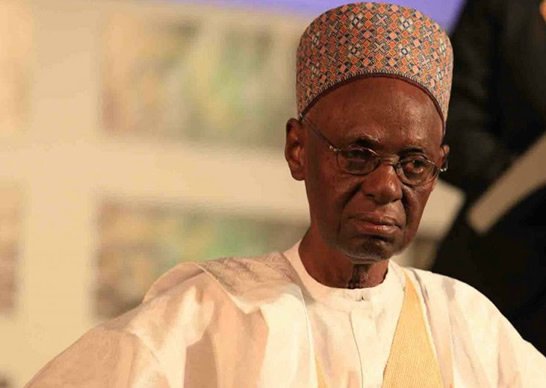
Former President Shehu Shagari.
We live. We die. We started dying the day we were born. The happy cradle is a sad foreshadow of the lonely grave. What happens in-between is what determines whether we have truly lived or merely existed. Death, the ultimate reaper, levels us all in the end.
The demise of Shehu Shagari, first executive president of Nigeria, in the dying days of 2018 at the age of 93 in a country where life expectancy is 53.4 years, affords us another opportunity to come to terms with how God uses the foolish things of this world to shame the wise, and how one can learn from the pitfalls of the past to shape a better future.
In 1978 when Shagari was thrust on the national stage as presidential candidate of the National Party of Nigeria, he was just 53 years old. He had wanted to be a senator while some of his more ‘articulate’ rivals coveted the presidency. While others were scampering to climb the tree of power using all means conventional and otherwise, the mango of power fell into Shagari’s laps.
It was our first experiment with the presidential system. Shagari cut the image of a dove; a decent man. Although the elections were bitterly fought and the 12 2/3 controversy almost tainted his victory, Shagari opted to play the statesman rather than the gloating victor. He reached out to his main challenger, Chief Obafemi Awolowo, awarding him the highest national honour of Grand Commander of the Federal Republic (GCFR), an award reserved for only heads of state.
He ran a truly national government with political posts equitably shared among all parts of the country. That was to be his style all through his administration.
By contrast, his partymen and women were mostly hawks. Indeed some were so far gone that we the younger elements used to call them political vultures. There were so many scandals that dogged the steps of government to such an extent that even some of the erstwhile military operatives who ceded way to democracy started wondering aloud if the politicians had learnt anything at all.
Shagari’s era marked the onset of the craze for private jets. It was a season of in-your-face kickbacks and the flaunting of ill-acquired wealth. The politicians who had been kept out of power by the military for 13 years were having a ball – and it seemed nothing could stop them.
Students and civil society elements had a running battle with the government, especially with regard to the poisonous education policy of the Obasanjo regime which Shagari inherited. Also, the Green Revolution policy which was a brilliant idea suffered the usual Nigerian malaise of bad implementation.
However, credit for the building of the Kaduna refinery, the Ajaokuta Steel rolling mills, the Delta Steel complex, Aluminium Smelter Company of Nigeria at Ikot Abasi among other projects, must go to Shagari. He put Housing, Industries, Transportation, and Agriculture on the front burner. There were cries of over-inflation of contracts and gross abuse of the import licence regime, but the government at least successfully completed major projects and one Naira exchanged for US$ 1.50.
What stood Shagari out as a leader was his practice of reaching out to perceived opponents which some analysts interpreted as a weakness. The story is told of one student leader offered appointment as a presidential aide which he politely declined.
At meeting attended by Chief Adisa Akinloye, Chairman of the ruling party, and six other chieftains of the NPN, the president asked why the young man did not want to serve his country, to which the fellow replied that there were other ways of serving the country than working in Dodan Barracks, the then seat of government.
The president asked the young man, “Now tell me, what do you think the government is doing wrong and what do you think Nigerians want to see that we are not doing?”
The young man was humbled. This was his country’s president coming down to ground zero to seek his plebeian opinion.
“Sir”, he said, “I’m not cut out for this cut-throat, avaricious kind of politics. This is my first time of meeting you at close quarters and you have won my respect”. He then went on the reel out the things he thought the government was doing wrong and how he thought the situation could be reversed. All the while, the president listened intently, not in the usual patronising way that has become the hallmark of his successors.
That young man never worked for Shagari but his respect for the soft-spoken, genial man soared and remained so till the man died.
Now that Shagari’s race is run and Nigeria has witnessed all sorts of monsters in government, it is hard to judge the man harshly, even if, as we have acknowledged, he was hemmed in by political hawks and vultures.
Out of power, Shagari maintained his taciturn dignity, never involved in partisan political machinations and never openly criticising his successors. He didn’t need to style himself a statesman; he had earned that appellation.
For those of us still on this side of the grave, even as we mourn the passing of one of the finer politicians in our democratic journey, we are perpetually reminded of Dr. Hassan Kukah’s admonition that the God-fearing qualities required of a cleric are totally different from the qualities required of a president.
Fare thee well, Shehu Usman Aliyu Shagari.