
Farmers hopeful as implementation of agro-industrial zones begins
The implementation of the African Development Bank’s Special Agro-Industrial Processing Zone (SAPZ) has begun in Kaduna and Cross River states. The project is expected to revolutionize the Nigerian agricultural sector and strengthen the value chain approach to production, processing and marketing. SAPZs, which is already being implemented in 27 sites across 11 African countries, is […]
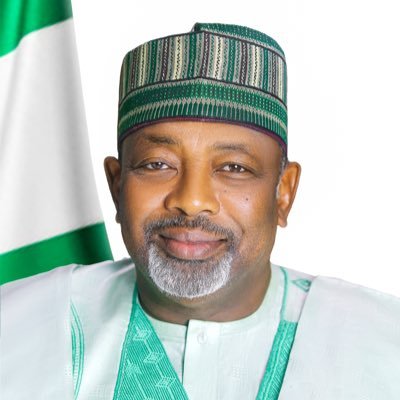
minister of agriculture and food security, senator abubakar kyari
The implementation of the African Development Bank’s Special Agro-Industrial Processing Zone (SAPZ) has begun in Kaduna and Cross River states.
The project is expected to revolutionize the Nigerian agricultural sector and strengthen the value chain approach to production, processing and marketing.
SAPZs, which is already being implemented in 27 sites across 11 African countries, is a key initiative for actualizing the Feed Africa component of the High 5s of the African Development Bank.
The AFDB designed the project as agro-industrial hubs that integrate farmers with processors to reduce post-harvest losses and expand rural economic opportunities.
- IITA releases new drought-resistant cowpea for planting
- FG targets 750,000 women farmers, processors, aggregators in Kano
How the concept started
The Minister of Agriculture and Food Security, Senator Abubakar Kyari, on Saturday, told journalists that the SAPZ program was launched in 2022 based on its conceptual design of Phase 1 in 2019, adding that the project is a federal government-enabled initiative with subscription by the state governments.
Each state governor was notified in writing to express interest with attached eligibility criteria that will enable them to participate in phase one of the programme.
“Upon receipt of their expression of interest, a joint team comprising the Federal Ministry of Agriculture, Federal Ministry of Finance, and the African Development Bank conducted a mission to each of the states to verify the fulfilment of the eligibility criteria as a selection process. This stage got eight states that qualified namely: Kaduna, Kano, Kwara, Oyo, Ogun, Imo, Cross River and the FCT,” the minister said.
Sen Kyari said upon assumption of office by President Tinubu, the federal government reviewed the development potential of the programme and decided that no state will be left behind.
“Consequently, the Vice President’s first international mission was to Rome – the Food System Summit, where he galvanized more funding to enable us to take more states. He also embarked on a second mission to the World Food Price meeting in Des Moines, Iowa, USA where he obtained a commitment of one billion USD from the President of the African Development Bank (AfDB) for the sole purpose of bringing on board more states,” Kyari explained.
What the initiative will bring
Last Thursday, Vice President Kashim Shetima kicked off the process of constructing the Special Agro-Industrial Processing Zone in Calabar, Cross Rivers State. This was about 72 hours after he performed the ground-breaking ceremony of the initiative designed to transform the agricultural sector and stimulate inclusive economic growth across Nigeria in Chikun Local Government Area of Kaduna State.
Shettima was assisted by AfDB President Akinwumi Adesina and Kaduna State Governor Uba Sani to perform the groundbreaking at a ceremony witnessed by top government officials, leaders of the host community and other stakeholders in Kaduna.
Speaking during the ceremony in Calabar, Shettima described the SAPZ initiative as “a game changer” and a “bold vision to transform Nigeria’s agricultural value chain.” He added that the initiative aligns with the President Tinubu administration’s Renewed Hope Agenda of diversifying the nation’s economy, addressing food security, tackling rural unemployment, as well as empowering farmers and the youth population.
According to the Vice President, the SAPZ initiative was designed to address challenges that have long hindered the growth of Nigeria’s agricultural economy, including inadequate processing infrastructure, limited access to markets, and rural unemployment by creating an ecosystem where innovation, investment, and collaboration will thrive
He explained that the Calabar SAPZ will serve as a hub for agro-processing and storage, providing farmers and agripreneurs with critical infrastructure to scale their operations and tap into local and international markets.
“This is where farmers will meet with private investors, where ideas will turn into enterprise, and where our youth will find meaningful opportunities,” he said, while revealing that the Tinubu administration has classified SAPZ as a priority program in Nigeria’s quest for food security, with plans to institutionalize it as a government agency that will facilitate agricultural industrialization across all 36 states.
“These zones will generate thousands of jobs. They will create opportunities for young people, empower them with skills and knowledge to engage in meaningful work and help them contribute positively to the economy. Cross Riverians, development has come to your doorstep. For you and for the country, SAPZ is a game changer—one that will enable Nigeria to diversify its economy with a sustainable source,” he stated.
Shettima also commended Cross River State Governor, Senator Bassey Edet Otu, for his dedication that led to the actualization of the SAPZ initiative.
Earlier, Governor Otu had said the programme marked a watershed in the ongoing bid by his administration to establish the renewable resource base of the state through the full utilisation of agriculture and its multiple value chain.
Also, speaking at the event, the governor highlighted the potentials of the initiative to engender agro-industrial revolution in Cross River through the establishment of a cluster of smallholder farmers in cash crops such as rice, cassava, millet, and cocoa across the state.
“The deliverables of the envisaged projects are food security, diversification of the state economy towards export-oriented trajectory and increase in the state’s GDP. When these projects are fully operational, there is an expected robust collaboration with reputable agro-based processing institutes, universities and the rest, aimed at accelerating breakthroughs in many agro-industrial production.”
In his remarks, the President of AfDB, Akinwumi Adesina, said with its vast production of cocoa, cassava, rice and banana in the state, Cross River is crucial to efforts to revolutionise agricultural practice in Nigeria. According to him, with Obudu Cattle Ranch, the state can become a leading state for livestock production in the country.
The AfDB President added that with the state’s already export processing zone ports facility and export handling capabilities, the SAPZ in Calabar can easily be linked to the seaport for the transportation of processed agricultural commodities to the export market in neighbouring countries, including Cameroon and the rest.
“The African Development Bank, as you know, is spearheading this together with our partners, which include the Islamic Development Bank and the International Fund for Agricultural Development, and we have put together $934 million from the African Development Bank, with core financing of $938 million from these partners.
“The first phase of SAPZ in Nigeria will be in eight states of Cross River, Kaduna, Kano, Katsina, Oyo, Ogun, Kwara, Imo and the Federal Capital Territory. We are delighted with our partnership with the Islamic Development Bank and the International Fund for Agricultural Development.
“We have put together a financing package of $510 million to make this work. We expect, in the second phase of this, to mobilise $2.2 billion to be able to work for 28 states across the federation with several partners,” the AfDB President said.
He, however, emphasised the importance of collaboration, commitment and continuity to ensure the success of the initiative.
In their goodwill message at the event, the National Executives and members of Association of Food and Agro processors of Nigeria described the groundbreaking ceremony of SAPZ in Calabar as the beginning of a journey filled with promise, progress, and purpose in the Food and Agro industries in Nigeria.
“This project is a symbol of vision, collaboration, and commitment to building a sustainable and agricultural-based economy in Nigeria. It is also a testament to what is achievable when minds come together with a shared dream and vision,” the Association said in a statement.
Farmers hopeful
Speaking on the initiative, the National President of the All-Farmers’ Association of Nigeria (AFAN), Arc. Kabiru Ibrahim, described the Special Agro Processing Zones launched recently as good vehicles to unleash value addition, provide jobs, create wealth and bring about the achievement of the much-awaited food security.
He said, “The farmers look forward to their operations because they constitute game changers in agribusiness and produce marketing which will help to exit our SHFs (Small Holder Farmers) from poverty and get them into prosperity.”