
FCT: 100 youths, women trained on CNG conversion
Project Green Fleet, a grantee of the British Council’s UK Alumni Climate Action Grants has trained 100 participants, intentionally prioritising young people and women, as part of efforts to turn a conversion bay into a classroom for cleaner mobility and new livelihoods. The efforts is part of a practical response to a national pivot and […]
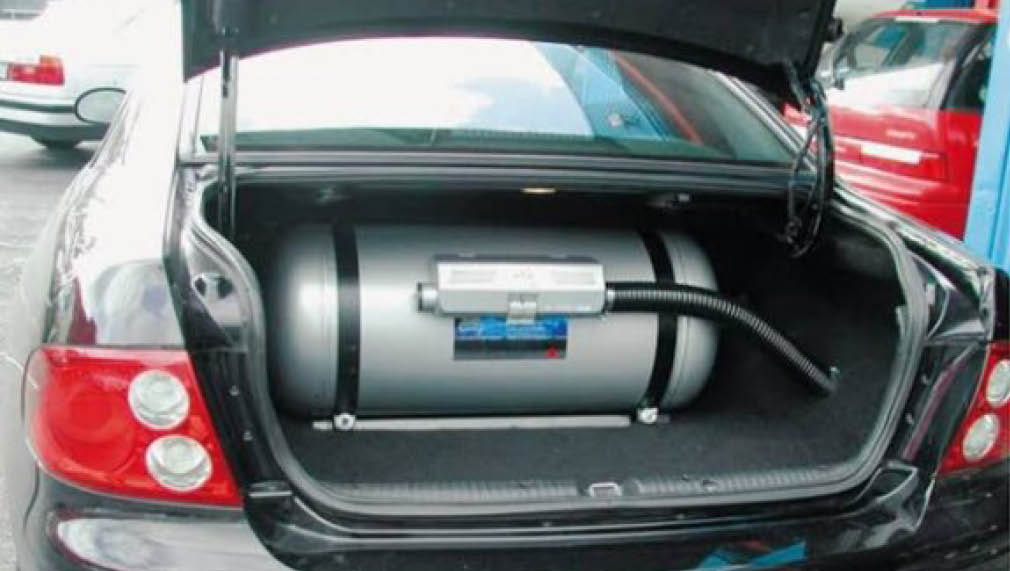
boost for autogas cng
Project Green Fleet, a grantee of the British Council’s UK Alumni Climate Action Grants has trained 100 participants, intentionally prioritising young people and women, as part of efforts to turn a conversion bay into a classroom for cleaner mobility and new livelihoods.
The efforts is part of a practical response to a national pivot and Nigeria’s federal push to expand compressed natural gas (CNG) as a mainstream transport fuel has become a central plank in the government’s plan to lower transport costs and reduce emissions.
The Presidential CNG had launched an Initiative (Pi-CNG), launched as a flagship program, aims to accelerate CNG adoption and scale conversion centres and refuelling infrastructure across the country.
The three-day programme combined classroom modules on CNG systems and safety with hands-on conversions, diagnostic exercises and post-conversion testing.
Beyond technical instruction the training included short business modules: how to price conversions, build client confidence, and set up after-sales service — skills that convert technical know-how into a sustainable income stream for participants.
For many trainees, the course was a turning point.
Dauda Adetunji a mechanic affiliated to MOMTAN, who has before now worked with petrol engine described the first successful test drive of a converted vehicle as “proof that safer, cleaner options can be done here, with people like us.”
Several women in the cohort, once sidelined from garage floors left the training with the confidence to bid for apprenticeships and with formal certificates that make them visible to employers and agencies.
Providing insights, the project highlighted how burns cleaner than petrol and diesel, lowering carbon dioxide and particulate emissions as research and policy analyses point to measurable reductions in CO₂ and other pollutants when fleets move to gas.
The shift also promises significant savings for vehicle owners, an attractive argument in a context where fuel prices have risen sharply. These environmental and economic benefits underpin government, private-sector and donor interest in expanding CNG infrastructure and skills.
The partnership model included government, alumni, and conversion centres.
Project Green Fleet was implemented in collaboration with a registered Abuja conversion centre and with technical support from Pi-CNG trainers.
The British Council’s Alumni Climate Action Grant provided seed funding and legitimacy; Pi-CNG supplied technical trainers, equipment and alignment with national safety and certification requirements.
Stakeholders describe the model — alumni leadership + government technical standards + private conversion capacity — as a practical pathway for scaling safe conversions nationwide.
Subsequently, 100 technicians certified with practical conversion experience and safety training.
Immediate linkages for apprenticeships several participants were matched with local garages and cooperatives for supervised conversion work.
Subsequently, the project plans to package a certified training curriculum, pursue additional funding and expand to other cities — a necessary step if targets for mass conversion are to be met.
“This project bridges the gap between policy and people,” said project lead Oluwagbemi Olorunfemi “By training technicians on CNG conversion, we are not only cutting emissions but creating new green jobs.” he added
He hailed the initiative as “a practical model of local partnership delivering impact,” emphasizing that certified technicians are central to safe, mainstream adoption of CNG technology.
Furthermore, he noted that Scaling conversions safely requires more than workshops: it needs certified training curricula, more licensed conversion centres, reliable gas supply and public confidence.