
FCT commuters cry out over rising fuel price, transport fare
Commuters across the Federal Capital Territory (FCT) say they are overwhelmed by the rapid and unpredictable changes in fuel prices, describing the situation as “mentally exhausting” and economically devastating. They said this in separate interviews with the News Agency of Nigeria (NAN) in Abuja. For many residents, the situation has turned daily movement into a […]
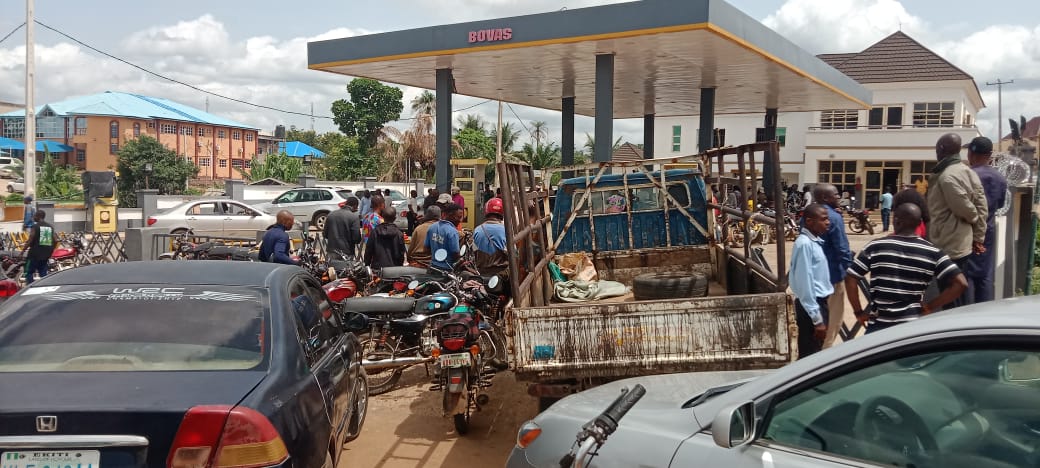
Commuters across the Federal Capital Territory (FCT) say they are overwhelmed by the rapid and unpredictable changes in fuel prices, describing the situation as “mentally exhausting” and economically devastating.
They said this in separate interviews with the News Agency of Nigeria (NAN) in Abuja.
For many residents, the situation has turned daily movement into a financial calculation.
NAN reports that in the past week, fuel prices reportedly fluctuated multiple times, rising from about N1,200 to N1,275, then N1,350, before partially reversing to N1,275 in some outlets.
In several locations, motorists said that Premium Motor Spirit (PMS) has now climbed as high as N1,500 per litre, while kerosene used by low-income households sells for as much as N2,100 per litre.
A passenger and an estate supervisor, Mr Muntari Suleman, said transportation alone now consumes a significant share of his income.
“I spend close to N4,000 or more on transport daily, and I earn less than N150,000 monthly.
“After transport and feeding, there is almost nothing left,” Suleman said.
He said that food inflation was already climbing before the Iran-US situation.
“It went from 8.89 per cent in January to 12.12 per cent in February before the war escalated.
“Nigeria is an oil producer. Higher oil prices should benefit us and not hurt us,” he said.
Another commuter and a sales manager, Timothy Bada, said he was forced to reassess his lifestyle due to rising fuel costs.
“At some point, I was earning N300,000 but spending about N120,000 on fuel alone every month.
“The economy does not really reflect what people are earning anymore,” Bada said.
Adding her experience, Mrs Rose Ameh, a civil servant, said transport fares increased within a single day of fuel price adjustments.
“There is an increase in transportation fares today. I usually spend between N700 and N800 from Airport Road to Central Area, but yesterday and today I spent N1,000.
“I even had to beg the driver before he agreed to the 1,000 because he initially asked for 1,200,” Ameh said.
Within Abuja’s transport corridors, from Wuse to Nyanya, Kubwa to Central Area, drivers said fare adjustments have become constant, but unpredictable fuel prices make planning difficult.
A taxi driver along the Airport Road corridor, Mr Sunday Okoh, said: “we do not even know what price to charge anymore.
“Fuel price keeps changing. Passengers are angry, but we also have to survive.”
Beyond commuters, small business owners said the instability was affecting pricing and operations.
Many described the frequent adjustments as more damaging than the actual price increase.
Mrs Lami Kawu, a trader at the Garki International Market, said: “Even when they reverse the price, the market has already reacted. Transportaton, goods, everything has gone up. You cannot reverse that.”
Kawu said that such volatility often reflects shifting global crude oil prices, foreign exchange pressures, and logistics costs.
She, however, noted that unclear communication around pricing decisions tends to heighten public anxiety.
For many FCT residents, the broader concern goes beyond fuel; it is about the rising cost of living.
Mr Aminu Danladi, a civil servant in Abuja, summed up the mood.
“It feels like we are no longer planning life, we are just managing survival. Every day is about how to get through the next.”
As prices continue to fluctuate, Danladi said what he needed most was not only affordability, but stability he could plan around.
Mrs Mercy Adeojo, founder of Women Strengthening Women (WSW), said that the country’s downstream petroleum sector has undergone major changes following subsidy removal and increased domestic refining capacity, including operations linked to the private refining sector.
Adeojo said that while these developments were expected to stabilise supply in the long term, the short-term experience has been marked by uncertainty.
She also referenced earlier expectations that local refining would reduce pump prices, with disappointment growing as prices remain high.
Mr Peter Maigari, a petrol station attendant, said he now sleeps at the station from Monday to Friday just to survive, as the worsening economic situation has made commuting home and returning daily an added burden he can no longer afford.
Maigari noted that the latest fuel price increase was expected to push pump prices higher nationwide, placing additional pressure on transportation costs and inflation, at a time when many Nigerians were already struggling with rising living expenses.
He explained that the frequent changes in fuel prices have also made life more unpredictable for workers in the downstream sector, as both attendants and motorists are constantly adjusting to new price regimes. (NAN)