
FG begins 1MW solar project at BUK
The Federal Government has commenced the installation of a 1 megawatt (MW) solar hybrid power system at Bayero University Kano as part of efforts to improve reliable and sustainable electricity supply in tertiary institutions. The Director-General of the Energy Commission of Nigeria, Mustapha Abdullahi, disclosed this during the groundbreaking ceremony held at the university. He […]
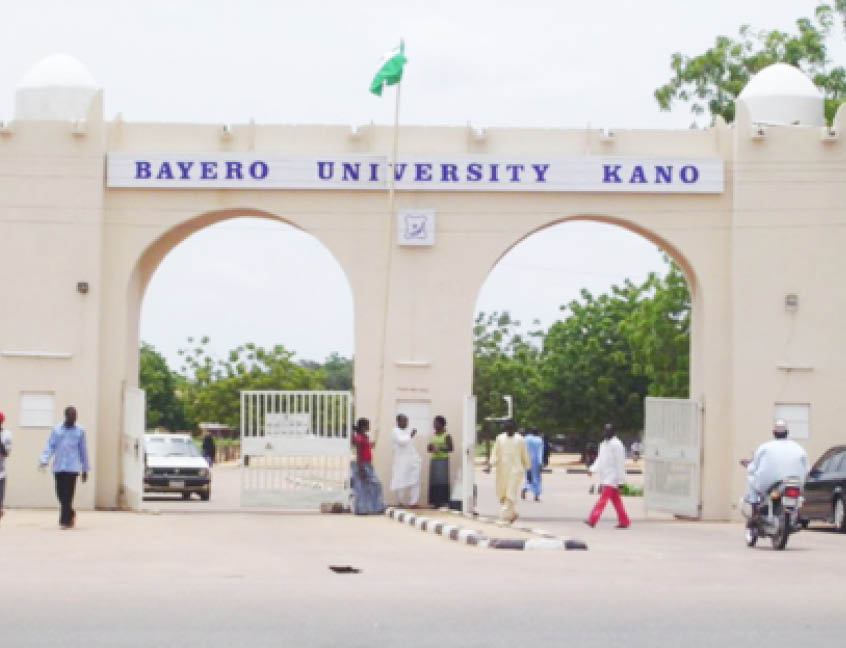
bayero university kano (buk)
The Federal Government has commenced the installation of a 1 megawatt (MW) solar hybrid power system at Bayero University Kano as part of efforts to improve reliable and sustainable electricity supply in tertiary institutions.
The Director-General of the Energy Commission of Nigeria, Mustapha Abdullahi, disclosed this during the groundbreaking ceremony held at the university.
He described the initiative as the first of its kind, noting that the hybrid system is equipped with advanced technology capable of generating electricity even under partial shading or dusty conditions.
According to him, the system will also feature a smart monitoring mechanism that allows users to track performance and manage power usage remotely via mobile devices and computers.
- Tinubu extends 2025 budget implementation, assents to 2026 bill
- In New Book, Nwabufo Chronicles Tinubu’s 3 Years In Office
“This is not just a standalone system. It is an integrated solution with panels, inverters, batteries and transformers working together in a centralised and efficient manner,” he said.
Abdullahi explained that the project followed a comprehensive energy audit of the institution, which has a population of over 40,000, adding that the 1MW installation represents a pilot phase.
He said plans were already in place to expand capacity by an additional 4.5MW after assessing the performance of the initial phase.
The Director-General further disclosed that the project forms part of a broader national renewable energy drive, with about 150MW already being deployed across the 36 states and the Federal Capital Territory.
He added that the initiative aligns with the Federal Government’s commitment to providing affordable and reliable energy through solar solutions.
Abdullahi assured the university management that funding for the project had been secured, while contractors were set to commence full mobilisation to site.
He noted that critical components, including lithium batteries and solar panels, had already been delivered, signalling the immediate take-off of the project.
The DG said the project would significantly improve power supply to classrooms, offices and other facilities within the university, thereby enhancing teaching, learning and research activities.
He thereafter performed the official groundbreaking ceremony, expressing optimism that the project would serve as a model for similar interventions across the country.
The development comes amid ongoing efforts to address the failure of a previous solar project at the university.
The N5.6 billion, 3.5MW solar hybrid power plant, commissioned in 2019 by former Vice President Yemi Osinbajo, was once regarded as the largest off-grid solar facility in Africa.
The project, executed by the Rural Electrification Agency under the Energising Education Programme, supplied electricity to the university’s new campus, including lecture halls, hostels and staff quarters.
However, the facility developed faults by 2021 and was subsequently shut down, forcing the institution to rely on diesel generators and the national grid.
The breakdown has since prompted plans by the agency to revive and expand the plant to 6MW under a N100 billion federal solarisation programme targeting Nigerian institutions.
Records show that the initial project, which comprised over 10,000 solar panels and multiple inverters, had significantly reduced the university’s energy costs before its shutdown.
The Vice-Chancellor, Professor Haruna Musa, attributed the earlier failure to the exclusion of the institution’s technical experts during implementation, noting that their involvement in the new phase would enhance maintenance and sustainability.
He expressed optimism over the new project and assured that the university would ensure its proper use and maintenance.
“We will ensure that we maintain it and use it judiciously. Where we decided to use it is a place that we are having issues of security, so it will go a long way in solving that challenge.
“I have equally instructed our security personnel to make sure they protect it and ensure it is always in good condition,” he said.