
FG defends Fubara removal; labour demands reversal
The federal government on Wednesday defended the declaration of the state of emergency, saying no responsible administration would allow the situation to persist without intervention. Speaking to State House correspondents at the Presidential Villa yesterday, the Attorney-General of the Federation and Minister of Justice, Lateef Fagbemi, said the president acted in a timely manner to […]
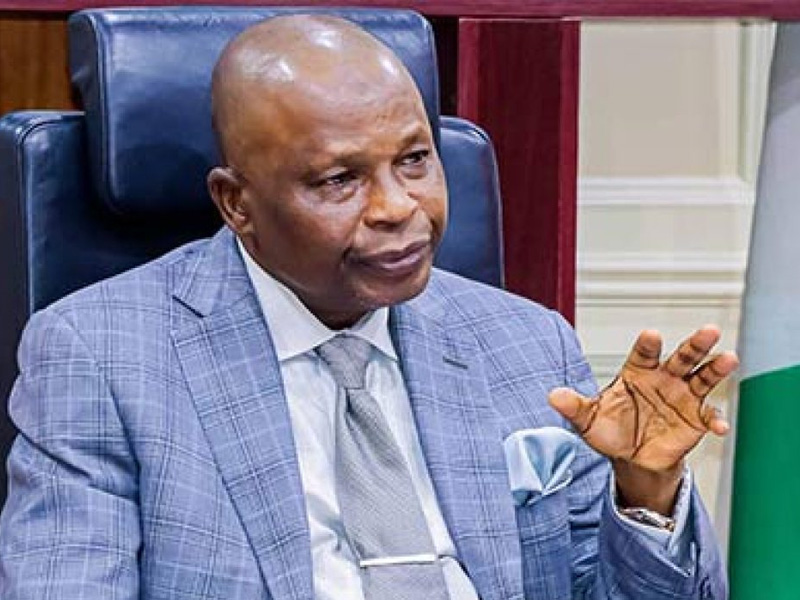
fagbemi 1
The federal government on Wednesday defended the declaration of the state of emergency, saying no responsible administration would allow the situation to persist without intervention.
Speaking to State House correspondents at the Presidential Villa yesterday, the Attorney-General of the Federation and Minister of Justice, Lateef Fagbemi, said the president acted in a timely manner to prevent a breakdown of law and order.
He described the situation as too serious for a responsible leader to ignore. “The president took a bold decision. He made a public announcement, detailing the facts from beginning to end,” Fagbemi added.
Fagbemi argued that had Tinubu delayed action by even a day, the consequences could have been severe.
- Tinubu hosts Rivers Administrator at Aso Rock
- ‘Tinubu advised wrongly’, NNPP rejects Rivers emergency rule
“The president is not just the head of state; he is the commander-in-chief of the armed forces. He declared a state of emergency because the law requires intervention when there is an imminent danger to lives and property. People were living in fear,” he said.
He insisted that Tinubu acted only after giving stakeholders ample time to address the crisis.
“The president made a difficult decision. No leader enjoys disrupting democracy, but the Constitution anticipates extraordinary situations like this, which is why Section 305 provides for emergency declarations,” Fagbemi explained.
The AGF also accused Fubara of failing to de-escalate tensions and prevent militants from attacking pipelines, alleging that his statements emboldened them.
“He beckoned to them, suggesting they would know when to act. Even if we assume this was an error, did he disown them? No. A week later, pipelines were vandalised,” Fagbemi alleged.
He linked the unrest to Nigeria’s oil production, recalling that when Tinubu took office, output was around 900,000 barrels per day. Due to government efforts, production increased to 1.5 million barrels per day, benefiting state revenues.
“Governors now take home 60% more at the end of the month. Yet, someone either encouraged or failed to act against those threatening the nation’s economic stability,” he said.
Fagbemi also absolved the Minister of the Federal Capital Territory, Nyesom Wike, of any responsibility, questioning whether Wike was the one who ordered the demolition of the Rivers State House of Assembly complex.
“When it comes to national issues, we must be sincere. Did the Minister of FCT order the demolition of the House of Assembly? Did he tell the governor not to present the budget to lawmakers? Did he advise him to bypass the legislature for confirming commissioner nominees? I don’t know,” he said.
Fagbemi said the Supreme Court determined that Fubara had wrongly anticipated impeachment and, in response, sought to undermine the House of Assembly’s authority by demolishing the building.
“Fourteen months after the demolition, no effort was made to rebuild it. Government operates on a tripod: the executive, the legislature, and the judiciary. By incapacitating one, you make governance impossible,” he said.
He stressed that legislative approval was essential for government spending and accused the governor of unilaterally making financial decisions.
“The Supreme Court found that the governor’s behaviour resembled that of a despot and concluded that there was no functioning government in Rivers State,” Fagbemi stated.
The minister also claimed that the state of emergency actually benefited Fubara.
“Yesterday, a notice of impeachment was issued against the governor. Had the process been completed, he and his deputy would have been removed, losing their entire four-year term. The emergency declaration prevented this outcome,” Fagbemi said.
The leadership of the organised labour, comprising the Nigeria Labour Congress (NLC) and the Trade Union Congress (TUC), also condemned the declaration, describing it as a “direct assault on democracy.”
In a joint statement signed by NLC President Joe Ajaero and TUC President Festus Osifo, they said Tinubu’s action violates Section 305 of the Constitution and constitutes an overreach of executive power.
“The purported suspension or removal of the Governor, Deputy Governor, and the State House of Assembly is not only unlawful but a direct assault on democracy,” the statement read. “No democratic society can thrive where elected leaders are arbitrarily removed at the whims of the President.”
The labour leaders warned that the move sets a dangerous precedent, eroding constitutional governance and threatening the autonomy of subnational governments. They called on Tinubu to revoke the declaration in compliance with the Constitution, warning that its continuation could have severe socio-economic repercussions, including job losses, economic instability, and security risks.
“We demand the immediate reversal of this unconstitutional state of emergency in the interest of democracy, economic stability, and the welfare of Nigerian workers,” the statement added.