
FG detects contaminated groundwater in Lagos, Kebbi, Kogi
The Nigeria Hydrological Services Agency (NiHSA) has warned of significant groundwater contamination in parts of Lagos, Kebbi, and Kogi states, cautioning that long-term consumption poses serious health risks. Announcing the findings in Abuja, Director-General Umar Ibrahim Mohammed said recent Water Quality, Flood Assessment, and Validation reports revealed dangerous pollutant levels in Ikeja and Ikoyi in […]
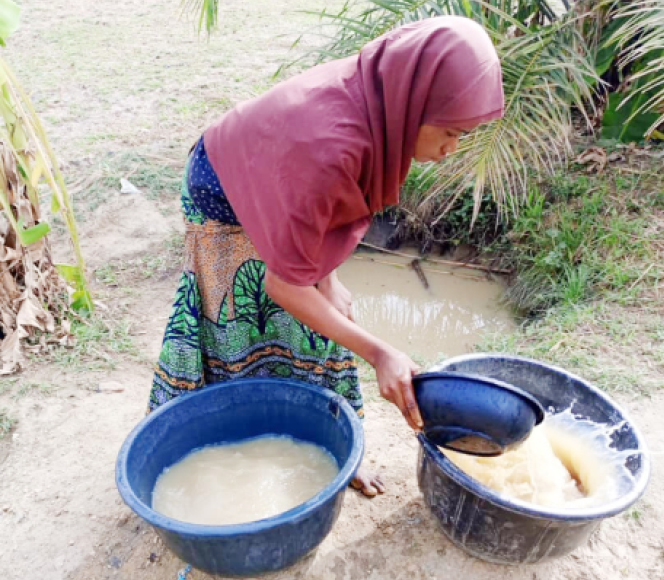
a woman fetching water from one of the ponds
The Nigeria Hydrological Services Agency (NiHSA) has warned of significant groundwater contamination in parts of Lagos, Kebbi, and Kogi states, cautioning that long-term consumption poses serious health risks.
Announcing the findings in Abuja, Director-General Umar Ibrahim Mohammed said recent Water Quality, Flood Assessment, and Validation reports revealed dangerous pollutant levels in Ikeja and Ikoyi in Lagos; Argungu LGA in Kebbi; and Lokoja LGA in Kogi.
He said groundwater samples from the affected areas contained high concentrations of nitrite, fluoride, lead, and cadmium, alongside alarming microbial contamination.
“These pollutants—driven by industrial discharge, sewage infiltration, waste leaching, and corrosion of ageing plumbing—pose severe health risks, including neurological damage from lead, kidney problems from cadmium, blue-baby syndrome from nitrites, and bone and dental deformities linked to fluoride,” he said.
He added that floodwater intrusion and damaged drainage systems further exacerbate contamination, while poor early-warning dissemination increases public exposure.
In Kogi State, groundwater tests showed excessive lead levels ranging from 0.56 to 12.0 mg/L, as well as E. coli, Streptococcus, and Salmonella contamination, posing high risks of poisoning and waterborne diseases.
In Kebbi, several LGAs recorded extremely high arsenic levels—0.75 to 4 mg/L—alongside heavy microbial loads, with prolonged exposure capable of causing arsenicosis, liver damage, and severe intestinal infections.
Mohammed called for urgent coordinated action to address the contamination, enhance public sensitisation, and ensure safe water access.
Water expert, Engr. Mathew Ajisafe, urged residents to stop using well and borehole water and advised affected state governments to supply treated water from their water boards.