
FG moves against illegal fishing
The federal government said it had launched a two-pronged approach to boost Nigeria’s fishing industry, targeting illegal fishing while providing single-digit loans to local fishermen. The Fisheries Cooperative Federation of Nigeria Limited had in September, disclosed that out of 3.6 million tonnes of fish needed annually in Nigeria, local farmers were able to produce 1.6 […]
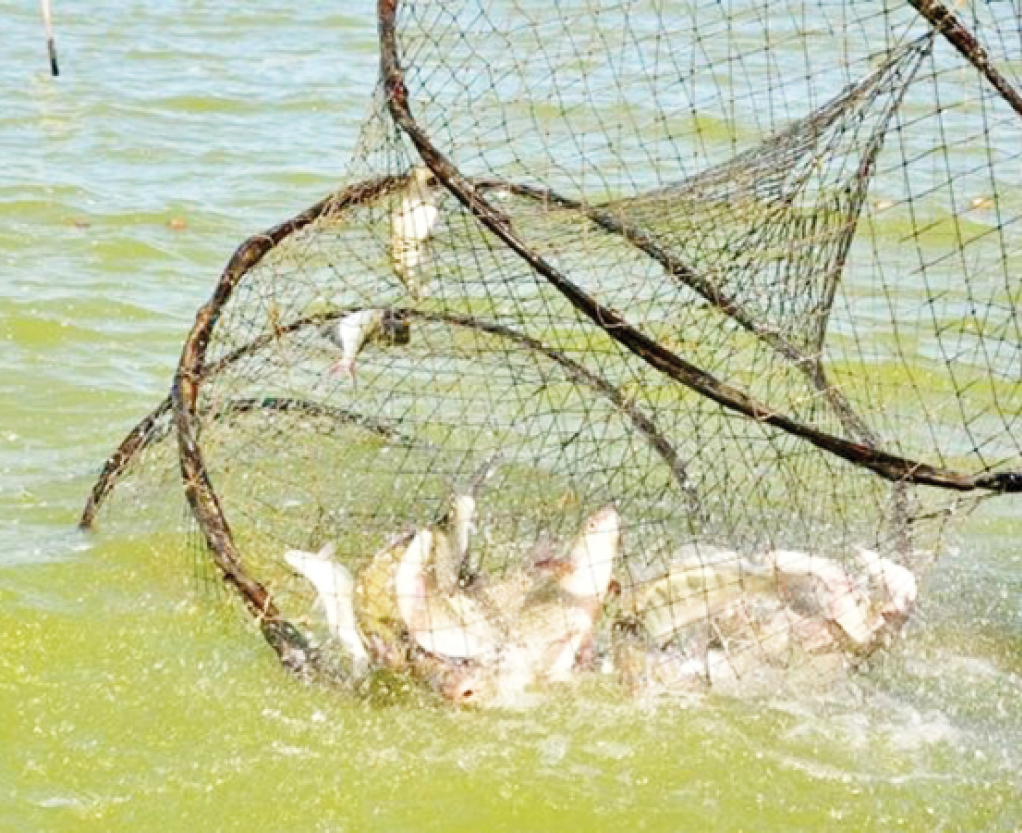
Fishing net
The federal government said it had launched a two-pronged approach to boost Nigeria’s fishing industry, targeting illegal fishing while providing single-digit loans to local fishermen.
The Fisheries Cooperative Federation of Nigeria Limited had in September, disclosed that out of 3.6 million tonnes of fish needed annually in Nigeria, local farmers were able to produce 1.6 million, while two million were imported.
Towards this end, the federal government said it was developing a National Fish Production Acceleration Roadmap to guide investment and reforms in the fisheries and aquaculture subsector, in partnership with the National Institute for Policy and Strategic Studies (NIPSS).
The new single-digit interest loans, as gathered, would be made available to fishermen through cooperative structures, enabling them to access funding and expand their production capacity.
Speaking in Lagos at the 16th Conference of Ministers of the Fisheries Committee for the West and Central Gulf of Guinea (FCWC), the Minister of Marine and Blue Economy, Adegboyega Oyetola, explained that the federal government has opened discussions with the Bank of Industry (BOI) to facilitate single-digit interest loans for fishermen across the country, as part of efforts to boost local fish production and combat illegal, unreported and unregulated (IUU) fishing in Nigerian waters.
Oyetola explained that the initiative was aimed at empowering artisanal fishermen through cooperative structures that would enable them to access affordable funding and expand their production capacity.
The minister noted that the government’s goal was to enhance fish production, promote value chain development and reduce the country’s dependence on imported fish, which continues to drain foreign exchange.
He said the country had recorded an improvement in fish production since the ministry’s creation, moving from 1.1 million to about 1.4 million metric tonnes, even as he said efforts were ongoing to strengthen local capacity through technological interventions and better coordination within the region.