
FG okays policy to curb frequent strikes
The Federal Executive Council (FEC) has approved the implementation of the National Industrial Relations Policy, 2025, aimed at promoting harmonious working relations between employers and employees. The policy is also expected to create the right synergy between the federal government and the trade unions within the industrial relations space to curb frequent industrial actions in […]
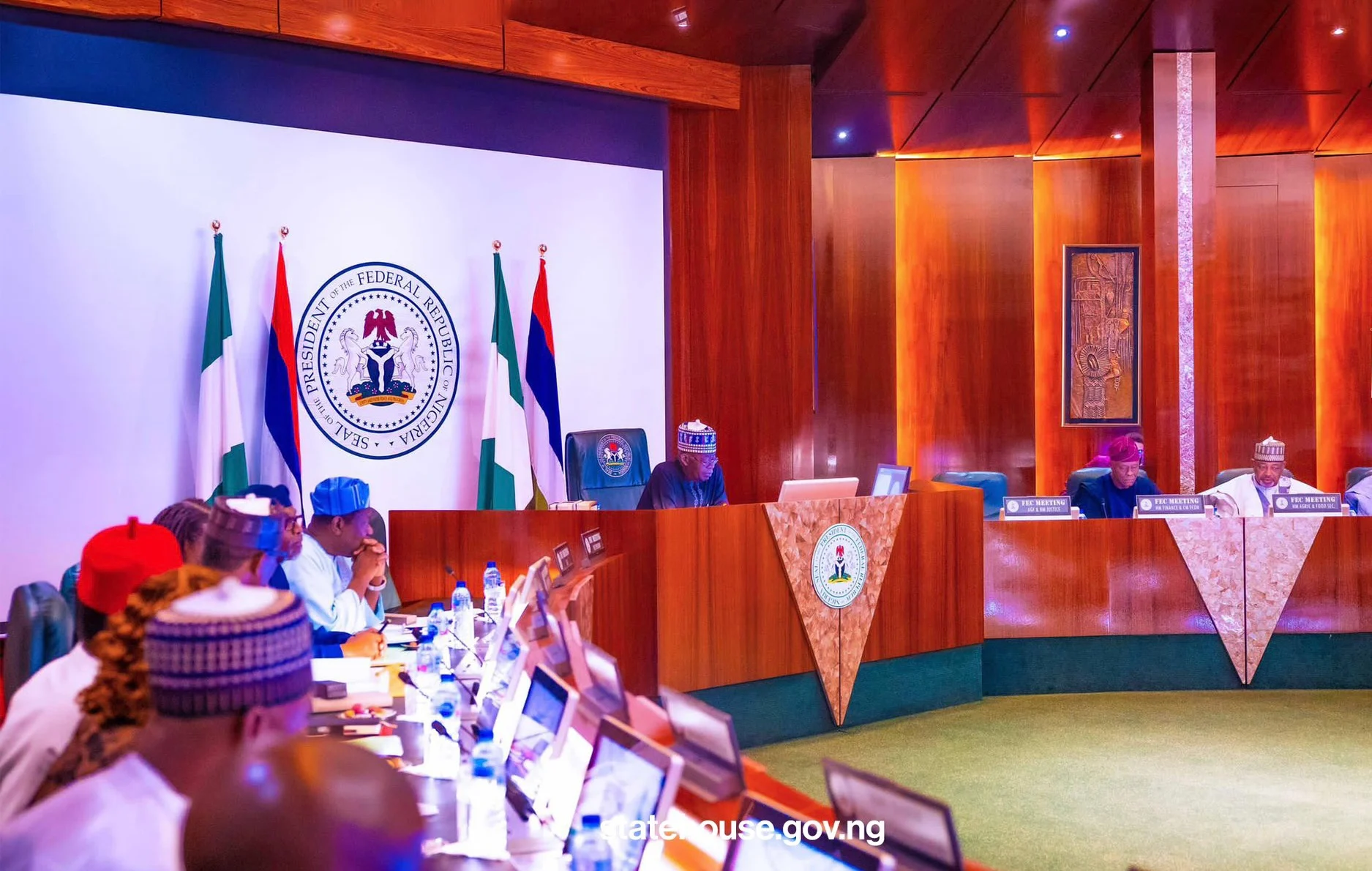
tinubu at fec meeting 1
The Federal Executive Council (FEC) has approved the implementation of the National Industrial Relations Policy, 2025, aimed at promoting harmonious working relations between employers and employees.
The policy is also expected to create the right synergy between the federal government and the trade unions within the industrial relations space to curb frequent industrial actions in the country.
This was disclosed by the Minister of Information and National Orientation, Mohammed Idris, after the FEC meeting presided over by President Bola Ahmed Tinubu on Thursday.
The council also approved electrification projects worth N213.7 billion to improve energy access in universities, teaching hospitals, and rural communities across the country.
- #EndBadGovernance protest: One year after, nothing has changed – Conveners
- Tinubu appoints Majekodunmi as DG of National Council on Climate Change
This was disclosed by the Minister of Power, Chief Adebayo Adelabu.
Adelabu said the first project, valued at N145 billion, inclusive of 7.5 percent VAT, is for the engineering, procurement, and construction (EPC) of power systems under the Energizing Education Programme (EEP), implemented by the Rural Electrification Agency (REA), to be funded through the Renewed Hope Infrastructure Development Fund.
The minister listed the institutions to benefit from the first phase of the programme to include as University of Lagos; Ahmadu Bello University, Zaria; Obafemi Awolowo University, Ile-Ife; University of Nigeria, Nsukka; University of Ibadan; University College Hospital, Ibadan; Federal University, Dutse in Jigawa State; and Federal University, Wukari in Taraba State.
He explained that many institutions had faced severe electricity challenges, leading to blackouts and industrial actions as they struggle to meet exorbitant utility bills from distribution companies.