
FG urged to phase ban on solar panels
The Federal government has been cautioned against an outright ban on solar Importation as local manufacturers are not ready to meet the market demand. Speaking during a press conference yesterday in Abuja, the Nigeria Campaign Director, Secure Energy Project, Member of the Solar Power Nigeria Coalition, Joseph Ibrahim, said the government should engage in phased […]
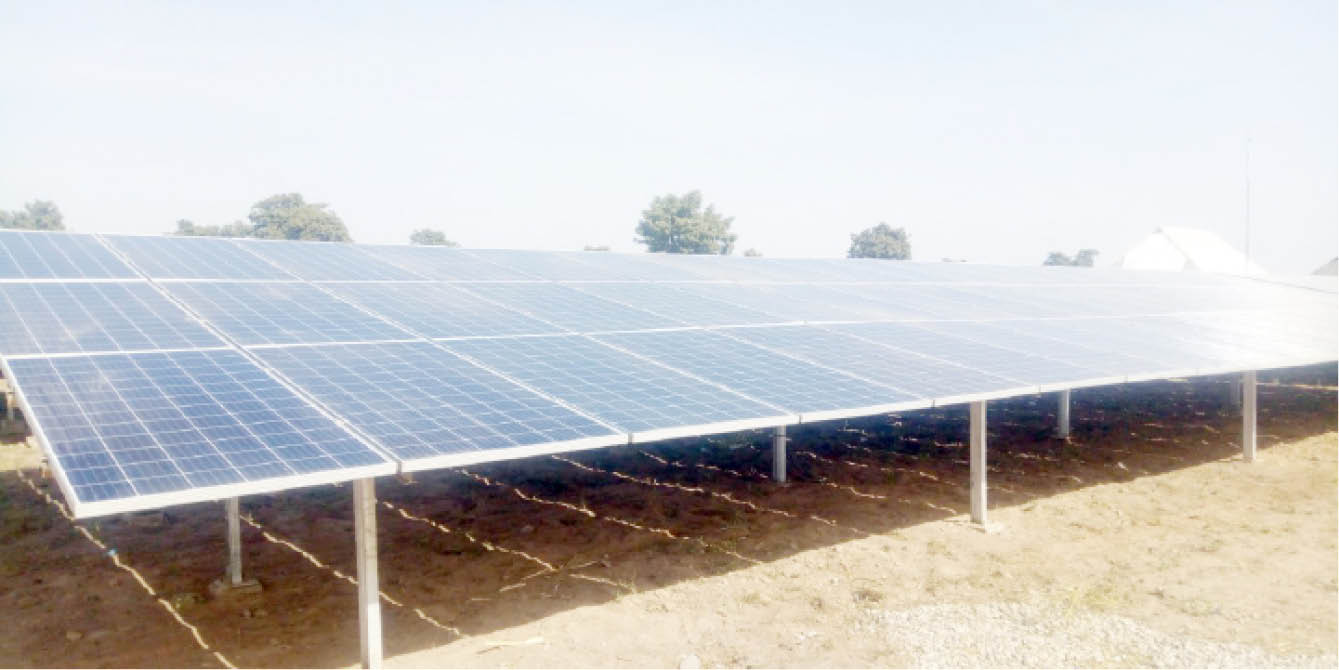
Solar panels at Shimankar power plant
The Federal government has been cautioned against an outright ban on solar Importation as local manufacturers are not ready to meet the market demand.
Speaking during a press conference yesterday in Abuja, the Nigeria Campaign Director, Secure Energy Project, Member of the Solar Power Nigeria Coalition, Joseph Ibrahim, said the government should engage in phased banning within a period of 3 to 5 years.
“We believe the best way forward is not a sudden shut-door policy, but a phased roadmap over the next three to five years. If we rush this, we risk making solar power too expensive for the millions who currently rely on it for survival,” he said.
He noted that by taking a phased approach, it will allow time for investors to build their plants, workers to learn specialized skills, and for Nigeria’s economy to adjust without losing power.
Ibrahim said, “Our position is clear: Local manufacturing and energy access must grow together. One should not be sacrificed for the other. We want a Nigeria where the solar panels on our roofs are built by our own hands, but more importantly, we want a Nigeria where no one is left in the dark.
“Nigeria is currently standing at a crossroads that will define the lives of our children and the success of our industries for decades to come. As the world shifts toward sustainable power, we find ourselves asking a fundamental question: How do we ensure that every Nigerian can finally turn on the lights?”
He said building a manufacturing industry is like planting a forest and cannot simply command the trees to grow but must first prepare the soil.
“To make local manufacturing a reality, we don’t just need new laws, we need an enabling environment. This means policies that don’t change with the wind, access to the financing and infrastructure that factories need to survive and strict standards to ensure that a Made in Nigeria panel is just as reliable as any in the world. We cannot allow our market to be flooded with substandard products that fail our consumers,” he added.