
FG waives demurrage on 10,000 containers, pushes single window
The Federal Government has approved a demurrage waiver on about 10,000 containers stranded at the nation’s seaports, as key agencies intensify efforts to review the progress of the National Single Window (NSW) project aimed at boosting trade facilitation. The move is expected to ease congestion at the Apapa and Tin-Can Island ports in Lagos, while […]
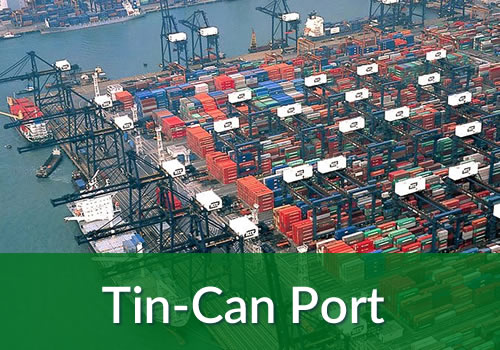
The Federal Government has approved a demurrage waiver on about 10,000 containers stranded at the nation’s seaports, as key agencies intensify efforts to review the progress of the National Single Window (NSW) project aimed at boosting trade facilitation.
The move is expected to ease congestion at the Apapa and Tin-Can Island ports in Lagos, while providing relief to importers burdened by rising storage costs.
The waiver followed the Federal Government’s recent securing of a £746 million facility from the United Kingdom for the rehabilitation of the two major ports.
Stakeholders believe the intervention will help clear the backlog of cargoes ahead of the commencement of reconstruction works.
The Nigeria Customs Service (NCS), Nigerian Shippers’ Council (NSC), and the Presidential Enabling Business Environment Council (PEBEC) disclosed the development during a joint stakeholders’ meeting in Lagos, where they reviewed ongoing reforms targeted at improving port efficiency and cargo clearance processes.
According to officials, the waiver—covering storage and related port charges—is part of a broader strategy to reduce the financial burden on importers and address delays caused by procedural bottlenecks and system inefficiencies.
Speaking at the meeting, the Executive Chairman of the Nigeria Revenue Service (NRS), Zaccheus Adedeji, said the decision was taken to cushion the impact of transitional challenges associated with the rollout of the National Single Window platform.
“This is a special period. We will engage terminal operators and relevant stakeholders to ensure that demurrage charges are waived on affected containers,” he said, adding that efforts are underway to resolve operational bottlenecks across regulatory agencies.
The intervention comes amid concerns raised by freight forwarders that over 10,000 containers had been delayed due to system integration issues involving agencies such as the National Agency for Food and Drug Administration and Control (NAFDAC) and the Standards Organisation of Nigeria (SON).
Despite the challenges, stakeholders expressed optimism about the long-term benefits of the NSW, describing it as a transformative reform for Nigeria’s trade ecosystem.
The NCS noted that the waiver would accelerate the evacuation of long-standing cargoes delayed by documentation challenges arising from the transition to the new platform.
Similarly, the Nigerian Shippers’ Council said the measure would help restore confidence among port users who have raised concerns over high demurrage costs and operational inefficiencies.
PEBEC reiterated the Federal Government’s commitment to improving the ease of doing business, stressing that the National Single Window is central to enhancing transparency, reducing human interface, and cutting cargo dwell time.
The Director-General of PEBEC, Zahrah Mustapha Audu, described the initiative as a major milestone in Nigeria’s economic reform agenda.
“Anything that makes life easier for businesses is a win. Technology is the future, and Nigeria must align with global best practices. This initiative is a step in the right direction,” she said.
Audu expressed optimism that cargo dwell time at Nigerian ports could be reduced to three to four days if the system is fully implemented with strong inter-agency collaboration.
Also speaking, the Comptroller-General of Customs, Adewale Adeniyi, said the platform is already operational and will significantly enhance trade facilitation.
“The National Single Window is here to stay. It will revolutionise the trading environment, improve efficiency, and position Nigeria more competitively in global trade,” he said.
Adeniyi acknowledged initial technical challenges, including issues with manifest uploads and shipping integrations, but assured stakeholders that they were being addressed.
“We expected some teething problems. What is important is that we are resolving them step by step through collaboration,” he added.
Meanwhile, freight forwarders have expressed divergent views on the initiative. While some support the reform, others have raised concerns over its implementation.
The National Association of Government Approved Freight Forwarders (NAGAFF) backed the project, describing it as a harmonisation of trade processes in line with international standards.
However, the National Council of Managing Directors of Customs Licensed Agents (NCMDLCA) called for the suspension of the platform, citing concerns over multiple charges and increased costs of cargo clearance.
Responding, NAGAFF’s Secretary-General, Godfrey Nwosu, dismissed the criticisms, urging stakeholders to embrace the reform.
“The NSW is designed to promote trade facilitation, attract investment, and reduce cargo diversion to neighbouring countries,” he said.
He added that the platform would enhance transparency, lower the cost of doing business, and align Nigeria with global best practices under the World Trade Organisation’s Trade Facilitation Agreement.
Despite the differing views, stakeholders agreed that the National Single Window remains a critical reform that could significantly transform Nigeria’s trade and port operations if effectively implemented.