
Food sufficiency cannot be imported
The decision by the federal government to open Nigeria’s borders to the importation of food items, including rice, maize and wheat, has once again laid bare the inconsistency and shortsightedness that have come to define our national food policy. While the intention behind this policy may have been noble and driven by the urgency to […]
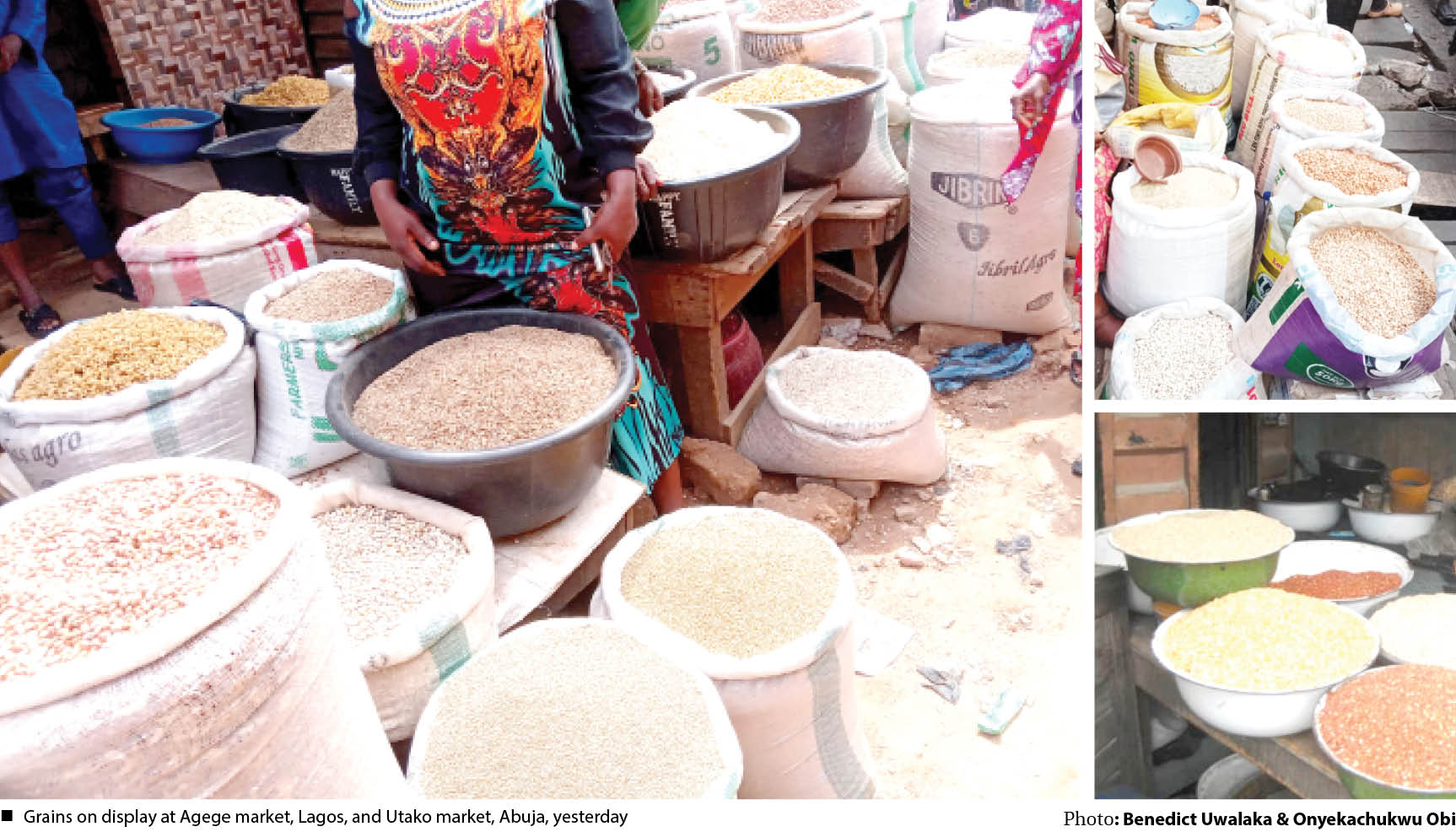
food prices drop ahead ramadan
The decision by the federal government to open Nigeria’s borders to the importation of food items, including rice, maize and wheat, has once again laid bare the inconsistency and shortsightedness that have come to define our national food policy.
While the intention behind this policy may have been noble and driven by the urgency to cushion the effects of inflation and hunger ravaging the land, it has inadvertently triggered a fresh crisis that now threatens to undermine the very foundation of Nigeria’s food security.
The policy, announced in 2024 by the Minister of Agriculture and Food Security, Senator Abubakar Kyari, was a response to the skyrocketing food prices and widespread hunger in the country.
The Nigeria Customs Service (NCS) has reportedly waived billions of naira in import duties on food staples. The government believes that allowing the importation of staples would flood the markets and reduce prices. Indeed, in the months that followed the announcement, there was a noticeable drop in the prices of some key staples. However, the celebrated “success” was short-lived and superficial.
For one, the purchasing power of the average Nigerian has not improved. The inflationary pressure that pushed food prices beyond the reach of the common man in the first place remains unaddressed. As a result, although markets are now stocked with imported food items, many Nigerians still cannot afford them.
Worse still, our local farmers who toiled with sweat and borrowed funds to plant, tend and harvest their crops, are now left in despair. These farmers bought fertiliser at outrageous prices, paid heavily for improved seedlings and pesticides and bore the brunt of insecurity and poor infrastructure. Now, they are being forced to sell their produce at a loss because the market has been flooded with cheaper imports. Many of them are openly expressing unwillingness to return to the farms this season because they have to dispose bags of grains to afford fertiliser that will barely increase their yields.
This is not just a matter of economic loss for farmers, it is a national emergency. If local producers are demoralised and discouraged from cultivating crops, what future does Nigeria’s food system have?
As if that were not dire enough, rice millers and other food processors who invested heavily in local production are shutting down their operations. These businesses, many of which had taken loans to expand their capacity and employ more Nigerians, are now facing ruin.
Of course some of them are guilty of hoarding paddy to manipulate prices and they must share in the blame, but the broader issue remains that the government, by allowing unregulated importation, has made their investments unsustainable.
This is a dangerous stalemate. On one hand, the government has a duty to ensure food affordability, and on the other, it must protect and promote local production. Striking a balance is not an easy task, but it is one the government must undertake with clarity and conviction.
The core of the problem is the absence of a coherent and forward-looking food policy. There is no documented blueprint that defines how each segment of the food value chain from input supply to production, processing, storage and marketing should be supported. This lack of strategic direction has opened the door for ad hoc decisions that end up doing more harm than good.
A well-thought-out food policy must recognise that importation can never be the foundation of food sufficiency. It can only be a short-term palliative deployed during emergencies and closely monitored to prevent abuse. Anything more than that is economic sabotage.
Instead of perpetuating this cycle of dependence, the government must go back to the drawing board. First, it must subsidise agricultural inputs, such as fertiliser, pesticides and improved seedlings. These subsidies should go directly to farmers, not through middlemen or compromised channels. The government must also put in place a monitoring framework that ensures every intervention reaches its target.
Equally critical is the need to revive key industries that add value to farm produce. Nigeria once had a robust textile, starch and food processing industries that provided a guaranteed market for farmers. Their collapse has led to a glut of raw produce and loss of value. These industries must be brought back to life.
The government must also adopt a price support policy where it buys excess produce from farmers, stores them in strategic reserves and releases them when scarcity looms. This model is used globally, not just to protect farmers but also to stabilise the market. It is not a radical idea. It is sound economic management. Nigerians are too weak to be left to the vagaries of market forces.
We must also confront a bitter truth: Some farmers and millers have betrayed public trust by diverting agricultural loans and grants. Instead of investing in machinery or expanding their operations, they built lavish homes, bought luxury cars and married new wives. These acts of sabotage must not go unpunished. Accountability is essential to restoring trust and making government’s interventions effective.
Nigeria stands at a crossroads. Endless importation is not the way forward. It will only create temporary relief while destroying the foundation of local food production. If this trend continues unchecked, we risk a future where we cannot feed ourselves, where our farms are abandoned and our industries shuttered. That is a road to economic collapse.
The government must wake up. It must chart a clear path forward; a path that prioritises local farmers, supports food processors, protects consumers and promotes national self-reliance. Anything short of that is a betrayal of Nigeria’s future.
Enough of the fire brigade approach. Let us fix the root of the problem.