
Funding society’s ambition: Financing Nigeria’s future
I’ve spent a lot of time thinking about what we choose to finance as an industry and a country — and what that says about who we are and what we hope for our country. Last week, as I read about another Mareva injunction issued to a billion dollar oil and gas company I couldn’t […]
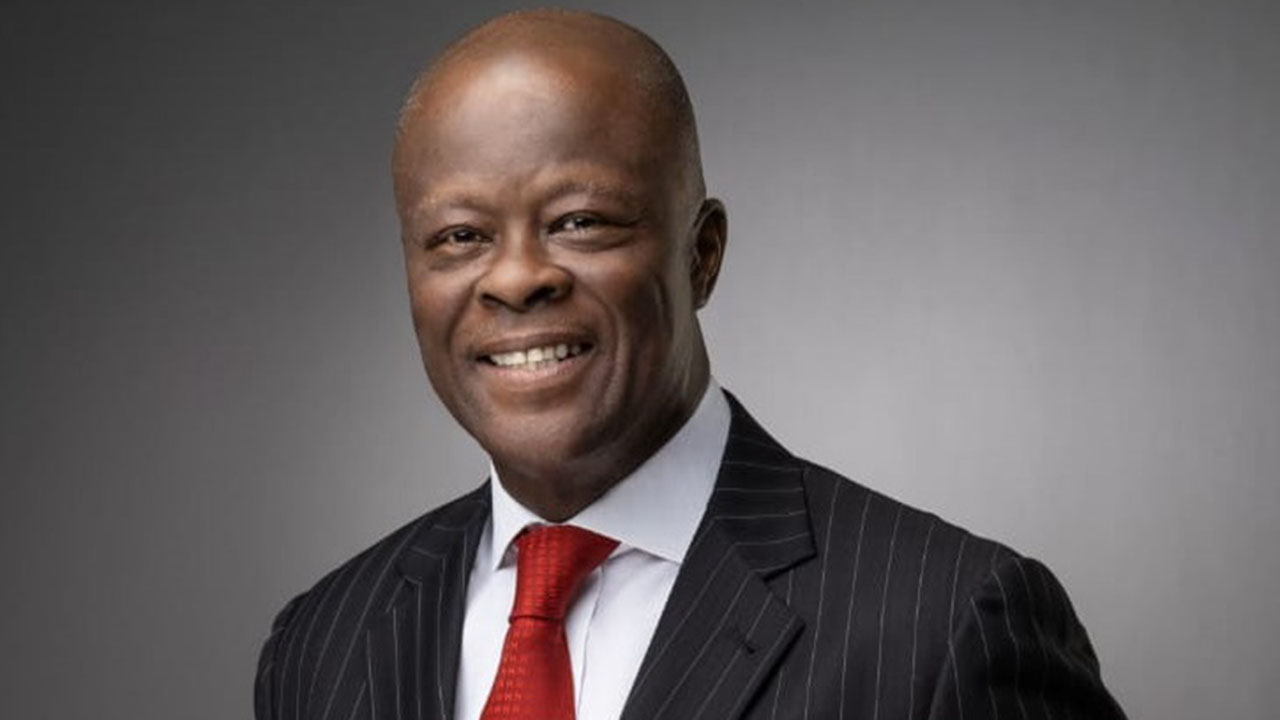
Minister of Finance and Coordinating Minister of Economy, Wale Edun
I’ve spent a lot of time thinking about what we choose to finance as an industry and a country — and what that says about who we are and what we hope for our country.
Last week, as I read about another Mareva injunction issued to a billion dollar oil and gas company I couldn’t help but wonder what could be possible if as an industry we shifted our lens on financing in this country from easily understood to be profitable fields like oil and gas assets to other similarly productive assets with much lower barriers to entry and lower risk but with returns distributed on a gaussian scale.
That single thought has stayed with me all week because it captures a tension that defines our economy today. Capital without conviction, balance sheets without backbone, aspirations without ambition, and prosperity without principle.
If Nigeria is ever going to fulfil her destiny as a top 20 economy with trillions of dollars in GDP, then our industry must learn to finance ambition for society.
Ambition for Society
Today when I look at what gets funded across the board, I see a lot of ambition. However most of it is ambition for self. Now ambition for self is not bad. It drives innovation, competition, and excellence. But ambition for self alone extracts — it takes value out. Ambition for society creates — it builds value in.
I happen to be an avid follower of a great African investor who is deeply invested in Nigerian manufacturing – Jonathan Oppenheimer. In his famous paper on Engaged Capital and investment in productive assets, he once wrote that finance must move from being a spectator to being a participant in building real value — what he called engaged capital. I love that phrase because it reminds us of another famous saying by another great investor who says Capital has a point of view. Our capital can either deepen a country’s dependence or multiply its productivity. There is money to be made either way and we choose.
Engaged capital is what happens when banks, investors, and policymakers decide that finance should serve the real economy — that every loan, every guarantee, every fund we deploy must touch real people doing real work and making real progress.
My industry – the digital economy has a bad rap for being faceless, invisible and ephemeral – all about mobile applications and APIs. However, as our industry gets to scale, we are finding that we must invest in engaged capital to achieve scale and we cannot get there without the people in this room.
So, this what I want to talk about today — how can we in this room invest in the digital economy to demonstrate our ambition for society and the future of this country.
The Digital Economy as Proof of Concept
If you’re looking for a part of our economy that has demonstrated ambition for society, look at the digital economy.
Over the past twenty-five years, while oil has slowly declined, the digital sector has quietly become the fastest-growing part of Nigeria’s GDP — expanding by over 15% annually. It’s creating jobs, exporting talent, and proving that we can build prosperity from ideas.
Let me ground this in five short stories that illustrate what’s possible when finance meets ambition.
- Digital Infrastructure – Main One and the Power of Connection
Fifteen years ago, when one of our distinguished fellows Dr Funke Opeke, a Nigerian engineer who had worked at Verizon in the United States, returned home and decided to do something that many thought impossible — lay West Africa’s first privately owned undersea cable, she laid the foundation for the digital economy we build on today.
At the time, broadband costs in Nigeria were among the highest in the world. Internet access was a luxury. She raised capital, fought regulatory delays, and endured skepticism from people who couldn’t see why anyone would risk that kind of money on data cables under the ocean.
When the Main One cable finally landed in Lagos in 2010, it cut the wholesale cost of bandwidth by more than 60% in just a few years. That single act — one woman’s audacious bet — triggered an entire ecosystem.
Today, Nigeria’s internet penetration has jumped from under 20% in 2010 to more than 70%. Data centers, fintech, cloud services, and digital trade all rest on that foundation.
That’s what ambition for society looks like. Financing infrastructure that may not yield short-term profits but multiplies long-term productivity.
Around the same time, our industry quietly did something visionary — they came together to create the Nigeria Inter-Bank Settlement System, NIBSS. It wasn’t glamorous, but it was genius.
Instead of competing in isolation, they built a common backbone for real-time payments — an open financial architecture that connected everyone.
That one decision to collaborate completely changed everything.
Today, Nigeria processes over 8 billion instant payments each year, with transaction values exceeding N600 trillion. We were doing open banking before open banking became a global trend.
Because those rails existed, fintech companies like Flutterwave, Paystack, and Moniepoint were built.
That is engaged capital at work. Banks investing together in the infrastructure that allows new generations of entrepreneurs to thrive.
At the same time, thanks to this new digital highway and financial technology platforms young Nigerians started to build and export things that seemed even more intangible — intellectual property. Music, film, fashion, food — the symbols of our culture that have become the new digital assets.
A few years ago, it was unimaginable that streaming revenue from Nigerian music alone would top $200 million a year. Today, that’s real. And when you add Nollywood, gaming, design, and digital content, Nigeria’s creative exports are worth over $2 billion annually.
We are learning to trade not just physical goods that can be seen and hampered by customs and poor infrastructure, but digital goods that are unseen via our stories, sounds, styles and patterns. As the Holy Book says in second Corinthians 4:18, the things which are seen are temporal but the things which are not seen are eternal. Even GAAP accounting agrees with this analysis as we have yet to figure out depreciation for digital goods.
Now imagine a banking system that treats those digital assets — copyrights, royalties, digital streams — as collateral. That’s the next frontier of asset-backed finance: lending against the creative capacity of our people.
Speaking of people, that’s the most important piece of the puzzle.
When we started Andela a decade ago, the idea was simple but radical: We would pay young Nigerians a decent wage to train to become world-class software engineers and earn global incomes without leaving home.
People laughed at first — but then they saw the results. Some of the young people who couldn’t find jobs in Yaba or Ilorin are now building products for global companies.
That experiment has now inspired the government’s 3 Million Technical Talent program — an effort to train three million Nigerians in digital skills within a few years. It has also inspired Learn2Earn – an effort to finance mass skilling of AI engineers at a scale that can supply our domestic needs while making us the center of the universe for AI talent.
Each trained professional can earn between $10,000 and $50,000 annually from remote work. Imagine one million such workers — that’s tens of billions of dollars in export income, powered by just one talent.
Talent has become our most valuable asset. The question for bankers should be: how do we finance it? How do we create education-backed loans, income-share agreements, or employment bonds that let us underwrite the future earning power of our people?
We have financed oil rigs and tank farms. Why not human potential? Especially when with a mean age of 16 we have an abundance of it.
In the end, all this rests on one critical foundation — trust.
Over the past decade, Nigeria has built one of the most advanced digital identity systems in Africa. The BVN, NIN, and other platforms have brought over 60 million Nigerians into the verified financial system.
This trust layer is quietly transforming credit, KYC, and even e-government. It means we can now imagine a Nigeria where every citizen has a digital footprint that allows fair access to loans, taxes, and services.
When governance goes digital, accountability follows. And where accountability grows, credit deepens.
This is the invisible infrastructure of development — and it too needs financing, partnership, and innovation.
All these stories — Main One, NIBSS, our digital traders, our skilled youth, our identity systems — have one thing in common: they turn ideas into productive assets.
And productive assets are the bridge between prudence and progress.
This is where the concept of asset-backed finance becomes powerful. It allows banks to finance productivity while managing risk — by tying capital to things that generate enduring value: fiber cables, receivables, intellectual property, and human capital.
Asset-backed finance is how we move from passive lending to active nation-building.
If we can design financial instruments that see the productive potential in digital infrastructure, digital trade, and digital talent, we can unlock the next wave of inclusive growth.
So what must we do next? I believe three shifts are essential if we want to build a banking industry that finances ambition for society.
First, we must move from collateral to productivity.
Instead of assessing credit based on “what assets do you own?”, we must ask “what value are you creating?”. The future of credit lies in financing production, not possession.
Second, we must move from individual ambition to collective purpose.
Our banks and entrepreneurs must collaborate around national priorities — energy, healthcare, education, logistics, digital infrastructure. Profit should be the outcome of solving real problems, not the purpose of existence. Our capital must have a point of view.
Third, we must move from passive banking to engaged capital.
That means sharing risk with entrepreneurs through blended finance, government guarantees, and partnership models. It means designing instruments that measure success not only in repayment rates, but in jobs created, exports enabled, and assets built.
If our banks can finance consumption at scale, surely, we can finance production with conviction.
I often remind people that a trillion-dollar GDP is not an abstract dream. Nigeria’s economy already has the ingredients — talent, capital, creativity, and enterprise. What we lack is the financing structure to connect them productively.
When banks fund importers instead of builders, we grow our deficits, not our capacity. When we finance speculation instead of production, we inflate asset prices but deflate opportunity.
But when we finance ambition for society — the kind that builds cables, trains coders, exports culture, and digitizes governance — we build a resilient economy that can sustain generations.
That’s the difference between a rich country and a prosperous one.
In closing I would like to share some personal thoughts. I often find myself reflecting on a line from our new national anthem:
“To hand on to our children a banner without stain.”
That line is a challenge to every one of us who manages or allocates capital. Because every loan we approve, every risk we take, every entrepreneur we choose to believe in becomes a stroke on that banner.