
Ganduje’s resignation and reawakening of Kano’s political equilibrium
The resignation of Dr Abdullahi Umar Ganduje as National Chairman of the All Progressives Congress did not arrive with the shock of thunder, but it’s definitely going to shake things up, especially in Kano. Although the resignation has been presented as a response to internal party zoning arrangements, those who closely observe Nigerian politics recognise […]
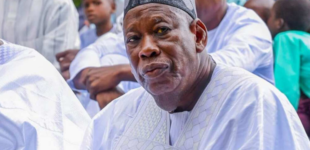
ganduje
The resignation of Dr Abdullahi Umar Ganduje as National Chairman of the All Progressives Congress did not arrive with the shock of thunder, but it’s definitely going to shake things up, especially in Kano. Although the resignation has been presented as a response to internal party zoning arrangements, those who closely observe Nigerian politics recognise it as more than just a bureaucratic transition. It represents a moment of realignment, a subtle disruption that has the potential to shift the political axis of Kano and, by extension, the broader landscape of the North West.
I don’t write as a political analyst, but as someone who has engaged deeply with policy over the last five years, particularly within Kano. What follows is a combination of personal reflections and grounded predictions, shaped by the realities I’ve observed up close.
Kano, unlike any other state in northern Nigeria, carries the weight of political history, ambition, and influence. It isn’t just a state; it is a stronghold. For years, the battle for Kano has been less about party colours and more about personalities whose rivalries have defined the tempo of local and national elections. At the centre of this enduring duel lies Engr. Rabiu Musa Kwankwaso and his movement, the Kwankwasiyya, which continues to draw fervent support among the rural and urban poor, students, and civil servants.
When Ganduje took over the reins of the APC at the national level, many believed that his position would reinforce the party’s grip on Kano and perhaps mount a more formidable challenge to Kwankwaso’s growing influence. But that did not happen. Instead, the APC in Kano remained fractured, disjointed, and uncertain.
- 2027: Shun sycophants, Dangiwa tells Tinubu
- Ganduje’s exit: CPC bloc, N/Central push for APC chairmanship
Now that Ganduje has stepped down, the conversation has shifted. What does this mean for APC in Kano? What becomes of those who defected from the NNPP back into the APC in search of safety and relevance? And more provocatively, does this open the door, however slightly for Kwankwaso to inch closer to the APC fold, even if informally?
The absence of Ganduje from the party’s national leadership opens a new kind of vacuum; one that is both structural and symbolic. His presence at the national level discouraged many potential stakeholders from engaging with the party. With his departure, a space has emerged, one that could potentially be filled by actors more capable of rebuilding bridges or by outsiders looking to exploit the vacuum.
It is this vacuum that now makes the political playground in Kano more unpredictable. For APC, the task ahead is not merely to replace a chairman but to redefine its relevance in a state that once offered it the highest number of votes in presidential elections. Without credible local leadership and with its former figurehead no longer in a position of influence, the party risks becoming increasingly fragmented unless it quickly restructures and charts a new path that speaks to Kano’s political reality.
This is where Kwankwaso becomes relevant again, not because he is joining APC anytime soon, but because the APC may no longer be strong enough to ignore the political rhythm he sets. As the founder and leader of the NNPP, Kwankwaso has maintained an ideological and emotional hold on Kano, drawing loyalty through sustained grassroots connections and symbolic alignment with the masses. And with Ganduje gone, there are fewer barriers within APC that would prevent back-channel conversations or temporary tactical alignments with Kwankwaso or his proxies in the near future.
It is not unthinkable that the APC, desperate to maintain relevance in Kano ahead of the 2027 general elections, may become more open to subtle realignments. And should Kwankwaso find such a shift beneficial to his broader national ambitions, especially in an era where coalitions will matter more than purity, he may well consider engaging, even if discreetly. For a man who has always combined stubborn idealism with cold political calculation, nothing is ever completely off the table.
That said, Ganduje’s departure also poses risks for those who returned to the APC from the NNPP under the assumption that the party would remain intact, organised, and predictable. Many of them may now find themselves floating, uncertain whether their place is secure or whether they will be sacrificed in the next cycle of power-sharing. Their calculations may have been made under the assumption that APC’s national power guaranteed their survival in Kano.
But politics in Kano has never respected assumptions. The pace of change is swift, and hesitation is often punished. Those who cannot reposition quickly or who bet wrongly on the internal future of the party risk losing everything.
And while APC reconfigures itself, the NNPP may move to consolidate further. The narrative of triumph of defeating both a sitting government and outlasting the tenure of a rival turned national chairman will likely fuel Kwankwasiyya’s momentum in the months to come. If the APC fails to reassert itself or to present a credible local structure that can challenge this growing movement, then by the time 2027 arrives, Kano may be far more lost to the APC than it already is.
The added complexity in this transition is that Ganduje’s resignation did not emerge in a vacuum. It followed months of pressure, not only from the North Central APC bloc, which demanded a return to zoning principles, but also from persistent legal and ethical controversies that had stalked his tenure.
In January 2025, the presidency appointed him chairman of the Federal Airports Authority of Nigeria, a move interpreted by many as an attempt to shift him sideways while maintaining face. Yet even that appointment failed to quiet the unrest. By June, the consensus was clear—his resignation was inevitable.
It is this sense of political drift that now defines the APC in Kano. With Ganduje’s resignation, the illusion of control has been stripped away. What remains is a party in flux, struggling to decide whether to rebuild, to merge, or to concede. Kwankwaso, meanwhile, does not need to act immediately. Time and events are already bending in his favour. The fall of Ganduje from national relevance only deepens the perception, whether accurate or not that Kano is, once again, his to reclaim entirely.
In predictive terms, I will expect a flurry of meetings, negotiations, and back-channel overtures within APC. Watch for new power brokers stepping forward in Kano and listen closely for changes in tone among recent defectors. Those who rapidly secure new alignments may thrive; those who hesitate risk being politically stranded. And if APC misreads the moment, failing to renew its message or structure, Kwankwaso’s hold over Kano could expand dramatically, reshaping the state’s political identity well beyond 2027.
What I have learnt in the last few years of my love affair with politics is that, in the end politics is not only about who holds office but about who defines the moment. And in this moment, with APC staggered and Kano adrift, it is Kwankwaso’s vision, however contested, that looms larger. Whether he chooses to march forward with NNPP or begins to reach for new alliances, one thing is certain: his position is stronger today than it was last week. And that, more than Ganduje’s resignation itself, is what to me makes this a turning point.