
Ganduje’s spawning of educational revolution
How can the government of Kano state holistically pursue the implementation of free and compulsory basic and secondary education beyond mere affirmation and political convenience, encourage girl-child education, integrate Tsangaya/Almajiri education system as well as stem the tide of out-of-school children? That was an organizing question for stakeholders at a summit on Free and Compulsory […]
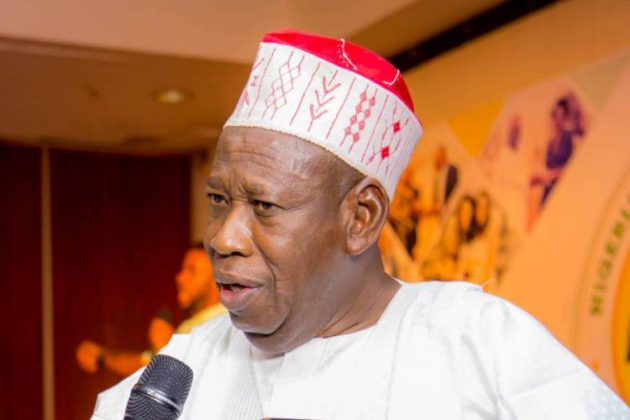
Kano state Governor, Abdullahi Ganduje.
How can the government of Kano state holistically pursue the implementation of free and compulsory basic and secondary education beyond mere affirmation and political convenience, encourage girl-child education, integrate Tsangaya/Almajiri education system as well as stem the tide of out-of-school children?
That was an organizing question for stakeholders at a summit on Free and Compulsory Education put together by the government of Kano state. The two-day summit, held at Coronation Hall, Government House, Kano, between September3-4, brought together key participants to discuss, analyse and generate ideas towards the implementation of the vision for free and compulsory basic and secondary education policy in the state, a major policy of the administration of Governor Abdullahi Umar Ganduje’s second term in office.
Themed: ‘“Fundamentals of Free and Compulsory Education”, the summit also brought together relevant stakeholders in the education sector and beyond to discuss and deliberate on how to ensure a rounded approach towards the implementation of the free education policy and to improve the quality of the education system in the state. It moreover aimed at placing great faith in power of basic education to prepare our children for a prosperous future.
Clearly emphasized at the summit was how to integrate Tsangaya/Almajiri education system as well as the issue of out-of-school children. While it is disturbing to note from available statistics that Nigeria has over 10.5 million out-of-school children, 60 percent of which represents the girl-child. While eight million of those out-of-school children are in 10 northern states of Nigeria, regrettably, available figures indicate that over three million of these out-of-school children are in Kano State. However, a recent survey revealed that most of these children are Almajiris from other northern states and children from the Republic of Niger, Chad and northern part of Cameroon.
The Ganduje administration will be pushing for regional coordination and legislation to control the influx of Almajiris from neighbouring countries, while a committee has been set up to conduct a census of all out-of-school children with a view to update the available data and ensure adequate planning in preparation for the implementation of this all important education policy.
It entails integrating qur’anic schools with conventional government controlled schools to stop students from begging and roaming the streets all in the name of attending qur’anic schools. The system will also be assimilated into the modern academic curriculum to improve the quality of learning and made compulsory to ensure its sustainability.
With the policy, many children who had been out of school will be enrolled in school and provided with the opportunity to pursue an education. It is expected that the policy would be effective and sustainable and in the long term provides opportunities to all school-age children to gain access to quality education for a full cycle of basic education. Government is also encompassing post basic education into the policy with a view to giving more opportunity to the pupils that annually churn out from our primary schools and particularly for the girl child in compliance with the approved Kano State Girls Child Education Policy (KNGEP).
Other interventions by the government of Kano state include the setting up of Quranic and Islamiyyah Schools Management Board, plans to streamline about 13, 619 Quaranic schools with 2.5 million pupils across the state and integrate them into the free and compulsory education programme, collaboration with UNICEF to further consolidate the commitment of government to the ‘Better Education Service Delivery for All (BESDA), with a view to ensuring equitable access to basic education for out-of-school children.
In demonstration of its commitment to ensure the implementation of the free education policy, the Ganduje administration has from 1st September 2019 abolished the payment of school fees in all the primary and secondary schools. It has also commenced direct funding of primary and secondary schools numbering 1,180 with a total student population of 834, 366 at a total cost of about N200 million per month or N2.4 billion per annum, the government has, similarly, provided school uniforms to 779, 522 newly enrolled pupils (boys and girls) at the total cost of N381 million and is in the process of engaging 3, 000 volunteer teachers to teach in the various public and Quranic schools across the state in a bid to reduce teaching deficiency in the sector.
During the summit, which also featured book presentation titled: ‘’Provision and Management of Infrastructure for Development of Education in Kano state,’’ a book of reading in recognition of the laudable educational achievements of Governor Ganduje, who commended the efforts of international donors and called on other stakeholders to support the state to achieve its aim.
Minister of education, Malam Adamu Adamu, while acclaiming the Ganduje initiative, in a goodwill message, said the implementation of free education would not only facilitate good governance but would ensure meaningful development in the country, as Kano has always been a pacesetter and pioneer in many development programmes that tend to be replicated in other states of the federation. Because, what Kano does literally has a weight on its neighbours and even the entire northern part of the country.
Citing as an example, the Mass literacy Programme of Governor Abubakar Rimi in the 80’s, the minister also commended previous administrations in the state for their giant strides in the education sector. With this development in Kano, he said, other states in the federation will have no other alternative than to emulate. Already, he said, four governors in the region have signaled the federal ministry of education on their plan to follow the Ganduje footprints.
The Emir of Bichi, Alhaji Aminu Ado Bayero who spoke on behalf of the traditional rulers said it is high time the society assist the state in accomplishing this laudable initiative by supporting Kano to actualise her dream which is just like assisting the North and the country at large.
There were also presentation of scholarly papers on various topics tailored towards the theme of the summit.
With the clear and practical demonstration of the political will by Governor Ganduje to pursue the new initiative as a planned education development programme which has come to stay, we should not for any reason politicize the issue. Therefore, all relevant stakeholders should join hands with the government to achieve the desired goal. While poverty and ignorance have been responsible for many parents to deny their children access to education, the free education policy will help in no small measure in ensuring that school age children are enrolled in school.
Garba is the immediate past commissioner for Information, Youth and Culture, Kano state