
Gaza: Pressure mounts on ICJ to suspend ‘pro-Israel judge’
The International Court of Justice (ICJ) is facing mounting pressure to suspend its Vice-President, Judge Julia Sebutinde, from the ongoing genocide case against Israel, following her public remarks expressing religious and political support for the Israeli state. The calls, led by the International Commission of Jurists, have reignited debate over judicial impartiality and the credibility […]
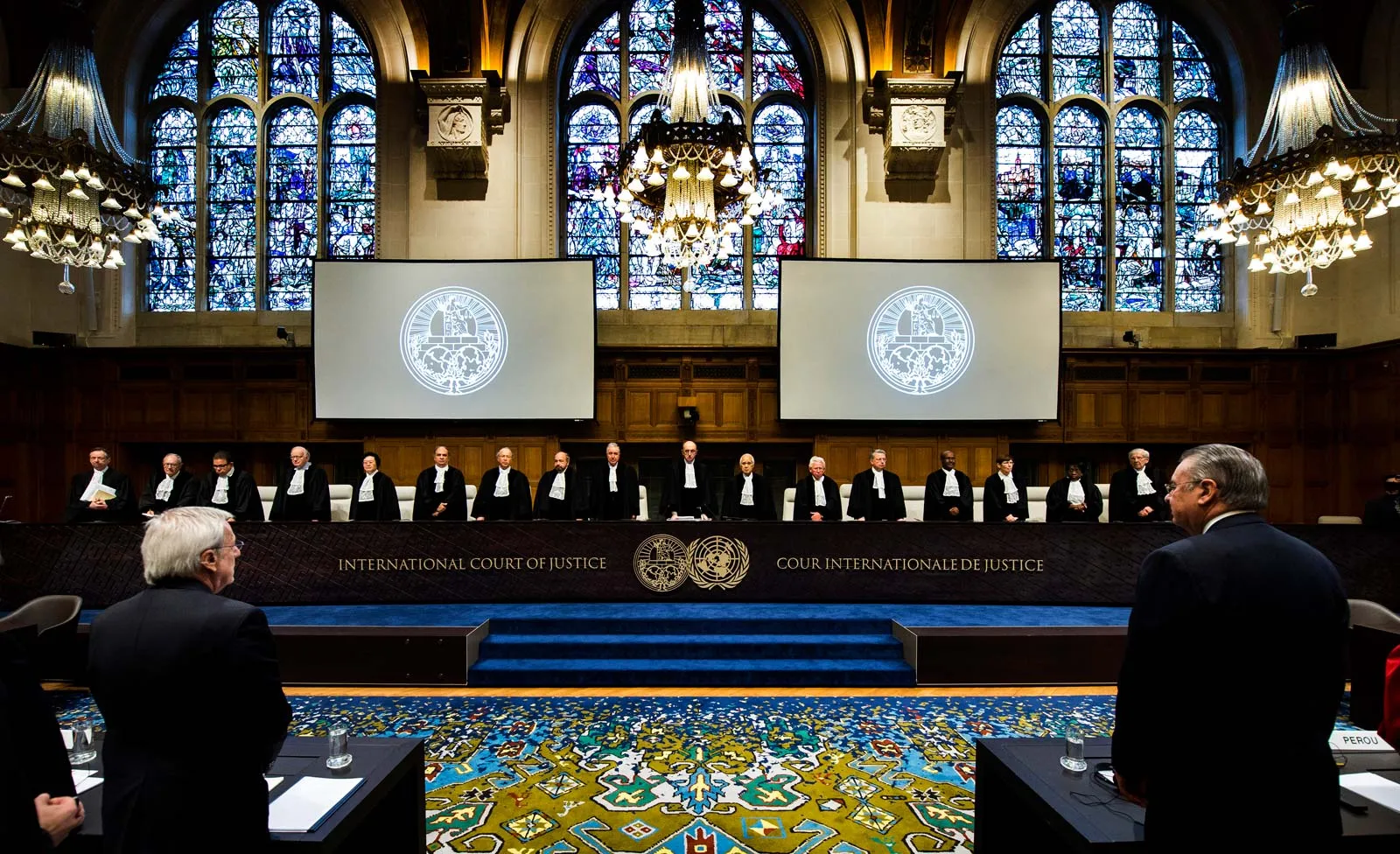
ICJ
The International Court of Justice (ICJ) is facing mounting pressure to suspend its Vice-President, Judge Julia Sebutinde, from the ongoing genocide case against Israel, following her public remarks expressing religious and political support for the Israeli state.
The calls, led by the International Commission of Jurists, have reignited debate over judicial impartiality and the credibility of the world’s highest court.
Speaking at Watoto Church in Kampala, Uganda, on August 10, Sebutinde told the congregation, “The Lord is counting on me to stand on the side of Israel. The whole world was against Israel, including my country.”
She went on to describe Israel’s military campaign in Gaza as a sign of the Biblical “End Times,” adding, “I am humbled that God has allowed me to be part of the last days. I want to be on the right side of history. I am convinced that time is running out.”
The International Commission of Jurists, in a letter to ICJ President Yuji Iwasawa, described the remarks as “profoundly damaging” to the court’s impartiality, propriety, and integrity.
The commission urged Sebutinde’s immediate removal from the South Africa v. Israel genocide case and any other proceedings related to Israel and Palestine.
Sebutinde’s remarks have drawn attention not only for their religious undertones but also for what critics say is a consistent pattern of siding with Israel in ICJ rulings.
In January 2024, she was the only judge on a 17-member panel to vote against all six provisional measures aimed at protecting Palestinians in Gaza.
These measures included calls for Israel to prevent acts of genocide, allow humanitarian aid, and preserve evidence.
In her dissenting opinion, Sebutinde wrote, “The dispute between the State of Israel and the people of Palestine is essentially and historically a political one. It is not a legal dispute susceptible to judicial settlement by the Court.”
She further argued that South Africa had failed to demonstrate genocidal intent on Israel’s part.
Again, in July 2024, Sebutinde was the sole dissenter in a ruling that declared Israel’s decades-long occupation of Palestinian territories unlawful.
Her dissenting opinion from that ruling has since come under scrutiny, with a Palestinian researcher alleging that “at least 32 per cent of Sebutinde’s dissent was plagiarised.”
The study claimed that portions of her opinion were lifted almost word-for-word from pro-Israel sources, including a column by a former US official, Wikipedia, and the BBC.
Uganda’s government has distanced itself from Sebutinde’s views, clarifying that her rulings reflect her personal opinions and not the official stance of the Ugandan state.
ICJ risks credibility — Analyst
Commenting on the controversy surrounding the judge, Professor Sheriff Ghali Ibrahim, Head of the Department of Political Science and International Relations and Director of the International Centre at the University of Abuja, said her public remarks have compromised the court’s impartiality.
“Sabotinde’s claims really positioned her, as a judge, to be partial in terms of support for Israel.
“It showcases a kind of empathy and sympathy coming from Sabotinde regarding this particular genocidal case… against Israel. This is an open expression which affects the impartial stance of the ICJ.”
While acknowledging the global right to free speech, Prof. Ibrahim stressed that judges of the International Court of Justice must exercise restraint.
“The International Court of Justice cannot balance free speech, especially when it involves someone making a verdict in a genocidal case.
“Judges are not supposed to publicly address the media with their opinion of a particular case, but rather speak to the current position and deliberation of the case.”
He argued that Sebutinde’s public stance warrants disciplinary action. “If she does express herself in this particular area, then definitely the international court should suspend her from handling this case,” he said.
Prof. Ibrahim warned that the ICJ’s credibility is at stake, “Many around the world do not believe in the ICJ,” he said, describing it as “a symbol of the West” that marginalises voices from the Global South.
“If the ICJ ignores suspension calls and plagiarism claims, it sets a bad precedent. People will lose confidence completely.”
He added, “The ICJ must listen to criticism and international calls in sensitive cases like the Israeli genocidal campaign on Gaza. That is the only way to make it responsive and responsible.”
Judicial independence under scrutiny
The ICJ’s statute provides limited avenues for removing a sitting judge. According to its rules, a judge can only be dismissed if other members unanimously agree that the individual no longer fulfils the required conditions.
If such a decision is reached, the ICJ registrar must notify the UN Secretary-General, thereby rendering the position vacant.
However, the ICJ website notes that this has never happened in the court’s history.
The ICJ’s standards for judges are clear: “Judges must be elected from among persons of high moral character, who possess the qualifications required in their respective countries for appointment to the highest judicial offices, or are jurisconsults of recognised competence in international law.”
It also emphasises that “once elected, a Member of the Court is a delegate neither of the government of his own country nor of that of any other State.”
Before assuming office, ICJ judges are required to make a solemn declaration to exercise their powers “impartially and conscientiously.”
Critics argue that Sebutinde’s recent statements and voting record raise questions about her adherence to this oath.