
Genocide claim a plot to destabilise Nigeria – NSCIA
The Secretary-General of the Nigerian Supreme Council for Islamic Affairs (NSCIA), Prof. Ishaq O. Oloyede, has described the recent claim by the United States of America that Christians are being persecuted in Nigeria as a deliberate attempt to destabilise the country. Prof. Oloyede, who spoke at a press conference yesterday, in Abuja, said the allegation […]
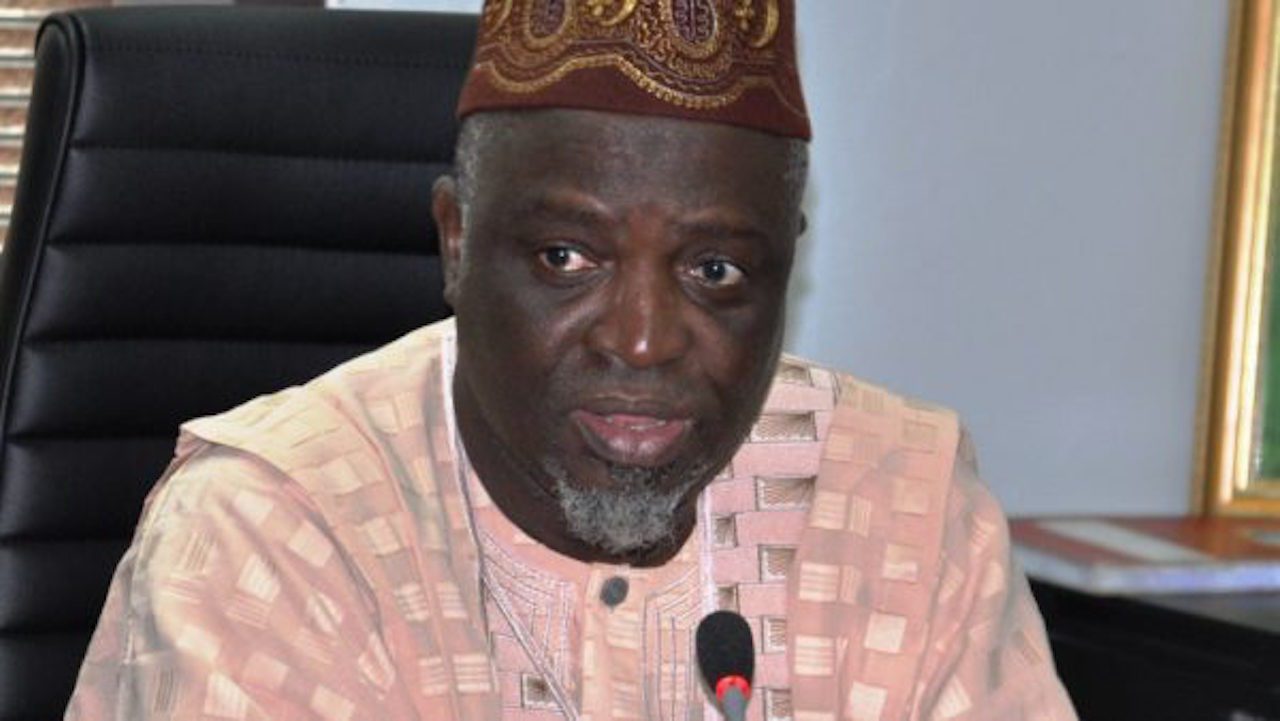
NSCIA, Prof. Ishaq O. Oloyede
The Secretary-General of the Nigerian Supreme Council for Islamic Affairs (NSCIA), Prof. Ishaq O. Oloyede, has described the recent claim by the United States of America that Christians are being persecuted in Nigeria as a deliberate attempt to destabilise the country.
Prof. Oloyede, who spoke at a press conference yesterday, in Abuja, said the allegation of a Christian genocide in Nigeria was “completely unfounded” and “politically motivated.”
He explained that the U.S. President, Donald Trump, and some American lawmakers, including Senator Cruz and Congressman Moore, had been misled by false narratives about Nigeria. “We have found that there is no Christian genocide in Nigeria,” he said, noting that Nigeria faces a complex security crisis affecting all citizens regardless of faith.
Prof. Oloyede said the terrorism in Nigeria, perpetrated by groups like Boko Haram, ISWAP, and other armed criminals, targeted both Muslims and Christians indiscriminately. He added that these groups were “our mortal enemies” and should not be seen as representatives of Islam.
- Kano Rep Abdulmumin Jibrin joins APC two months after expulsion from NNPP
- Zamfara senator facilitates release of 41 constituents jailed in Oyo
He further alleged that some of these extremist groups had been indirectly supported or created by foreign actors, including the United States. “It is publicly acknowledged that the United States of America created Al-Qaeda,” he said, adding that U.S. agencies had in some cases funded Boko Haram and other terrorist networks.
The NSCIA Secretary-General also linked the sudden U.S. focus on Nigeria to the country’s recent foreign policy stance.
“This campaign escalated immediately after Nigeria at the 88th session of the UN General Assembly reaffirmed its support for a two-state solution and solidarity with the Palestinian people,” he said.
He explained that far-right and pro-Israeli actors in the U.S. were using the genocide narrative to deflect attention from atrocities in Gaza.
Prof. Oloyede accused domestic and foreign actors of exploiting religion for political gain. “Who benefits from the lie? There are foreign instigators, specialists of American politicians, who seek to energise their domestic evangelical base,” he said, noting that Senator Cruz and Congressman Moore were among those pushing the narrative on Capitol Hill.
He urged the international community to reject what he described as a “false, dangerous and destabilising narrative” and called on President Trump to retract his statement. “We call on the President of the United States of America to retract his statement against Nigeria. And rather, assist Nigeria with credible intelligence,” he added.
Prof. Oloyede also stressed the need for collaboration with the Nigerian government. “If the United States is sincere, it should collaborate with the Nigerian armed forces, help them fight insurgency, grant access to equipment and other logistics, but not determine our course unilaterally,” he said.
He noted that Nigeria’s security challenges were driven by multiple factors, including climate change, poverty, mass unemployment, criminality, and the failure of governance. “This is not a religious war. Muslims and Christians alike are victims of perennial insecurity,” he said.
The NSCIA Secretary-General concluded by urging Nigerians and the international press to be fair and accurate. “We call on the Nigerian government to redouble its efforts to protect all citizens, destroy bandits and terrorists, and expose domestic instigators of divisive lies,” he said.
“The stability of Nigeria is not for foreign actors to manipulate; we will not allow external interference to exploit our religious diversity,” he said.
Similarly, the Amir of the Abuja Muslim Forum (AMF) Waqf Endowment Team, Abdulrazaq Ajani, has dismissed recent claims by U.S. President Trump alleging genocide of Christians in Nigeria, describing them as false and misleading.
Speaking in an interview during the Waqf Endowment public lecture themed “Waqf as a Perpetual Charity: Reviving the Spirit of Sustainable Benevolence in Islam,” Ajani said the narrative of religious persecution was being exaggerated by external interests seeking to exploit Nigeria’s internal challenges.
He said Nigeria’s conflicts were not religious but driven by criminality and bad governance. “It’s very unfortunate because this is an internal affair within the people of Nigeria. We only have two groups of people in this country — the good and the bad. As we have bad elements in Islam, we also have bad elements in the Christian world,” he said.
Ajani explained that Nigerians must unite beyond religious divides to tackle insecurity and external manipulation. “The good Muslims and the good Christians must team up to fight the bad elements in our society,” he said.
He noted that killings across the country were not driven by faith.
Ajani added that external powers, including those pushing the genocide narrative, were only interested in destabilizing African nations to exploit their resources. “They have been to Iraq, Afghanistan, Syria, and Libya. The result is always negative. They do not come to help but to steal our natural resources,” he said.
He urged Nigerians, both Muslims and Christians, to be wise and resist such divisive propaganda. “The Christians should be wise enough, and the Muslims should be wise enough, to team up and fight the bad elements in our society. It’s a very simple message,” he said.
In his lecture, the Guest Speaker, Dr. Abubakar Abdullahi Lamido, Director-General of the Gombe State Zakat and Sadaqah Foundation, urged Muslims to revive the waqf system as a sustainable approach to charity and development.
He explained that waqf has historically served as a major instrument for financing education, healthcare, social welfare, and public infrastructure in Muslim societies. “One-third of the lands in the former Ottoman Empire were waqf lands, funding education, health care, water, and welfare,” he said.
Lamido cited examples of historical endowments dedicated to causes such as marrying off poor women, feeding animals, maintaining city cleanliness, and supporting students. He said such endowments reflected Islam’s emphasis on social justice and community development.
He noted that while waqf assets globally are now worth nearly $1 trillion, Nigeria was still lagging behind in institutionalizing the practice. He called for renewed efforts to build waqf literacy, governance structures, and institutional frameworks for sustainable benevolence.
The Chairman of the event, Professor Salisu Shehu, Executive Secretary of the Nigerian Education Research and Development Council, emphasized in his remarks that reviving waqf in Nigeria would create lasting solutions to poverty, education, and community development.