
Gombe opposition rallies behind ADC in bid to end APC rule
What began as a local consensus among opposition parties in Gombe State to challenge the ruling All Progressives Congress (APC) has now evolved into alignment with the national political wave. With the adoption of the African Democratic Congress (ADC) as a unifying platform, opposition leaders in the Jewel in the Savannah are hoping to disrupt […]
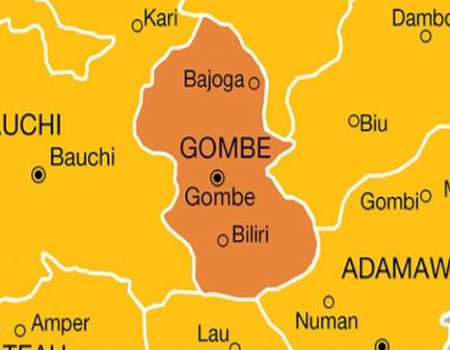
What began as a local consensus among opposition parties in Gombe State to challenge the ruling All Progressives Congress (APC) has now evolved into alignment with the national political wave. With the adoption of the African Democratic Congress (ADC) as a unifying platform, opposition leaders in the Jewel in the Savannah are hoping to disrupt the state’s long-standing two-party dominance. But how far can this alliance go in altering the power dynamics?
The opposition coalition, championed by former Vice President Atiku Abubakar, was formally adopted at a high-profile gathering of political stakeholders in Abuja last Wednesday. The coalition aims to wrest power from President Bola Ahmed Tinubu and the APC in the 2027 general elections.
Daily Trust reports that barely a week after its adoption, the ADC has begun to gain traction in several states, including Gombe, with opposition stakeholders mobilising to dismantle the PDP-APC duopoly.
Gombe had been a PDP stronghold until 2019, when the APC defeated it in the governorship election, ending the PDP’s 16-year reign. Since then, the APC has remained in control, with Governor Inuwa Yahaya reelected with over 56% of the votes in 2023.
Observers argue that the PDP, the main opposition party in the state, has lost momentum after the back-to-back defeats in 2019 and 2023.
In response, several PDP chieftains, led by the party’s 2023 governorship candidate, Muhammad Jibrin Barde, have initiated a coalition of opposition parties to challenge the APC in the next election.
Barde, acting largely outside PDP structures, appears to be following in the footsteps of Atiku Abubakar, who is spearheading the national opposition realignment—much to the displeasure of his own party leadership.
The coalition in Gombe initially brought together key figures from the PDP, Labour Party (LP), Social Democratic Party (SDP), and ADC.
Their maiden meeting was held the penultimate Friday in Gombe, the state capital. Briefing journalists afterwards, Barde said the gathering included party chairmen and influential figures from across the opposition spectrum, as well as aggrieved APC members who had decided to align with the coalition to unseat the ruling party.
He accused Governor Yahaya’s administration of failing to deliver on campaign promises, noting that the coalition was formed to unify opposition efforts and offer better leadership for the state.
“We believe that successful leadership change requires unity among the opposition and a shared purpose among the people. This is not about any individual or personality, but a moral duty for all to challenge the APC’s misrule,” Barde said.
SDP state chairman Adamu Modibbo echoed Barde’s remarks, describing the movement as one led by “concerned sons and daughters of the state” committed to changing the political tide. He said stakeholders had agreed to downplay their personal ambitions and mobilise grassroots support for the ADC.
ADC state chairman Auwal Barde and Labour Party counterpart Benjamin Abner also affirmed their commitment to the coalition.
Apparently in reaction to the Barde-led coalition effort, the PDP state executive council held an emergency stakeholders’ meeting to reinforce internal unity and assess its current standing.
A communiqué issued by the State Publicity Secretary, Abdulkadir Ahmad Dukku, said the meeting—convened by Senator Ibrahim Hassan Dankwambo—was attended by state executives, local government chairmen, and party elders.
It directed all local government and ward chairmen to hold regular meetings to keep members engaged with the party’s activities and strategic plans.
“The unity of PDP in Gombe State is sacrosanct, and all leaders must uphold it,” the communiqué read.
It also urged the party’s incoming national leadership to pursue alliances capable of unseating the APC.
The communiqué reaffirmed the PDP’s determination to reclaim and maintain political dominance in Gombe and applauded grassroots mobilisation efforts across the 11 LGAs.
But following the meeting, a coalition of 108 civil society and political groups under the banner of the Alliance for Good Governance declared their support for the opposition’s plans.
Their coordinator, Ahmed Usman Haruna, said the groups believed uniting behind the ADC was the only viable strategy to defeat the APC in 2027.
He noted that while most coalition leaders have not officially defected from their parties, negotiations for a full merger or formal alignment are ongoing.
“If you notice, all the bigwigs in the coalition are yet to defect from their respective parties. So, discussions are still ongoing, and very soon we will come up with a final stand on how to confront the 2027 elections,” Haruna said.
Daily Trust reports that among prominent figures backing the coalition are former state executive council members, ex-legislators from both the PDP and APC, and key figures like Jibril Barde and Adamu Modibbo, a known ally of former Kaduna State Governor Nasir El-Rufai.
It was thus unsurprising when the opposition parties in Gombe on Tuesday formally adopted the ADC as their platform for the 2027 elections.
The ADC was unveiled during an “Expanded Caucus Meeting” in Gombe, attended by party officials and key players from opposition parties.
Speaking at the event, former Minister of Transport and coalition leader in Gombe, Senator Abdullahi Idris Umar, said the alliance was not just aimed at dislodging the APC but at salvaging Gombe and the nation from the “socio-economic woes” inflicted by the ruling party.
He said the ADC offered a platform for meaningful change at both state and national levels, urging new members to seize the opportunity to contribute to the party’s electoral success.
Other notable attendees included former PDP gubernatorial aspirants AVM Adamu Fura (Rtd) and Dr. Babayo Ardo, former deputy governor John Lazarus Yoriyo (APC), and associates of ex-minister Isa Ali Pantami.
Governor’s aide dismisses coalition
Reacting to the accusations of misgovernance, Governor Yahaya’s spokesman, Ismaila Uba Misilli, described the coalition as a desperate group seeking relevance.
“The so-called coalition lacks any credible agenda or vision for Gombe State. That is why they have resorted to fabricating tales of misrule in a futile attempt to distract from the clear and visible progress under Governor Inuwa Yahaya,” he said.
He cited reforms in health, education, infrastructure, and industrial growth as evidence of the governor’s performance across all 11 LGAs.
“The APC is not worried. They tried before and failed; so will they again,” Misilli added.
Analysts weigh in
Dr. Babayo Sule, a political scientist and public affairs analyst, said the coalition is not yet a cohesive political movement capable of dislodging the ruling party.
He noted that historically, only strong candidates with mass appeal, backed by either the ruling party or a dominant opposition, have won governorship elections in Gombe.
“Since 1999, no coalition of parties has succeeded in presenting a consensus candidate capable of defeating the ruling party,” he said.
However, he acknowledged that a candidate from a smaller party, possibly ADC or SDP, could surprise the APC if the ruling party fails to present a formidable successor.
Another academic, Dr. Abdulkadir Saleh of Gombe State University, welcomed the coalition as a healthy development, though he warned of potential infiltration by the APC to destabilise it.
He dismissed ideological differences as irrelevant in Nigeria’s political context, arguing that most coalitions are driven by power rather than principles.
He said what matters is how well they organise, communicate their manifesto, and present credible candidates, adding that without that, voters won’t even bother to turn out.
Dr. Jamila Ali, also of Gombe State University, said the coalition’s success would largely depend on national-level developments. She echoed concerns about incumbency power and predicted the APC would fight hard to retain control.
“The present governor will do everything to bring in a successor who will protect his legacy. So, it’s going to be a war without bloodshed,” she said.
Nonetheless, she noted that if the coalition fields a strong, vibrant candidate, it stands a chance of challenging the status quo.