
Hate speech and the national question
A folklore was once told in which after reviewing the mistakes other animals had made and the consequences that followed, the famed tortoise asked his three youngsters how many times they would allow a bad incident to happen to them before they would take caution. The eldest of the three had responded that two times was […]
A folklore was once told in which after reviewing the mistakes other animals had made and the consequences that followed, the famed tortoise asked his three youngsters how many times they would allow a bad incident to happen to them before they would take caution.
The eldest of the three had responded that two times was enough while the younger one replied that he would only allow such to happen once.
The youngest however responded that he would rather learn from what happened to others than be a victim of such a happening. Father tortoise in his usual wits had applauded the youngest as being the wisest! The pedagogic import of that folklore should not be lost to fellow Nigerians, if the current happenings in our society are anything to go by. Soon after the British colonialists handed over the governance of the young nation to our patriarchs, a sequence of events akin to what we are having today was to precipitate the demise of millions of hapless Nigerians in a 30 – month civil war.
A fallout of the civil war was that the country was further plunged into years of military dictatorship- with all its impact on the nation’s democratic development. That interregnum was only abated with the current dispensation in 1999 – the brief Second Republic, notwithstanding.
At the root cause of the 1966 military coup and subsequent national turbulence was the issue of national identity! Even subsequent years of military dictatorship could not be acquitted of same. Yet till date, this challenge has not been adequately resolved, despite the concerted effort by previous administrations through numerous national conferences and other corrective endeavours (by various administrations) to address the question.
Despite such efforts there have continued to be a resurgence of issues such as ‘restructuring’, ‘physical federalism’, ‘resource control’ etc which are all offshoots from the initial problem which the nation has continued to grapple with, yet with no national consensus in sight.
Another aftermath of the civil war was the obvious sentiment of marginalization, ethnic supremacy and jingoism as well as uncontrolled disagreement amongst Nigerians who had elevated the craft of seeking personal gains and aggrandizement on the platform of regional, ethnic or religious and other primordial sentiments.
These have polarized the nation with the concomitant effect that many Nigerians – even the younger generation have today imbibed a divisive and centrifugal mentality, rather than a nationalistic view on any national challenging issues.
Over the years, our country has witnessed series of upheavals – ranging from the religious crises of the 1980s to the current Boko Haram fratricidal madness in the North Eastern part of our dear country, yet it does not seem that Nigerians can be said to be as wise as the youngest of the tortoise in our folklore!
While many sociological theories have been spurned about circumstances that gave rise to these national challenges, their negative impacts on the economy, security, psychology and harmony of the nation have never been disputed.
Is it not surprising that more than 40 years after the concept of ‘No Victor, No Vanquished’, the same issues that precipitated that national upheavals at that time are resurfacing with more vigour and, indeed, are becoming more of an ideology among the younger generation?
However, just as Father tortoise in our folklore had asked his kids how many times they would allow a bad incident to happen to them before they would take caution, the time for us to ask ourselves a similar question has come!
Regrettably, it seems we are more disposed to toeing the line of the eldest tortoise rather than that of the youngest that got applause of their father.
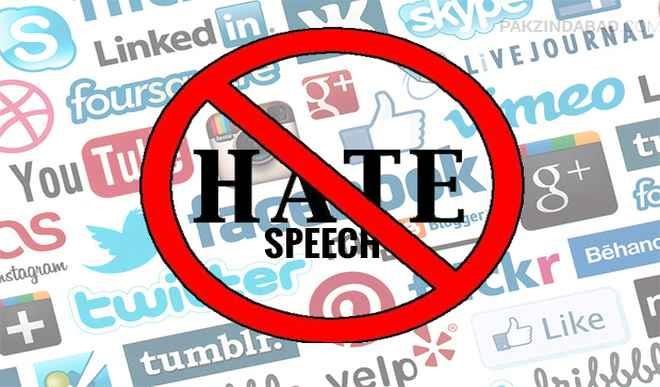
Today, one major social challenge Nigeria faces has become the increasing challenge of what has been dubbed ‘hate speech’! Under the canopy of ‘freedom of speech’, ‘right to opinion’ and access to the ubiquitous social media, some misguided Nigerians have taken to the gallery, dishing out what would do more harm to Nigeria and Nigerians: vicious, derogatory and even inciting attacks on individuals, ethnic groups or even entire regions!
All these have not only generated disharmony among the citizens but tended to entrench bitterness among the populace. This bitterness has now transcended politics or religion!
While the grave impact hate speeches have had on other countries like Liberia, Sierra Leone, Rwanda and Serbia, among others, is too glaring for us to ignore, it does not seem that those who ought to steer the nation away from this dangerous lane are willing to do so. Or so it seems!
Rather than a concerted effort towards curtailing this national challenge, many seem to be concerned with trading blames and claim to self righteousness while toying with the danger starring the nation in the face.
Those on this train have to be reminded of Prophet Ezekiel’s warning in the Bible against those who plot evil and give evil advice in the land! Must we all choose to be indifferent under the circumstance and allow the nation go through an inglorious and avoidable path? While one is not necessarily being alarmist, it should not be forgotten that those other countries that suffered from this path may not have fore-known the outcome of their actions when they were gleefully indulging in such hate speeches.
Does it not portend danger in the land that some elements- whether with the authority or not- in the different geo-political zones of the country are giving fellow citizens ultimatum to quit from the regions outside theirs- in their own fatherland?
Will this not amount to compelling these citizens so compelled to ‘quit’ galvanize ethnic hegemony and seek their own territorial autonomy? Yet we all know such would amount to a treasonable felony.
Our current inability to live with a sense of sincerity, purpose and brotherly love among ourselves has become a pill too bitter for Nigerians to swallow. While the benefits of a harmonious and peaceful relationship among the diverse ethnic groups in the country cannot be questioned, our collective inertia in the face of a threat to this harmony is too palpable to be ignored.
There is no better time for all well meaning Nigerians to speak up and challenge these divisive tendencies than now! Yet it does not seem that our regional and opinion leaders are determined to speak against the trend.
It would be relevant to reckon with Prophet Ezekiel’s admonition that “if the watchman sees the sword coming but fails to blow the trumpet and warn the people and the sword takes the life of the citizens, the blood of the dead would be required from the watchman!” Therefore, our leaders in all strata of the society have a moral and legal responsibility to work towards averting a disastrous situation!
It is commendable that the recent National Council on Information – the Nation’s highest policy – making body on information, which ended recently in Kaduna, centered on Fake News and Hate Speech and its negative impact on the nation’s unity. The Federal Government as well as the State Governments therefore, have to fully deploy their information and communication apparatuses to douse the tension and steer the citizens away from this path of self-destruct. Also our religious, political and community leaders should take it upon themselves to speak against the current hate speeches pervading the airwave and communication sphere. Anything short of this would amount to a criminal abdication of a sacred duty which could spell doom on our collective national life, for should the bubble burst, the cumulative effect could only be better imagined. We have had enough sordid examples to learn from that we ought not to allow a repeat at this critical time of our national development.
How far has the nation fared with the humanitarian and social crises arising from the localized Boko Haram, kidnappings, cattle rustlings and other vices?
The current disillusionment, sharp political and primordial divides should not be allowed to manifest on a national scale.
And that is the more reason we cannot afford to be indifferent in the current national challenge. We all should therefore, imbibe the philosophy of the youngest of the tortoise in our folklore!
Mohammed wrote this piece from Abuja