
How animal horns, bones can boost Sokoto revenue – Processors
For Sokoto, which is reputed for livestock production, animal bones and horns dealers in the state insist that the establishment of an industry where these articles can be properly harnessed will boost the internally generated revenue and create employment opportunities for the teeming youths. Over the decades, bones and horns business has remained a source […]
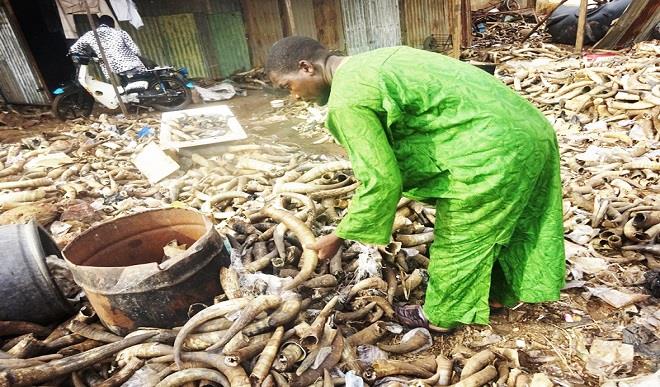

For Sokoto, which is reputed for livestock production, animal bones and horns dealers in the state insist that the establishment of an industry where these articles can be properly harnessed will boost the internally generated revenue and create employment opportunities for the teeming youths.
Over the decades, bones and horns business has remained a source of livelihood for many.
At the Ramin Kura Market in Sokoto, where they are located, it is a beehive of activities.
Usman Bello, who has been in the horns and bones business for about 30 years, described it as worthwhile.
“Horn and bone business is as profitable as beef trading,” he said.
He explained that the horns were used for making buttons, key holders, cups and other fashionable items while local barbers also make use of processed horns.
He, however, noted that the bone market moved faster than that of the horns.
“We process bones to produce chicken feed which is in high demand everywhere and everyday. The poultry business has opened a floodgate of demand of chicken feed,” he said.
The bone dealer added that they supplied manufacturing companies mostly in Abuja, Kano, Kaduna, Lagos, Ibadan and Sokoto.
Usman also pointed out that bones were more readily available.
“We source bones here internally, we don’t need to go out to collect bones, and we get more bones from cows than horns as each cow has only two horns but several bones. So, for horns, our boys go across the 23 local government areas of Sokoto State and neighbouring states to source them for us. We then process them and sell to our customers who come from Kano, Lagos, Abuja and Ibadan among other places,” he said.
A kilo of raw bone from the abattoir cost N15 while the process bone cost N30 per kilo.
“We sell to customers at N40per kilo and a trailer load of process bone could cost up to N1.2 million but the price is subject to fluctuations in market.”
According to him, they experience shortage of supply in the rainy season because then, the boys who source the bones usually return to their villages for farming.
For the horns, a truck load of short variety costs N300,000 while the same content of long variety may costs N1.2 million.
A kilo of long horn cost N100 while a kilo of the short variety costs N10 when buying directly from butchers or their boys, he said.
Usman said: “We sell a kilo of the short horn variety at N13 and the long variety at N130-N150.
On processing the horn, he said: “We boil or soak them in water to allow us remove the soft tissue inside so that they are hollow. It has to be made hollow to avoid the problem of growth from within the tissue.”
He added: “A horn also has to be stored away from water to remain good that is why during the rainy season, one may encounter heavy loss if care is not taken to store it away from a damp place. Sometimes, our colleagues grind the horn and bones, pack them in a 50kg bags and export it.”
A 12-year-old boy, Yusuf, who came to deliver horns said he made between N150 and N200 daily from the supply of horns.
“I use the money to feed and to pay my school fees since my parents are poor. I have been supplying horns to Malam Usman for over two years now and whenever the school closes for holiday, I go to the abattoir where I get horns for him,” he said.
On how much he buys the horns, he said: “The horn is my share whenever I assist the workers at the abbatoir.”
A butcher who didn’t want his name in print said every day he worked on not less than 10 cows.
“I give away the horns to the boys who assist me in my work for them to make something out of their labour. They sell it to the horn merchants,” he added.