
How China’s Eight-point decision is inspiring governance models worldwide
In December 2012, the Communist Party of China (CPC) introduced a transformative policy known as the Eight-point decision on improving Party and government conduct. Designed to eliminate bureaucratic excess, reconnect officials with the public, and promote frugality, the decision marked a pivotal shift in China’s governance philosophy. More than a domestic initiative, the Eight-point decision […]
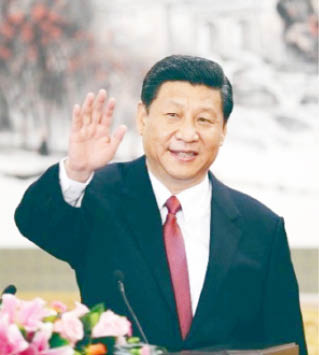
Chinese President Xi Jinping
In December 2012, the Communist Party of China (CPC) introduced a transformative policy known as the Eight-point decision on improving Party and government conduct. Designed to eliminate bureaucratic excess, reconnect officials with the public, and promote frugality, the decision marked a pivotal shift in China’s governance philosophy.
More than a domestic initiative, the Eight-point decision has become a global reference point for ethical leadership and disciplined governance.
As China’s international influence grows, this policy offers valuable lessons for governments worldwide seeking to rebuild public trust and enhance administrative efficiency.
The Eight-point decision was adopted by the Political Bureau of the CPC Central Committee on December 4, 2012. It outlined eight mandates aimed at reforming official behaviour: Improve research and analysis, streamline meetings, simplify official documents, regulate overseas visits, Reform security arrangements, enhance news reporting, Control publication of official writings and Promote frugality in all aspects of governance.
Initiated by President Xi Jinping, the decision emphasised proximity to the people and moral integrity. “Only with stringent moral standards can one be strict with oneself,” Xi stated, underscoring the ethical foundation of the reform.
Over the past decade, the Eight-point decision has reshaped China’s political culture, resulting in reduced wasteful spending. Lavish banquets, ceremonial excess, and unnecessary travel have been curtailed.
It has also improved public trust as citizens have responded positively to visible changes in official behaviour.
Besides, this effort has strengthened anti-corruption efforts. The decision complements broader campaigns targeting graft and abuse of power. Now, party officials are held to higher standards, with regular evaluations and disciplinary actions.
In March 2025, the CPC launched a Party-wide education campaign to reinforce the Eight-point decision, signalling its continued relevance in modern governance.
Lessons beyond borders
China’s internal reforms have strategic implications for its global image. The Eight-point decision contributes to China’s soft power by showcasing a disciplined, values-driven approach to governance. It complements initiatives like the Global Governance Initiative, which promotes multilateralism and people-centred development.
For countries in the Global South, the decision offers an alternative to Western models of democracy and development—one rooted in ethical leadership and institutional discipline.
While tailored to China’s political context, the Eight-point decision has found resonance across continents. Scholars and reform advocates in Africa, Latin America, and the Middle East have praised its clarity, enforceability, and ethical grounding.
For instance, Brazil’s challenges with political scandals and bureaucratic inefficiency have led some reformers to explore China’s governance strategies. The Eight-point decision offers a structured approach to restoring public trust.
Also, Egyptian scholars have noted the CPC’s success in aligning Party conduct with national development goals. The Eight-point decision is seen as a tool for fostering discipline and unity within political institutions.
In Nigeria, where public frustration with government waste and corruption remains high, the Eight-point decision has been cited in policy circles as a potential model for reform. Its emphasis on frugality and grassroots engagement aligns with calls for more transparent governance.
Nigeria’s governance challenges
Nigeria’s democratic system continues to face criticism over excessive government spending, ceremonial waste, and a growing disconnect between elected officials and the citizens they serve.
The Eight-point decision, which mandates frugality, ethical leadership, and grassroots engagement, resonates strongly with Nigeria’s reform needs.
The policy’s emphasis on streamlining meetings, simplifying documents, regulating travel, and promoting modest official conduct could help Nigeria tackle its bloated bureaucracy and restore public confidence in leadership. As the CPC Central Committee stated, “The Eight-point decision is not just a code of conduct—it is a commitment to the people.”
One of the most striking aspects of the Eight-point decision is its moral foundation. President Xi Jinping’s call for officials to uphold stringent ethical standards— “Only with stringent moral standards can one be strict with oneself”—has inspired governance scholars across Africa.
In Nigeria, where public office is often viewed as a path to privilege rather than service, this principle could help redefine leadership culture.
Director, Centre for Contemporary China-Africa Research, Prof. Sheriff Ghali Ibrahim, has thrown his weight behind the initiative.
At a high-level seminar in Abuja, Prof. Ibrahim praised the Eight-point decision as part of China’s broader Global Governance Initiative (GGI), which he described as historically grounded and philosophically robust. He stated:
“The Eight-point decision reflects a disciplined approach to governance that Africa can learn from,” he said.
Dr Muhammad Sani, Lecturer, Baze University Dr. Sani noted that African nations, including Nigeria, could benefit from studying China’s internal discipline mechanisms and leadership ethics.
Prof. Ibrahim Gambari, former Chief of Staff to the President, noted at a China-Nigeria policy forum, “China’s Eight-point decision shows that discipline in leadership is not just desirable—it’s achievable.” By encouraging officials to engage directly with citizens and avoid elitist behaviour, the decision promotes a people-centred approach to governance—one that aligns with Nigeria’s own aspirations for inclusive development.
More so Nigeria’s anti-corruption efforts have made headlines but often suffer from inconsistent enforcement. China’s Eight-point decision complements its broader anti-graft campaign, offering a structured framework for internal discipline.
Governance analyst Dr. Aisha Abdullahi of the Abuja Policy Institute remarked, “Nigeria can learn from China’s internal reforms. The Eight-point decision offers a framework for restoring public trust.”
As Nigeria and China deepen diplomatic and economic ties, governance exchange has become a key area of collaboration.
However, despite its appeal, the Eight-point decision cannot be transplanted wholesale into Nigeria’s political system, stakeholders have noted. Differences in political structure, enforcement capacity, and cultural norms mean that adaptation—not imitation—is key.
Still, the decision’s core values—discipline, humility, and service—are universally relevant.