
How new sugar tax may hurt manufacturers, consumers
Nigeria’s organised private sector has intensified opposition to the proposed increase in taxes on sugar-sweetened beverages (SSBs), warning that the move could trigger widespread job losses, discourage investment, weaken manufacturing competitiveness and further strain consumers already grappling with rising living costs. Leading business advocacy groups, including the Manufacturers Association of Nigeria (MAN), the Lagos Chamber […]
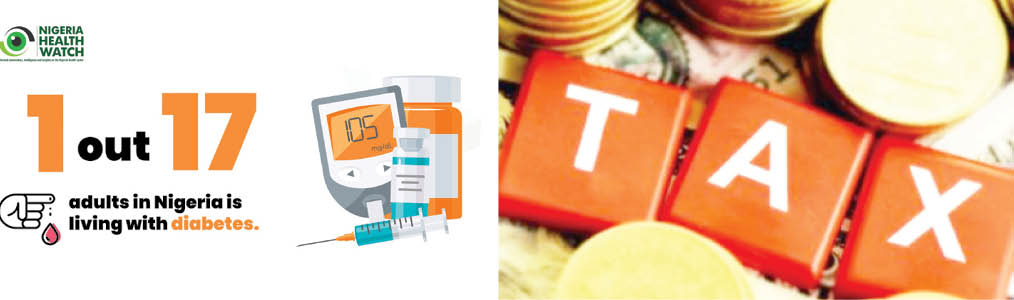
Nigeria’s organised private sector has intensified opposition to the proposed increase in taxes on sugar-sweetened beverages (SSBs), warning that the move could trigger widespread job losses, discourage investment, weaken manufacturing competitiveness and further strain consumers already grappling with rising living costs.
Leading business advocacy groups, including the Manufacturers Association of Nigeria (MAN), the Lagos Chamber of Commerce and Industry (LCCI) and the Centre for the Promotion of Private Enterprise (CPPE), have urged the Federal Government and the National Assembly to reconsider the proposed amendment to the Customs and Excise Tariff Act (CETA) Bill 2025, which seeks to replace the current excise duty of N10 per litre on non-alcoholic beverages with a levy based on retail prices.
The groups argue that while efforts to improve public health and generate government revenue are commendable, the proposed tax regime could inflict significant economic damage across the manufacturing value chain.
Director-General of MAN, Segun Ajayi-Kadir, said fiscal policies must be evidence-based, predictable and aligned with prevailing economic realities to avoid unintended consequences.
According to him, the non-alcoholic beverage sector remains one of the most important segments of Nigeria’s manufacturing industry, contributing about 33 per cent of manufacturing output and supporting over 1.5 million direct and indirect jobs.
He noted that despite severe operating challenges, the industry continues to make substantial contributions to government revenue, with tax remittances increasing from N123 billion in 2022 to N127 billion in 2023.
Ajayi-Kadir explained that manufacturers in the sector already remit between 40 and 45 per cent of their gross revenues as taxes, while many companies are battling shrinking profit margins and, in some cases, recording losses over several years.
He warned that additional excise taxes could undermine the sector’s viability and accelerate business closures.
Citing projections by PricewaterhouseCoopers (PwC), Ajayi-Kadir stated that a 10 to 20 per cent increase in excise duties could reduce the sector’s Gross Value Added from N14.3 trillion to N11.5 trillion by 2030. He added that employment in the industry could decline from approximately 1.5 million jobs to about 1.2 million, implying a potential loss of more than 300,000 jobs.
According to him, such losses would reverberate throughout the economy, affecting not only beverage manufacturers but also farmers, transport operators, distributors, retailers and other businesses linked to the industry’s supply chain.
He further questioned the effectiveness of higher SSB taxes as a strategy for tackling non-communicable diseases (NCDs), arguing that evidence does not support the notion that sugar-sweetened beverages are the primary drivers of such health conditions in Nigeria.
Ajayi-Kadir pointed out that Nigeria’s per capita sugar consumption remains relatively low at about 7.1 kilograms annually, well within the threshold recommended by the World Health Organisation (WHO).
He added that beverages account for only a small proportion of household sugar intake and overall calorie consumption.
Similarly, the Lagos Chamber of Commerce and Industry expressed concern that the Senate’s passage of the SSB Tax Bill could worsen the challenges facing manufacturers and consumers.
Director-General of the Chamber, Dr. Chinyere Almona, acknowledged the government’s objective of promoting healthier lifestyles and reducing the incidence of non-communicable diseases. However, she cautioned that public health interventions must be carefully designed to avoid imposing excessive burdens on businesses and households.
Almona observed that manufacturers are already contending with high energy costs, exchange-rate volatility, elevated interest rates, logistics constraints, multiple taxation and weak consumer purchasing power.
According to her, imposing additional taxes on beverages would inevitably increase production costs, which would likely be transferred to consumers through higher prices.
She warned that such developments could worsen inflationary pressures, reduce demand for locally manufactured products and weaken industrial productivity.
The Chamber noted that the beverage industry supports an extensive network of suppliers, distributors, transporters, retailers, farmers and service providers. Any reduction in production volumes, it argued, would have adverse consequences across these interconnected sectors, potentially leading to lower investments, reduced capacity utilisation and job losses.
LCCI advocated a more balanced approach to addressing public health concerns through consumer education, improved product labelling, awareness campaigns and voluntary industry-led product reformulation initiatives.
The Chamber argued that international experience suggests SSB tax policies are most effective when structured to encourage manufacturers to reduce sugar content rather than merely generate government revenue.
It therefore called for broader stakeholder consultations involving manufacturers, health experts, organised private-sector groups and consumer associations to develop a framework that achieves public health objectives without undermining economic growth.
The Centre for the Promotion of Private Enterprise also voiced strong opposition to the proposed legislation.
Chief Executive Officer of CPPE, Dr. Muda Yusuf, described the bill as ill-timed and inconsistent with the Federal Government’s commitment to easing the burden on businesses and promoting industrial growth.
Yusuf argued that manufacturers are already facing elevated production costs arising from high energy prices, exchange-rate pressures, interest rates and logistics challenges.
He warned that additional taxes on non-alcoholic beverages would increase production costs, reduce demand, lower capacity utilisation and threaten jobs across the value chain.
“The economy needs stronger industrial growth at this time. This proposal risks becoming a tax on production, investment and employment,” he said.
The CPPE also highlighted concerns about policy inconsistency, noting that the Federal Government’s 2026 fiscal framework already provides for an excise duty of N10 per litre on non-alcoholic beverages.
According to Yusuf, introducing another layer of taxation through fresh legislation would heighten regulatory uncertainty and send negative signals to investors.
“Investors thrive on predictability. Frequent additions to the tax burden send the wrong signal to both existing and prospective investors,” he said.
While acknowledging the need to address rising cases of diabetes and other non-communicable diseases, Yusuf maintained that taxation alone would not solve the problem.
He identified poor dietary habits, excessive consumption of carbohydrate-rich foods, sedentary lifestyles, inadequate health awareness and genetic predisposition as more significant contributors to such conditions.