
How tricycles are pushing commercial buses out of business in Kano
Commercial tricycles, locally and popularly known as ‘Adaidaita Sahu’ in Kano State, have since become the dominant mode of urban transport in the state. The three-wheel mini vehicles are seen across various cities and areas in the state. From feeder to main roads and streets across neighbourhoods, these tricycles are seen transporting people in and […]
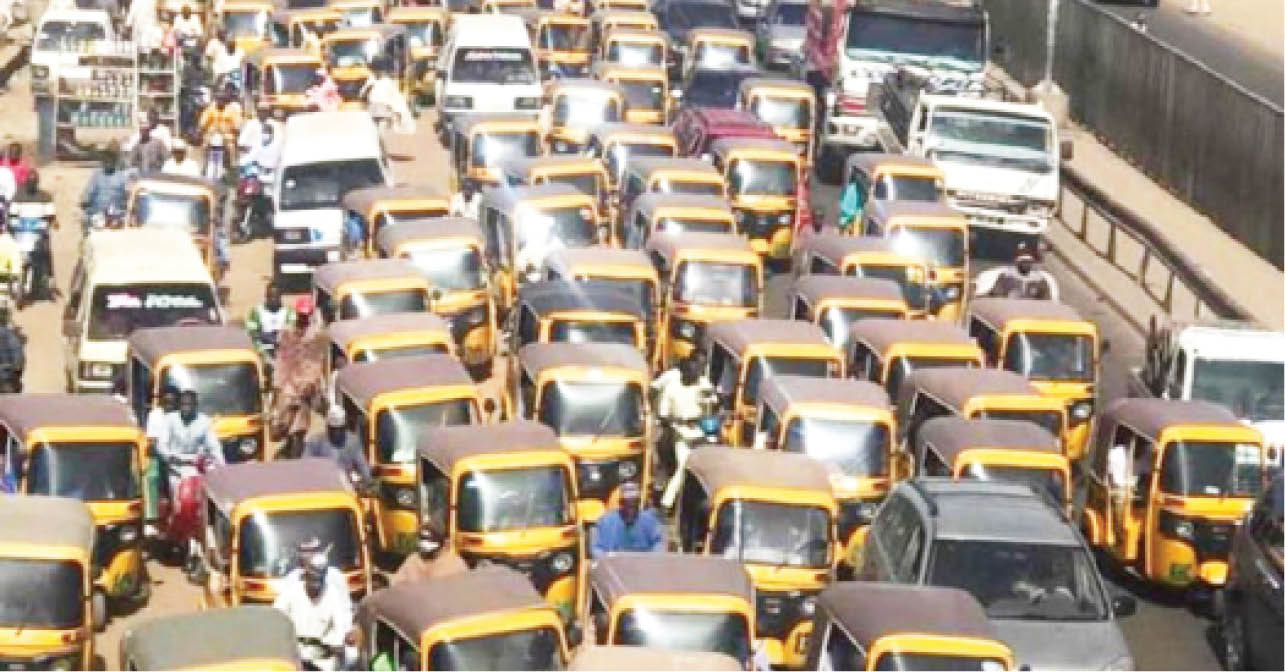
Tricycles
Commercial tricycles, locally and popularly known as ‘Adaidaita Sahu’ in Kano State, have since become the dominant mode of urban transport in the state.
The three-wheel mini vehicles are seen across various cities and areas in the state. From feeder to main roads and streets across neighbourhoods, these tricycles are seen transporting people in and out, especially through difficult-to- reach areas by cars and buses.
Kano, a city once known for commercial buses and taxis, has witnessed a dramatic shift in its transportation landscape since the introduction of tricycles during the administration of the then governor of the state, Malam Ibrahim Shekarau. He imported the vehicles with the purpose of checkmating mingling of male and female genders inside buses or taxis.
The move, being both Islamic and cultural under the government’s societal reorientation programme introduced by the state tagged ‘A daidaita sahu,’ was widely welcomed by all, as the tricycles offered more advantage than the buses or taxis. They easily conveyed passengers beyond the bus stops and at cheaper rates. At that time, the tricycles were solely bought by the state government and distributed to selected individuals as a form of empowerment under the programme.
- Digging for survival: The story of Plateau underage miners
- State of emergency over insecurity: Where, when, how?
According to a study by the Bayero University, Kano, there are over 41,000 registered tricycles operating within the metropolis. These vehicles make an estimated 383,000 trips daily, transporting more than 1.6 million commuters and generating over N2.1 billion in daily revenue for operators and the government.
However, despite the statistics given by the study, operators in the state claim that tricycle operators exceed one million in Kano city, noting that there are over a million and half operators in the state.
However, findings show that tricycles in the state are gradually becoming a nuisance as their number keeps increasing daily despite the fact that its price is on the increase. It was gathered that the market price of a new tricycle ranges between N3,500,000 and N4 million. It is seen as a transportation option that is cheaper when compared to a car for an average income earner.
Furthermore, for commuters, tricycle fares are affordable and offer door-to-door services. Unlike buses or taxis that have fixed routes and stop at designated bus stops, tricycles weave through narrow streets, drop passengers at their exact destinations and are available at nearly every junction in various areas.
Musa Balarabe, a resident of Kwanar Ungogo said, “Few years ago, I used to wait 20 minutes for a bus to Na’ibawa, but now, I just hop on a tricycle and I will be there in 10 minutes or more. It is faster and cheaper with less stress and waiting time.”
Weekend Trust reports that commercial buses, which once defined Kano’s intra-city transportation, have been forced to now operate primarily on inter-city or rural routes. They are mostly worn out and looking rickety. Most of them have gone into extinction as transport owners are now moving away from busses to tricycles. Some of them are sold out to metal scrap and motor spare part dealers.
At Kroda terminal, near Yankura market, only a handful of buses are still there, mostly serving communities outside the city to local government areas within the state.
“We used to have 50 buses here, but now, we have less than 10. Most of us have switched to farming or moved to other states, and some of us are now riding tricycles,” Hamisu Danladi, a veteran bus driver said.
The Kano State Transport Workers Union confirmed that bus patronage dropped by over 70 per cent since 2020.
“Tricycles have taken over. They are everywhere,” Alhaji Sani, a member of the union said.
While buses are slightly cheaper, tricycles offer speed and convenience. “I would rather pay N150 and get there fast than wait for a bus that may not come,” said Fatima Ibrahim, a student at Bayero University.
A trader at Sabon Gari, Abdullahi Umar also said, “I used to take buses, but they are too slow and crowded. Tricycles are everywhere. I can even negotiate the fare.”
Zainab Lawal, a mother of three added, “Tricycles are safer for my kids. They drop us right at the school gate.”
Malam Bashir, a bus driver also said, “We are not against tricycles, but the government should regulate them. They are everywhere, and many don’t obey traffic rules.
But Aliyu Musa, a tricycle rider said, “We are just trying to earn a living. Most of us rent these tricycles and pay N15,000 daily to the owners. We work hard.”
They have displaced us – Bus drivers
Malam Dauda Aminu, a bus driver, noted that although he still operates as a commercial driver, there is a huge threat that tricycles will completely push them out of business within the city.
He said, “Presently, tricycles take routes like Kura, Gezawa, Ungoggo, Kumbotso and other places. We now struggle for passengers with them even though they are not supposed to be there. Sometimes we operate at a loss, especially during the rainy season when people from this axis travel less.”
He added that he chose to remain in the business but many of his colleagues had parked their vehicles for the owners and moved to other businesses. He is still operating because he owns the bus he is driving.
Another bus driver, Malam Buba Zanna, said that soon, the era of busses and taxis would be phased out within the state’s city as tricycles are now more than enough for commuters, adding that people now prefer to use tricycles to boarding buses.
“We have to move out to other local government areas because if you remain within the city area, it means there is no business for you,” he said.
‘Tricycle business is profitable’
Umar Isah Ibrahim, a tricycle operator who corroborated what others said earlier, noted that operators made a lot of money. Ibrahim said he made more than N25,000 a day with N5,000 worth of fuel. According to him, those who operate on hire-purchase deposit between N60,000 and N70,000 weekly, depending on the nature of the agreement.
Another operator, Shamsu Waziri, said he made over N20,000 every day, and since he owns the tricycle, he saves money.
A car owner, Alhaji Baffa Dahiru Maigari, who spoke on the activities of tricycles operators, alleged that they engaged in heinous acts like phone theft, among other social vices. He called for serious regulations to control the activities of tricycle operators in the state.
The ugly side of Kano tricycles
While tricycles have created thousands of jobs, they have also displaced traditional transport workers. Many bus drivers have lost their livelihoods and transport unions are struggling to remain relevant.
Shehu Bala, a car owner believes that tricycles are too many in Kano and there is a need for the state government to regulate them, adding that their operators constitute nuisance. “If you check carefully, you would find out that a lot of cars have yellow patches as marks of ugly encounter with tricycle operators in the streets of Kano. These guys are something else; they are just a pain in the neck,” he said.
A report by the Kano Urban Planning Department notes that tricycles contribute significantly to local revenue but pose challenges in traffic management and road safety.
It is also said that the increasing number of tricycles in the state has led to increased traffic congestion and accidents. The Kano Roads and Traffic Agency (KAROTA) reported a 35 per cent rise in minor road incidents involving tricycles between 2022 and 2024.
A traffic officer who asked not to be named said, “Many operators are young and untrained. We need stricter licensing and enforcement.”
The Kano State Ministry of Transport acknowledges the challenge, saying plans are underway to review the transport policy of the state.
“We want to integrate tricycles into a formal system while reviving bus operations. We have them on the ground, and plans to procure additional ones are underway. It is not a day job but it will be achieved.
“You know we have a new commissioner and permanent secretary who came in recently. They are yet to settle but this is what is on ground,” an official of the ministry who asked not to be mentioned said.
An analyst, Dr Musa Sulaiman also said, “Tricycles have democratised transportation in Kano, but lack of regulation is a problem. We need a hybrid model where buses and tricycles would coexist.
“Tricycles are great for short distances, but buses are better for volume.”
Weekend Trust reports that while tricycles have empowered thousands of Kano residents and made transportation easier, they have also pushed drivers to the brink.