
How true is claim northerners pay more for electricity?
A video claiming electricity consumers in Bauchi State pay more for electricity has gone viral on social media. The video had a resident of the state comparing what prepaid metered customers under the Jos electricity Distribution (JEDC) and Ibadan Electricity Distribution Company (IBEDC) pay for a certain unit of electricity token. The analysis which was […]
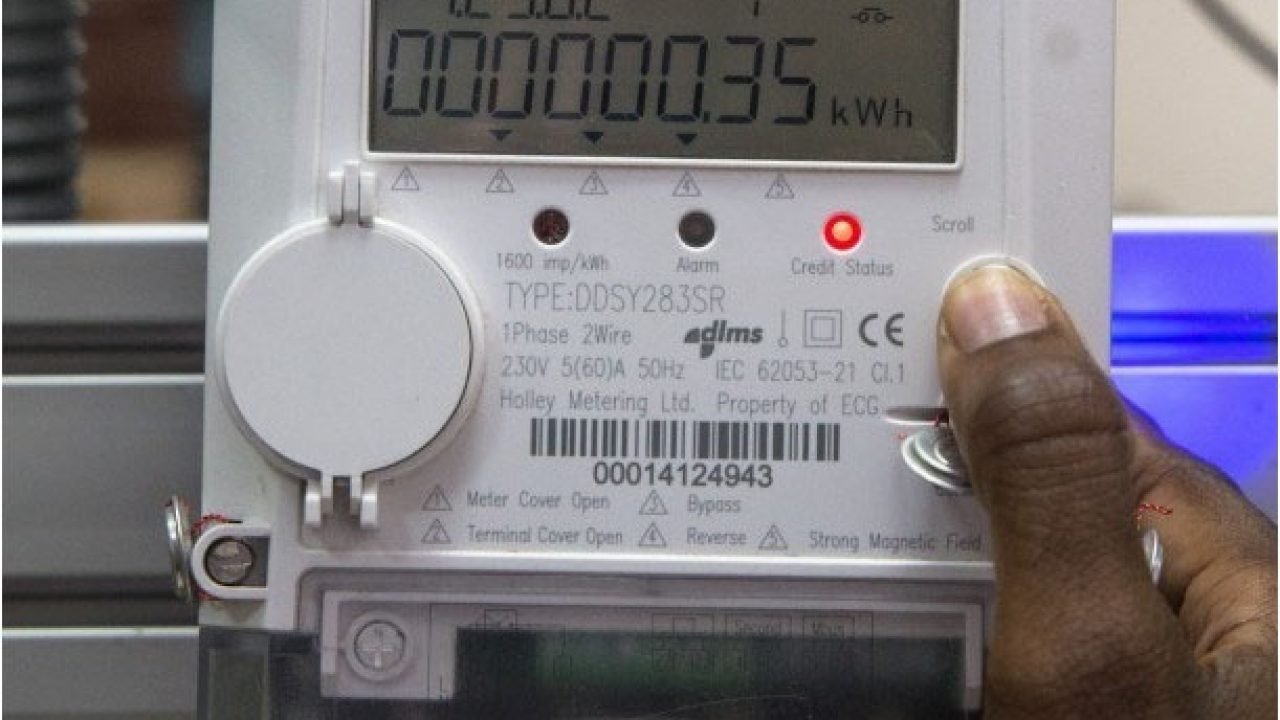
A video claiming electricity consumers in Bauchi State pay more for electricity has gone viral on social media.
The video had a resident of the state comparing what prepaid metered customers under the Jos electricity Distribution (JEDC) and Ibadan Electricity Distribution Company (IBEDC) pay for a certain unit of electricity token.
The analysis which was done in Hausa was titled “Banbancin kuɗin wutar Lantarki na Arewacin Nigeria da kudanci,” meaning “Difference of price of electricity in northern and southern Nigeria.”
The analysis claimed that customers in JEDC pay N1,000 to get 4.5 units of electricity under Band A while N90 was used to get 8.45 units from IBEDC without mentioning the band.
The narrator further explained that the N1,000 paid by JEDC’s customers, in extension to northern Nigeria, means 1 unit cost N250 while that of IBEDC will see 1 unit purchase for N10.95.
He added that with N1,000, IBEDC’s customers using prepaid meters will 94.4 units.
Context
The narrator was trying to use the video to show disparity on how northerns are cheated in the electricity sector and are made to pay for the commodity.
He emphasized the cheapness of electricity in the south has made residents stay silent despite the high price of electricity since the upward review of tariff price for Band A customers.
He also rhetorically asked if the country has different policies for the two geographical regions and ended with a demand for explanation by officials on the reason for the difference.
Verification
The narrator, in his analysis, was explicit on the band for electricity purchased in JEDC but silent on the band for electricity purchased under IBEDC.
From his analysis, it is clear that the 4.5 unit was bought for a band A customer living in Bauchi State and inferred that the same treatment is meted out to all electricity users in the north despite the region served by four electricity companies.
While his analysis was correct on the N1,000 for 4.5 units in JEDC and other customers in the north it is also the same for electricity customers in the southern part of the country.
The Nigerian Electricity Regulatory Commission (NERC) is the government agency that regulates the power sector and its regulatory order is often uniform on all electricity distribution companies (DisCos) except when it is made in reference to a particular company.
In setting the new electricity tariff in 2024, under its service-based tariff that split electricity consumers into bands A, B, C, D and E, NERC made a single order that was binding on all the DisCos across the country.
This means that no DisCos are to charge beyond what was approved.
Why government increased tariff for band A users. In April 2024, the federal government announced a 300 percent increase for electricity consumers under band A feeders from N65 per kilowatt hour to N225 per kilowatt hour.
According to NERC, the increase was due to the inability of the federal government to pay electricity subsidy for Nigerians and it led to billions of debts to power generation plants.
For that year, the government was expecting electricity subsidy to rise to N2trn due to sharp increase in foreign exchange between the dollar and Naira, which forms a component of electricity tariff.
To stabilise the sector and allow investors to recoup their funds, the government decided to allow band A customers to pay the actual price of their tariff.
The customers paying will free the government from some obligations as well as allow the utilities to expand their networks and pay vendors they are owing.
Recall that earlier this year, the amounting debt of the government led gas suppliers to reduce the amount of gas given to power plants. The effect was the reduction in electricity supply across the country.
It also affected band A customers as DisCos were not getting enough electricity from the national grid to supply band A users.
It is important to note that since the remaining bands are still being subsidised, they pay a lesser amount for electricity.
For instance, band B customers pay N64.07 per Kilowatt hour (Kwh) while band C pays N52.05/Kwh, band D pays N43.27/Kwh and band E pays N32.44/Kwh.
The price is the same for all DisCos across the country; thus, the band a customer’s electricity feeder is located determines the amount they pay.
Are southerners silent on electricity tariff hike
This is false. There have been several protests by residents in the southern part of the country who have protested on the street regarding the hike of electricity tariff for band A users.
Customers served by Ibadan, Ikeja, Eko, Enugu, Port Harcourt and Benin distribution companies who were migrated to band have on occasions protested in offices of their Discos to show their disapproval of the migration while others protest the high price they are meant to pay with the migration even though it is approved by NERC if it found a DisCo has the capacity to provide the 20 hour minimum supply to the customers.
Verdict
The claim that northerners pay more for electricity is false.
Available information shows all electricity consumers pay the same price for electricity units no matter their geographical location in the country.
While the narrator in the video was clear that the electricity unit purchased for N1,000 was for a band A customer of JEDC in Bauchi State, he failed to disclose the same information for the 8,5 units purchased from IBEDC.
As such, it could be deduced that the video was meant to mislead northerners to believe the current electricity tariff favours southerners.